
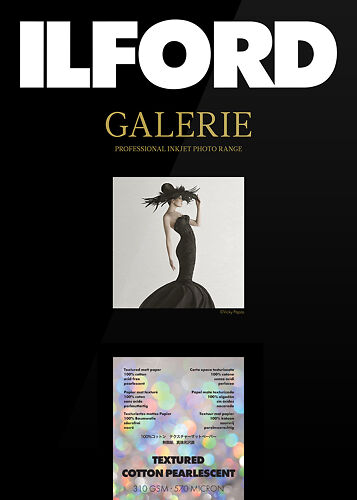
Ilford Galerie Textured Cotton Pearlescent 310gsm
A textured, 100% matt cotton rag paper featuring a unique, pearlescent sparkle finish.
Please note that we are open by appointment only (except for click and collect pickups once notified ready).
A smooth, 100% matt cotton rag paper featuring a unique, pearlescent sparkle finish.
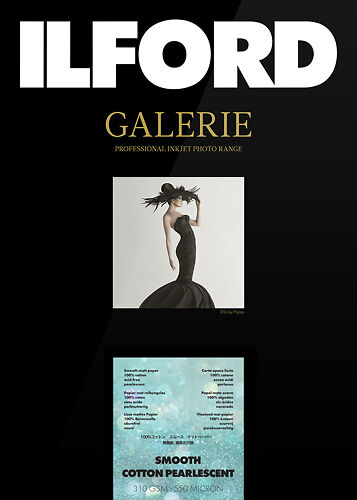


Featuring a truly unique sparkle effect finish (please note - this is not a pearl or glossy paper - this is a matt paper with a shimmering sparkle in the coating), this innovative paper opens up a wide range of creative possibilities.
Imbue photographic works like landscapes and editorials with luminescent depth, add an element of sparkly fun to graphic and cartoon artworks (we can see this working especially well for pop art or manga styles), or elevate wedding invitations with a touch of elegance.
Ilford Galerie Smooth Cotton Pearlescent brings a refined sense of depth and elegance to fine art inkjet printing. Crafted from mould-made, 100% cotton rag, this premium paper features an exceptionally smooth surface paired with a distinctive pearlescent finish.
Using Ilford's original coating technology, Smooth Cotton Pearlescent introduces a subtle sparkle effect that adds another visual dimension to images. Highlights gain a gentle shimmer, tonal transitions remain smooth, and fine detail is rendered with clarity and sophistication. The result is a striking print surface that elevates photographs, artwork, and exhibition pieces without overpowering the image itself.
Ideal for photographers, artists, and printmakers seeking something truly distinctive, this paper combines the timeless quality of cotton rag with a contemporary, luminous finish.
Construction
Fibre Based
Substrate
100% Cotton
(acid free)

Paper Weight
310 gsm
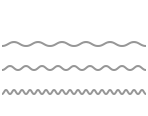
Surface Texture
Matte, Smooth

White Tone
White

Optical Brighteners?
Please note: Specifications are provided as a guide only.
We try very hard to keep these up to date and correct, but if a particular specification is really critical to you, then please double check the specification directly with the manufacturer. Some features may of course have caveats not fully described here.
To get more information about a particular specification, use the arrow to get a 'Specxplanation'.
Described simple, papers are constructed in two main ways:
Resin Coated papers are the 'modern' approach. These use less fibre and replace the fibre with resin (a nice name for plastic). This means these papers are relatively cheap, strong and robust, but tend to be less attractive to the touch, and accept less ink. They tend to have a clinical appearance and it's hard to write on the back of them. They tend to be popular in the consumer and wedding/portrait markets.
Fibre Based papers are traditional papers made without plastic, using only plant fibres. These tend to accept more ink and have a more attractive appearance, and these are the papers most of our customers favour. These papers
Environmental Concerns:
Resin coated papers are difficult or impossible to recycle because of their plastic content.
Fibre Based papers are fully recyclable and we thus strongly recommend you use fibre based papers whenever possible.

What is the paper base made from?
Possibilities include:
Is this paper acid free?
Acid in paper leads to earlier yellowing and the paper will also become brittle more quickly. Thus for a paper to be archival, it needs to be acid free.
Papers which are not acid free are generally best used for proofing (test printing), and shorter term purposes. That is, they are not considered to be a fine art level product, or suitable for print sales into the art or professional photography markets.
This does not, of course, mean these papers will vanish or discolour overnight - they generally still have life-spans suitable for commercial work and above or on par with e.g. typical photo chemistry papers. They are thus suitable to markets like signage, or the decor market (e.g. print sales for kiddies bedrooms, for example) - but should be avoided if you're trying to sell your work as a serious art level product.
In general, papers made from cotton are naturally acid free, which is one reason they are often favoured. Other fibres, like Kozo, are also naturally acid free. High grade wood pulp papers can also be made to be acid free, however, if the lignin/acid is removed from the pulp.
These days almost all papers are microporous coated - meaning they'll accept inks from both dye based and pigment printers well.
In years past, some papers had a swellable coating - designed to give a greater life to prints with dye based inks but this approach has fallen out of favour.
In 'gsm' - grams per square metre.
Not, technically, the same as paper thickness, but obviously correlated. The heft of the paper. European art papers are traditionally generally around the 300gsm mark. Asian papers historically tended to be lighter, 100 to 200 gsm.
Papers with a higher GSM tend to have more opacity, i.e. you see less through them.
The thickness of the paper, as supplied by the manufacturer. Also known as Caliper (as calipers are used to measure this value).
Unit are in millimetres (e.g. 0.5mm, half a millimetre), or microns/μm = micrometre, or thousands of a millimetre. I.e. 500 microns (μm) = 0.5mm.
(Note in many ways this a much more relevant figure than the more often quoated gsm - as it is thickness of a paper, more than weight, which determines how easily a printer feeds a paper).
What is the surface texture of the paper?
We divide this into six groups. We go by the appearance of the actual paper and not what the manufacturer might label the box with!
What is the white tone of the paper?
Measurement of the white tone of the paper, as supplied by the manufacturer, with the measurement standard they have used (where given). It's really best used e.g. as a comparison figure against other papers, rather than an objective figure for any one paper.
The value is often given as a percentage (with an ISO standard), or more usually as an LAB value (with a measuring standard). If you want to understand LAB, then we have information in Chapter Two of our Fundamentals of Digital learning resource.
Important - this is an average figure and not a specific guarantee that any particular sheet you might measure will be exactly this figure.
Does the paper contain chemicals in it to brighten its appearance?
We're using the value/description the manufacturer supplies (see also the White Tone and White Value specs).
In many cases, only a small amount is used to even out batches of cotton, and then only in the paper base, not the coating - in these cases, it is generally agreed such use of OBAs is essentially insignificant and will not materially impair the archival life of the paper.
More on this here.
What ink type (dye and/or pigments) can you use with the paper?
Also, if using pigment inks and you have a choice, should you use the Matte Black or Photo Black ink?
Confused about something, or just want some human to human advice?
Send us a question about this product.
We answer all enquiries, and promptly too!
You're also very welcome to ring us on 03 9329 4522 if you prefer.
Note this form is for pre-purchase enquiries, or support enquiries if you have bought this product from us. If you have bought this product from another supplier then please contact that supplier for support.