Please note that we are open by appointment only (except for click and collect pickups once notified ready).

Palette Pico Review

25th June 2025 Product News

A review of the Palette Pico portable colour digitiser, including what it is, what it does, who it's for, and an evaluation of operation and performance.


Introduction

Palette is an inspiring local success story - a Melbourne based start-up company, they used crowd funding to produce their impressive flagship product, the Cube - a portable colour digitiser - which we've just reviewed.

Since the release and subsequent resounding success of the Cube, Palette have released an even smaller unit called the Pico - about the size of a lipstick, which we're reviewing today.

Don't let it's diminutive size fool you, just like it's big brother, the Pico is an excellent unit - an even more slick, even more portable, spot colour measuring and paint matching device. 

While it isn't quite as fully featured as the Cube, the performance it gives at it's even more competitive price point blows us away!

What it is

Overview

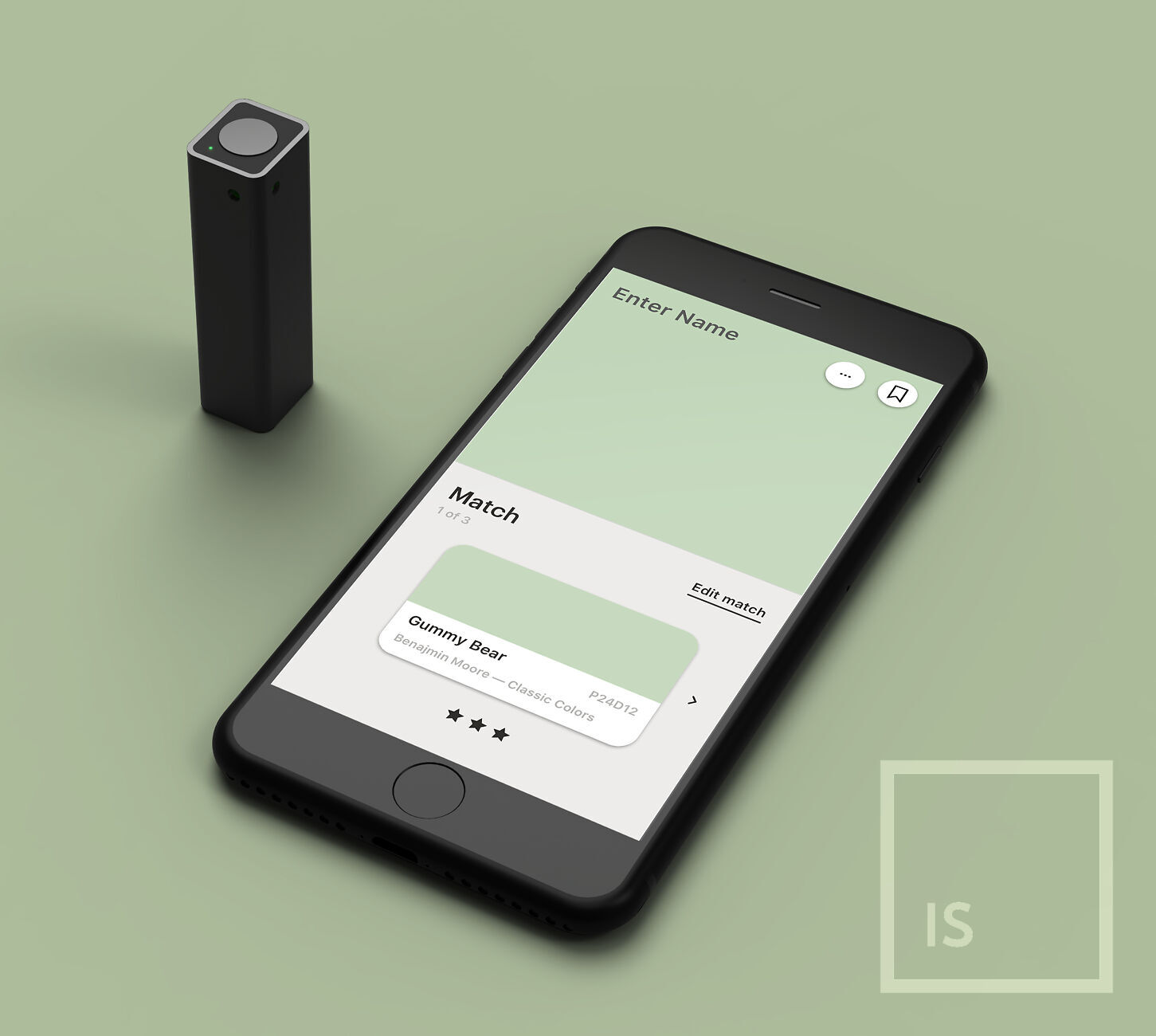
Put simply, with the tap of a button, the Pico allows you to very precisely 'steal' colours from the real world. You just pop it on the colour you want to read, click the button, and up on your mobile phone comes the exact colour, the closest match to standard paint systems (eg. Dulux, Wattyl) as well as precise numerical data - RGB, HEX, LAB, CMYK and LRV values. You can then use the precise colour easily in any way you can imagine.

It can capture basically anything flat that is not super shiny, fluorescent, crazily saturated, or extremely dark.

The Pico has minimal environmental impact - beneath it's aluminium exterior, it's internals are assembled entirely without screws, glue or harmful metals. A remarkable 99% of Pico's parts are readily recyclable!

It’s a great and very well priced product - very slick and was designed right here in Melbourne. It's great to see a local success and the really excellent result of all their hard work.

Technical

Much like the Cube, from a technical aspect, the Pico almost stands in a class of it’s own, there’s not too much else like it out there at this price point.

Again, let’s be clear, the Pico is definitely not a scientific instrument like a spectrophotometer - but it’s also not claiming to be. If you’re intending to use it as a budget spectro for high-accuracy colour analysis, then you’re going to be disappointed. It is however, fantastically accurate for it’s intended purpose.

Broadly speaking the Pico operates on similar tristimulus principles as a colorimeter - this is, it has individual red, green and blue diodes that are powered sequentially and shine onto the sample, it then reads the amount of each colour of light that is returned from the sample in turn, and builds a very accurate numerical colour definition of the sample.

Unlike the Cube which does these measurements through spherical interface geometry (an internal hard-finish integrating sphere), the Pico instead operates on a flood illuminator principle that more closely resembles a traditional 45:0 measurement geometry.

While Palette doesn't state a standard accuracy figure, they do claim an "Inter-device repeatability < 1.0 ∆E", which is quite good. I imagine this figure is specified in the ∆E76 standard just like the Cube is, and would be based on testing derived from the Dulux Colour Atlas range (as the Cube is). Like it's big brother, the Pico has specifically been designed to be more sensitive on near-white colours, which are often the most critical to get right, and are also the type of colours indicative of mixed paint (i.e. according to the physicality of how paint is tinted/mixed down from a white base). 

Again, if we’re nitpicking, the unit does definitely show some reduced performance on very dark or extremely saturated colours (just like the Cube), but those sorts of colours tend to make up a minority of it’s intended target field of colours and uses. Once again, some of this reduced dark-tone accuracy/performance (particular on dark fabrics in our testing) I expect (and this is my speculation only) is coming from the limited peak luminance of the emitters - they’re just not bright enough to provide enough illumination to reflect back off really dark and dense ‘light trap’ type materials like very dark woven fabrics.

All in all, it's honestly pretty amazing to get the level of accuracy the Pico shows at it’s price point - nothing else even comes close!

What it does

With the tap of a button, Pico finds the RGB, HEX, LAB, CMYK and LRV values of the colour of a surface

Pico also finds the closest match in popular colour palettes/collections, such as Dulux and Wattyl.

A fantastic feature is it's inbuilt measurement averaging modes. Not only can you use the standard 1x 'spot read' mode, but you can also very easily average both 3 and 5 reads for more consistent and accurate results over a larger area - fantastic for textured or tricky surfaces, or even getting a better idea of a true skin tone by taking measurement from different areas of skin.

You just pop it on the colour you want to read, click the button, and up on your mobile phone comes the exact colour. Unlike the Cube, the Pico only operates with a mobile device, it does not share the same desktop link functionality that the Cube has, so if direct integration into Photoshop is something you value, then look at the Cube instead.

In comparison to the Cube, the app is somewhat less fully featured, missing the Cube's colour palette recommendations (Analogous, Triadic, Complementary, Split Complementary, and Tetradic colours), so if this is important to you as a designer, then again look to the Cube instead.

One point I will say, is that you really just can’t judge the accuracy of the Palette measurements by simply visually looking at the measured result preview/matching paint swatch on your phone/tablet/computer monitor. It’s important to be clear that this is no fault of Palette - the Palette products are far more accurate than typical consumer electronics, so even if you think you have a 'good device' (iPad, Macbook, whatever...) - the reality is that those devices are simply not colour accurate devices, so the displayed swatch on screen will almost always look different to the actual thing you’re measuring (and especially so if you're not using a proper imaging monitor that is properly calibrated). You simply need to trust the cold, hard numbers in this case.

Who it's for

The Pico is designed for anyone who works with colour. It significantly improves the traditionally time-consuming colour matching process, and is a leap forward from current colour matching devices.

While being primarily aimed and marketed towards paint matching, it is also super useful for the many design industries: interior, decor, graphic, and product to name a few, but it’s uses and applications are basically endless.

For it's diminutive price, it makes a very handy tool to just keep around for anyone who loves or works with colour.

Perhaps you’re an individual or a business involved in custom paint matching and mixing, the Pico gives you the ability to scan a physical painted thing (eg. that your customer brings to you), and then interpret the scanned values into the necessary paint tinting formula to match the object they’re trying to replicate, it removes the guesswork and inaccuracies related to visual analysis, and roots results firmly in the unwavering numerical.

Or maybe you’re a designer (of any sort): products, graphics, interiors, decor, or fashion. The Pico lets you capture real world colours and then super easily implement them into your design or product. Walking down the street and see some eye-catching graffiti? You can scan it and use it later however you like. Got a swatch book of colours you’re looking to leverage? You can physically sort through until you find the ‘right’ colour in the physical realm, and then scan it and use the data it in myriad of ways super easily in the digital realm.

We’re actually seeing quite the uptick in use from the beauty industry of late, for skin tone analysis, and makeup colour matching and the like. Whilst there isn't native support for a skin tone ‘library’ in the app (yet?), Palette did do a fair bit work with a few of the big industry leaders early on to make sure it works for that too. The measurement averaging feature is very nice for this purpose too.

Palette even generously provides SDK/API access for development purposes, so that any company can build their own colour database and integration for use with the Pico.

App

Once again Palette have followed through with an excellent mobile app to accompany the Pico.

The ‘Pico’ companion app (available for Android and iOS) is very slick, quite intuitive and powerful.

As previously mentioned, the Pico only operates with a mobile device, it does not share the same desktop link functionality that the Cube has.

Starting with the main homescreen of the app and the sidebar (accessed with the hamburger menu button top left):

The sidebar options include: 

  • Account Sign In - Thankfully optional.
  • Zero - An important calibration step to do regularly (before a measurement session) for accurate results.
  • Help & Support - Including a 'how to use' guide.
  • Settings - where you can define which specific RGB and CMYK spaces to use, as well as access device specifics like serial number (RGB is selectable from Adobe RGB or sRGB, while CMYK is selectable from Coated FOGRA39, US Web Coated SWOP V2, and GRACoL2013).
  • Subscriptions - also thankfully optional for NCS and Palette Pro.
  • Latest News
  • Battery Charge level and pairing status.

Back on the main homescreen, 'My Colors' takes you to a library of previously scanned colours/swatches, which can be analysed just like the normal results screen.

'Projects' allows you to save various project details, like individual room and colour schemes, dimensions and area coverage calculations - very useful for keeping track of and calculating paint coverage if you're repainting your house for instance.

Again, back on the main homescreen, 'Collections' takes you to a list of all available colour systems/libraries/collections that you can choose from. In Australia this is Wattyl, Colours Designer Fandeck, Dulux, and Tint.

Lastly, back on the main homescreen we also have the opportunity to compare two of our saved colours

Finally, from any of these screens, the hovering 'Scan' button at the bottom right will take a measurement (as will pressing the button on top of the Pico). If you tap the 1x button next to the scan button this will cycle through the 3x and 5x averaging modes.

After a second of measuring you will be presented with the results screen. At the very top it will let you name your colour scan for reference. The background gives you a representation of the captured colour.

Tapping 'More' below the date will let you export data, save the swatch to a collection, favourite a colour, compare it to another colour, or delete the result.

The match section will display the three closest pre-existing paint swatches in whatever systems/collections you have selected (I have Dulux 'Seduction Half' and 'Lean Lemon', and Wattyl 'Over The Moon').

The preview section will display your captured colour in three different room mockups.

Finally the Data section will display the RGB, HEX, LAB, CMYK and LRV values.

RGB is selectable from Adobe RGB or sRGB, while CMYK is selectable from Coated FOGRA39, US Web Coated SWOP V2, and GRACoL2013.

Specifications

Color Technology
  • High dynamic range micro color sensor
  • Integrated light baffle
  • Tri-stimulus flood illuminators
  • Palette Color Engine 2
  • Automatic temperature control
  • Inter-device repeatability < 1.0 ∆E
Size, Weight and Color
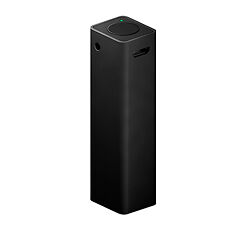
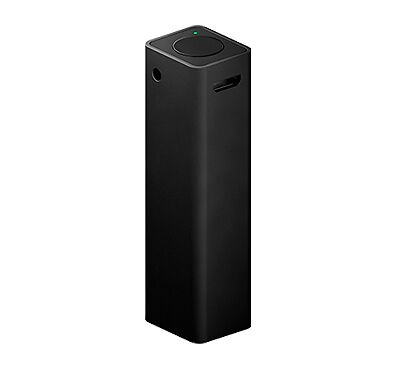
  • Unit Dimensions: 60mm high, 15mm wide, 18mm deep.
  • Aperture Dimensions: 7.8mm by 2.3mm
  • Weight: 16 g
  • Colour: Black
What's In The Box
  • The Pico
  • Calibration Cap
  • Lanyard
  • Charging Cable
You'll Need

Smartphone or tablet with:

  • Bluetooth Smart 4.0 or higher
  • iOS 9.0 or higher
  • Android 4.3 or higher
Languages
  • English
  • Chinese
Calibration Cap
  • Aperture protection
  • Calibration surface
  • Impact protection
Battery

Pico's built-in battery lasts over a month on a single charge, so you're always good to go.

Included Collections
  • Behr
  • British Standards
  • CIL
  • COPIC
  • Crown Trade
  • Donald Kaufman
  • Dunn Edwards
  • ECOS Organic
  • Farrow & Ball
  • Glidden
  • Holbein
  • Interpon RAL
  • Jotun
  • Kelly Moore
  • Molotow
  • Montana
  • PPG
  • Rainbow Paint
  • RAL Classic
  • RAL Design
  • Sherwin-Williams
  • Silk Colors P&C
  • Valspar
API/SDK
  • Full access SDKs for iOS and Android development available upon request
  • C# code snippets for Windows also available upon request
  • For access to, contact [email protected]

Conclusion

In conclusion the Pico is an impressive evolution of an already great idea – even more compact, even more affordable, and surprisingly capable. While it doesn't have every feature of the Cube, it delivers excellent accuracy, slick design, and true portability, making it a perfect everyday tool for anyone who works with colour.

Whether you're matching paint, capturing real-world inspiration, or building colour into your digital workflow, the Pico makes the process fast, easy, and reliable. It won’t replace lab-grade instruments, but it was never meant to – and within its scope, it performs brilliantly!

If you’re a designer, maker, or just someone passionate about colour, the Pico is a smart, useful tool you’ll be glad to have on hand.