Featured Artist: Warren Bonett
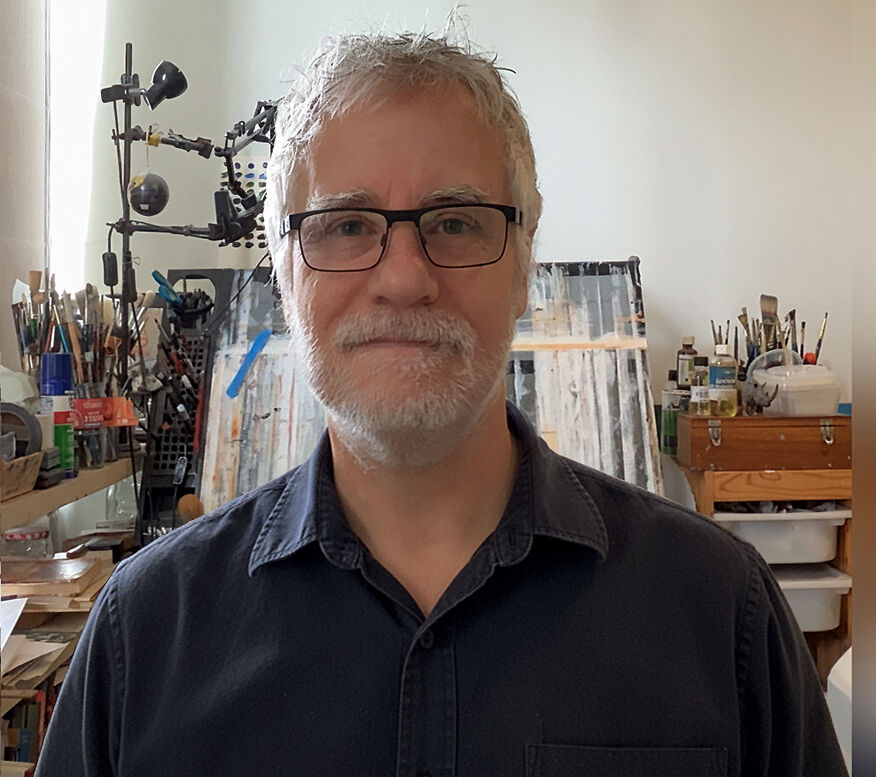
Warren Bonett is an Australian illustrator, author and painter whose work is shaped by a lifelong connection to books - from an early obsession with comics to years spent immersed in bookshops and publishing, this enduring relationship with story is threaded throughout his practice, where narrative and world-building sit at the centre of his richly imagined, often whimsical worlds.
After an early stint as a bookshop assistant at age eleven fuelled his love for the printed page, Warren's professional life naturally leaned into a career surrounding books and images. In London, he worked as a bookseller and magazine cartoonist while exhibiting his artwork and printmaking, then gradually transitioned into graphic design and illustration, working as a freelancer to develop brands and create book covers for studios like Wolff Olins and Interbrand.
Upon his return to Australia, Warren launched 12 year passion project Embiggen Books, a much-loved Melbourne CBD bookshop that specialised in non-fiction subjects across science, philosophy, politics and history. Since its closure in 2019, Warren’s creative practice has continued to flourish. His work was selected as a finalist for the dPICTUS Unpublished Picturebook award, and he has recently completed a 32-page picture book with Amicus Ink, set for release later this year.
Read on as we chat to Warren about the inherent magic of books, why he's drawn to traditional media over digital, and how storytelling continues to shape his work.
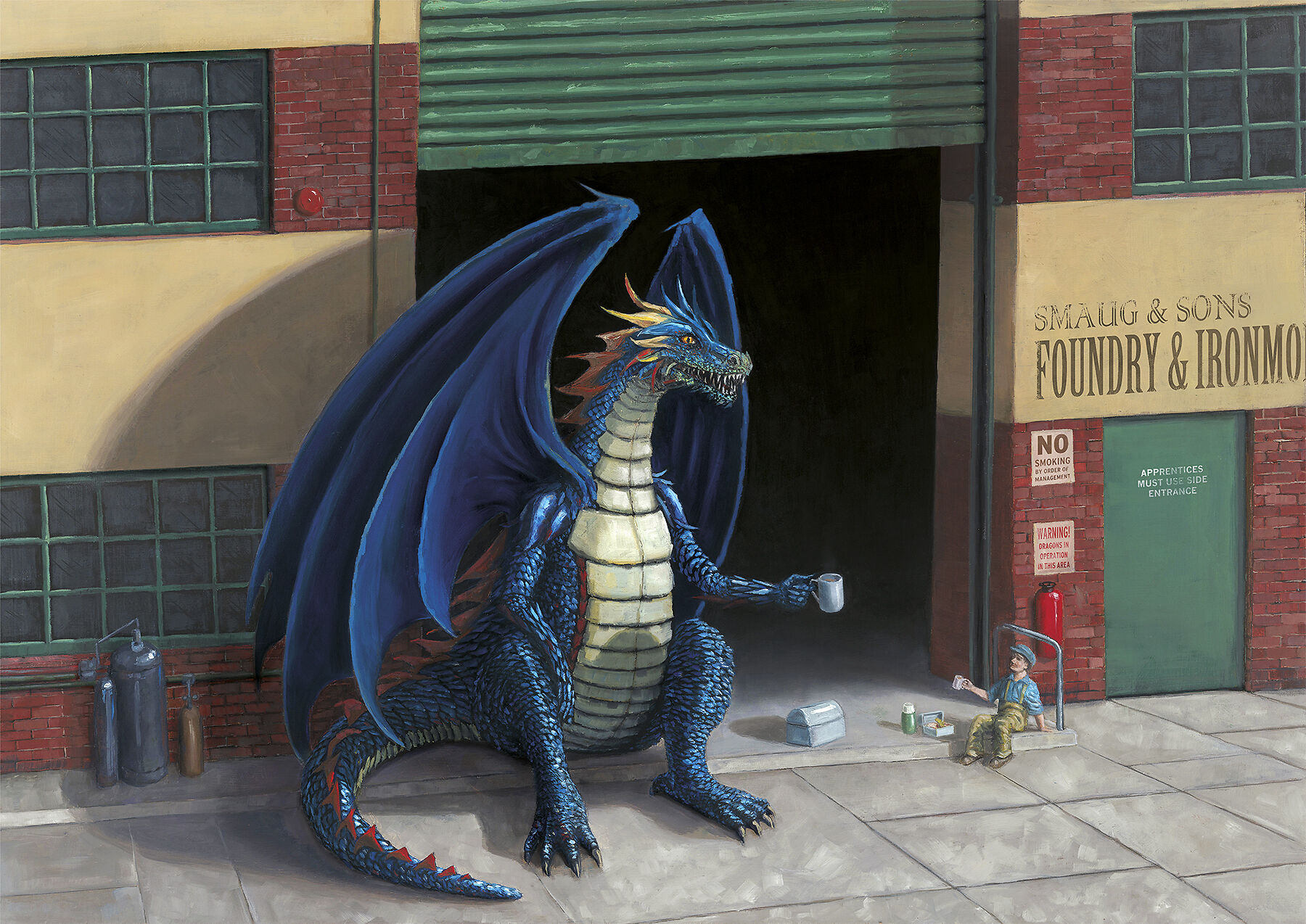
Your creative path seems closely intertwined with books and storytelling, from working in a bookshop at a young age, to travelling with a sketchbook and eventually becoming an illustrator. Could you tell us a little about how that early environment shaped your journey and what first drew you toward illustration as a lifelong practice?
My path to books was paved with ten thousand comics. Breakfast, lunch and dinner and under the bedsheets with a torch. While other kids were out doing the usual rural Aussie kid things, I was on a repeat cycle of reading, drawing, and writing.
Then, in early high school, a teacher the great Peter Legge (husband of children’s illustration legend Rachel Tonkin) handed me A Wizard of Earthsea by Ursula LeGuin, and that sealed it. Books stopped being entertainment and became absolutely everything. I cannot even begin to tell you how all consumingly exciting that moment was. I was 14. I spent the next 6 months writing a novel, and illustrating it, creating maps and scenes and of course dragons. I lived and breathed my imaginary world.
It seems baffling to me that I didn’t even conceive of this as being a job, I just thought it was my private thing. If I could go back I’d tell younger me “Do it mate! Just do it! It’s the best thing in the world!”
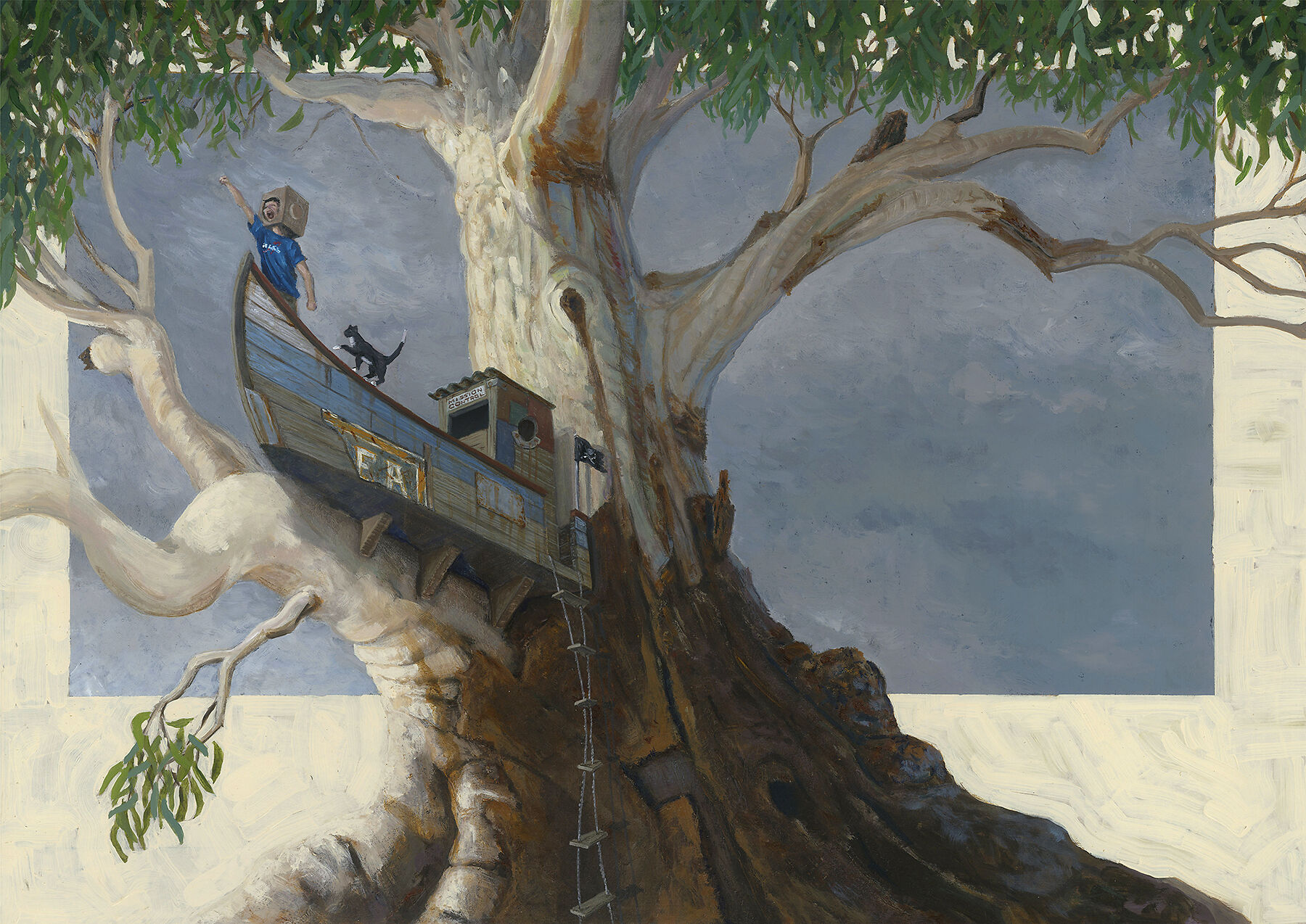
Having spent many years working in bookshops and publishing environments, you’ve been surrounded by stories in many forms - has that immersion in the world of books influenced the way you approach narrative and character in your own work?
Working in bookshops changes how you read. You’re suddenly talking about books all the time, having hundreds of conversations about what matters in a story. That experience shaped my expectations. Not so much about seeing myself in a character, but about believing in them. I need to feel that the character believes in what they’re living for, or feels something strongly enough that it matters.
The most important thing I’ve realised is that the work has to connect to a sense of love, excitement, and possibility. I have to find a way to care about what I’m making. It might not be entirely normal, but it often leaves me close to laughter, or something like grief. Like a kid lost in fantasy, then returned to an ordinary day. There’s always a kind of ache at the edge of it.
The publishing world itself has had less influence on me than it probably should. There’s a constant conversation about “the market,” but the work I’ve always loved never seemed to come from that place. It feels closer to a kind of compulsion. I’m still stuck with that kid’s need to pour it all out and see what happens.
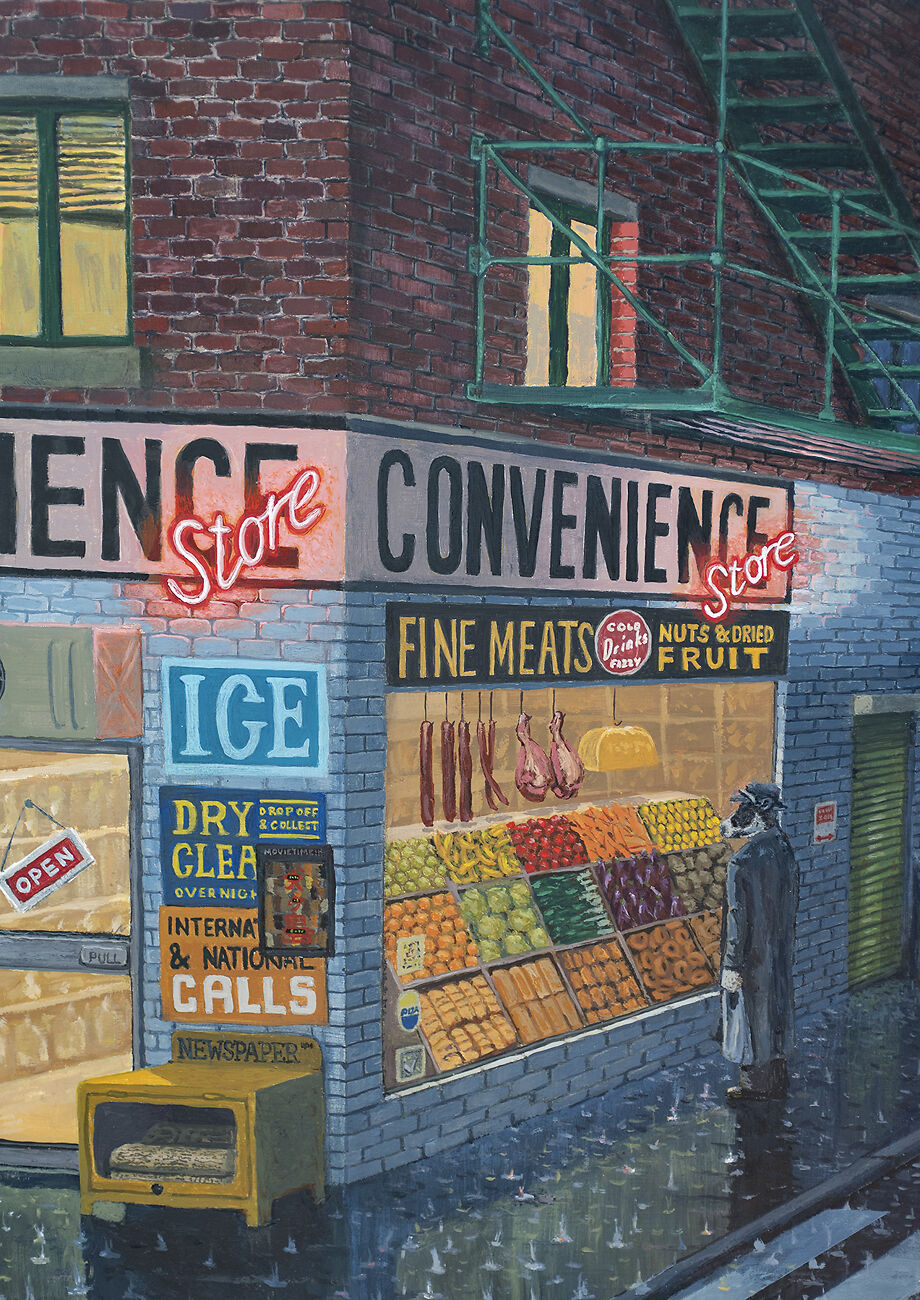
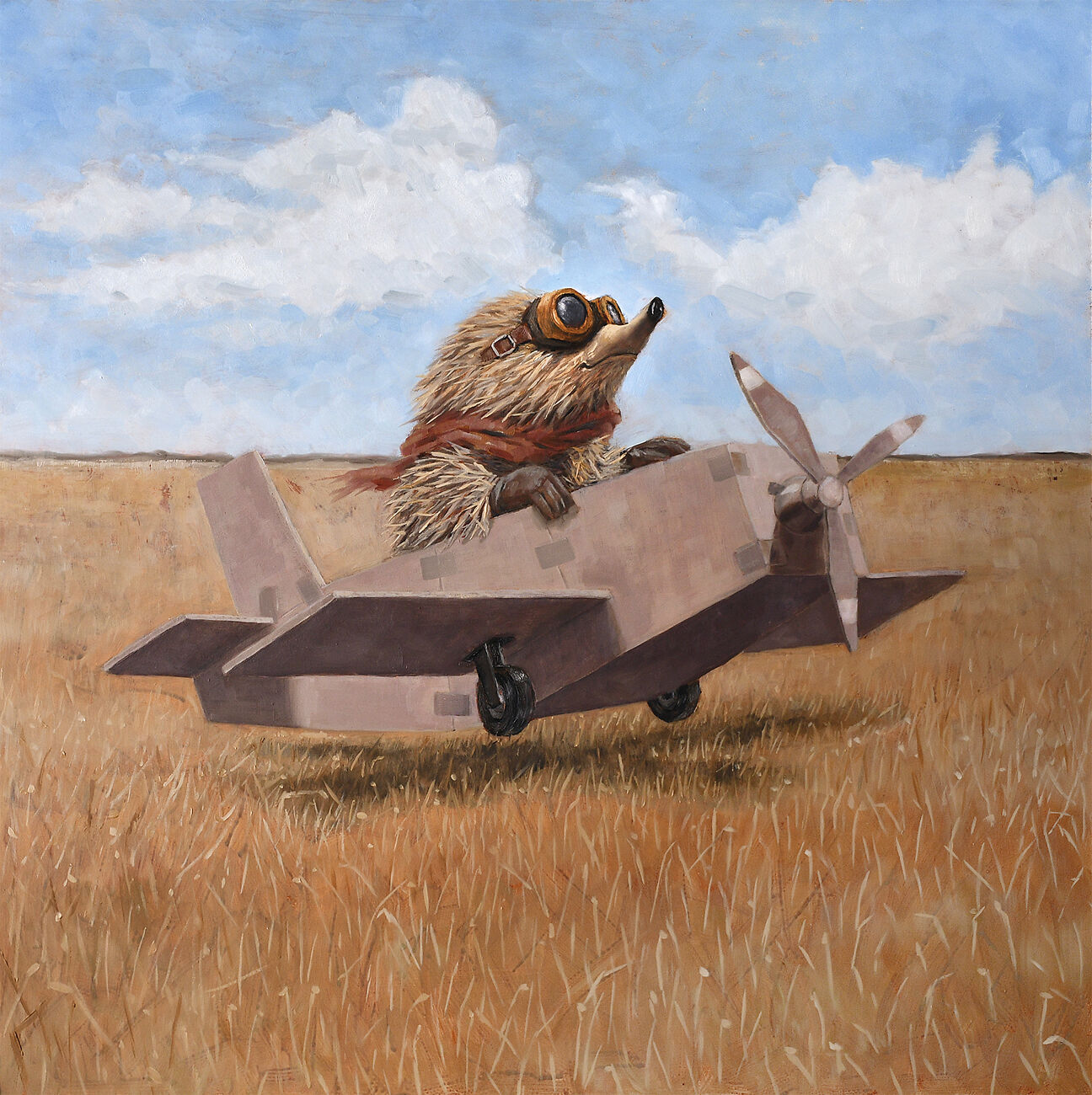
Your work often embraces traditional media such as oil painting and drawing. What draws you to these materials, and how do they shape the mood or atmosphere of the worlds you create?
I started out doing cartoons for various London street rags in the 90s, then I moved into the digital for technology and travel magazines, but eventually came back to physical media.
I lost a lot of digital work to a series unfortunate events, about 15 years worth. But my physical work survived. Some of which I hadn’t seen in years, etchings and paintings from my first ever exhibitions. Their survival basically reset my internal creative software.
There’s also something about standing in front of a physical piece, even your own, that feels different. It exists in a way a file just doesn’t. And anyone who has pulled a print on beautiful heavyweight etching paper or sanded a gessoed board or canvas has the tactile response to the material itself that seems to tell you how to do the work. And then there’s the paint or ink. The lusciousness of the colours on the palette, or the deepness of the blacks. Totally compelling.
When you begin a new book project, how do you start building the visual language that will carry the story?
It depends on whether it’s a commissioned project or my own work.
With a manuscript, I’ll read it multiple times, make notes, do rough sketches, and then start asking questions. What kind of world it is, how specific it needs to be, what details will carry weight. Then comes the research. A lot of research. It’s strangely exhilarating working on other people’s books, and I feel a great responsibility to get things right, so I’m always checking. That can continue right up to the end of the job.
With my own projects, it’s less direct.
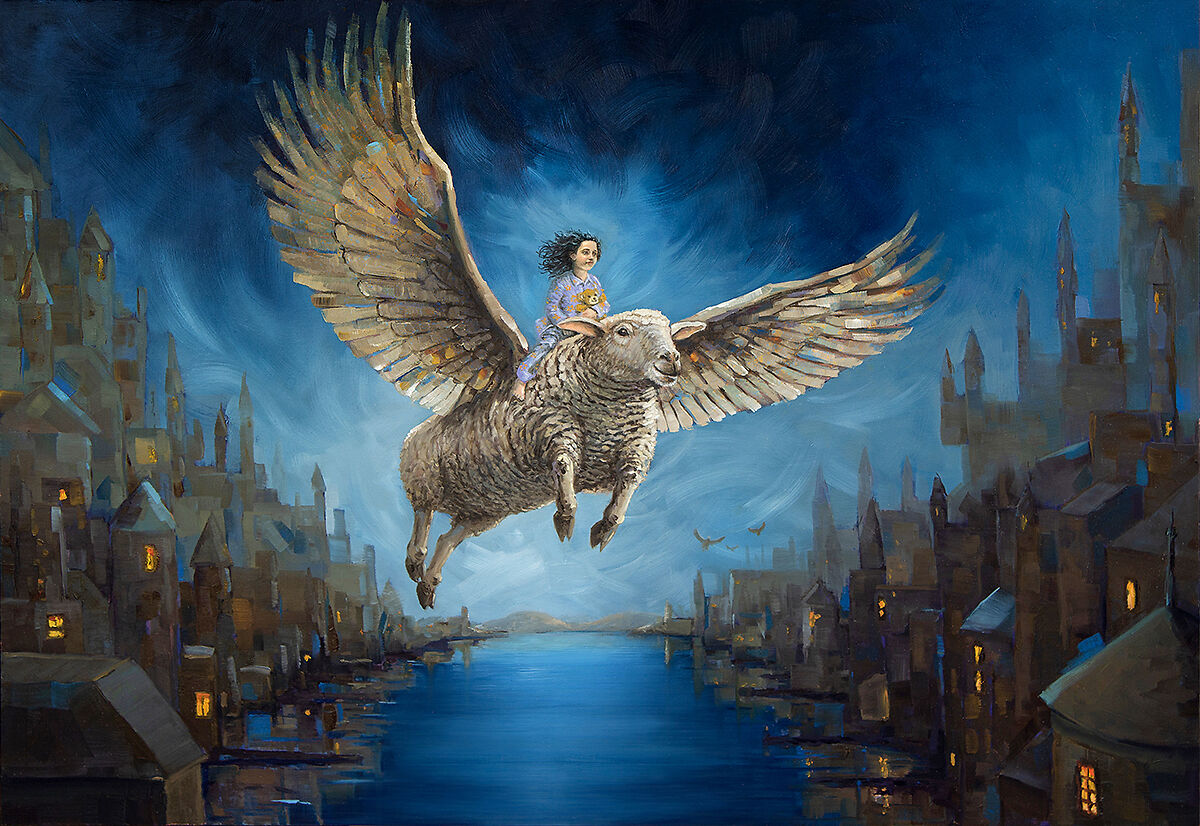
Sometimes it starts with an image that won’t leave me alone. I’ll paint it without really knowing what it belongs to, and only afterwards realise there’s a character or a story sitting inside it. That is the best moment.
Other times it comes out of what I think of as “autowriting” days. I’ll spend hours just writing. Fragments, ideas, half formed things from notebooks. Those are probably my favourite days. Ideas with nothing to prove, no harsh light of the needs of public consumption, no critics just a thing of potential. It occupies the same place in my brain as an illustration that inexplicably comes with a fully fledged story attached.
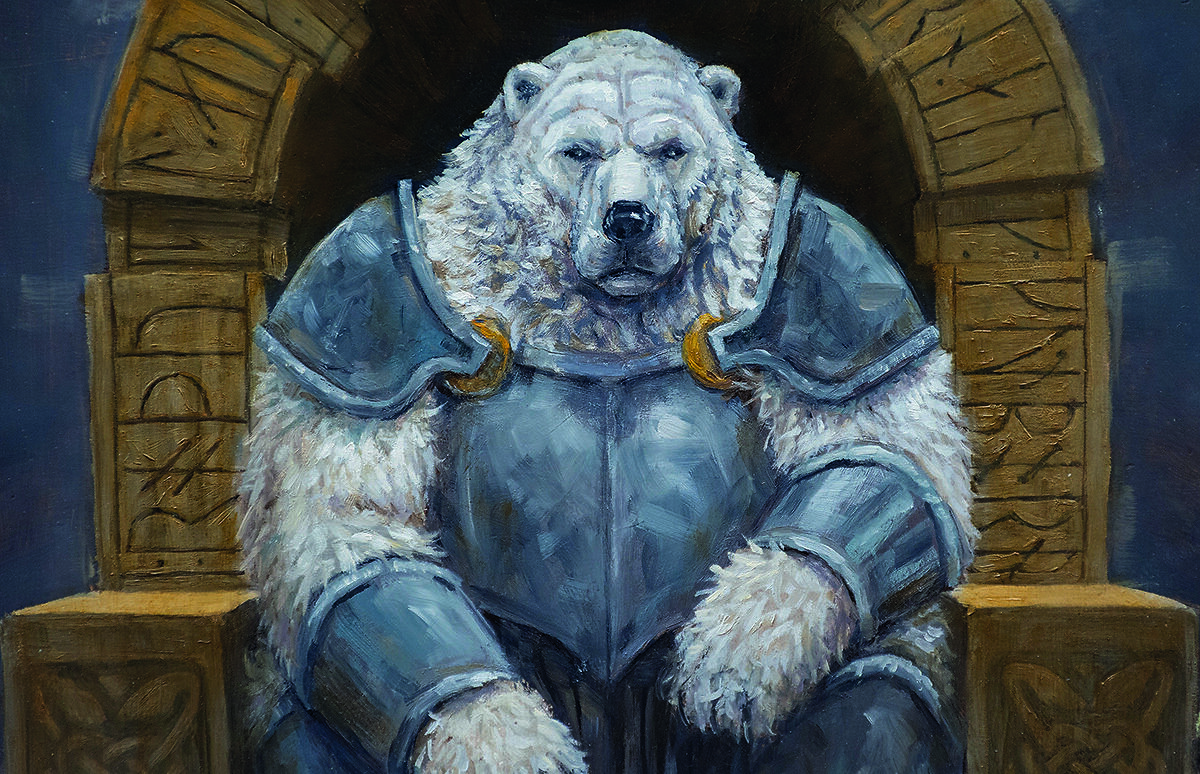
Many of your works depict animals, landscapes, and richly detailed environments. What role do research and observation play in your process, and how do you balance realism with imagination?
Memory and observation are my starting point. Something I see reminds me of something I felt or knew. If there’s something there I’ll begin the descent into the the research hole, and it is always a deep hole — could it be anything else?
Realism for me is matrix in which the imagination sits. I feel that if I’m good enough I can make this seem real. A real character in a real place doing real things. The character could be someone that anyone can see themselves in, hence an animal or robot or creature or someone specific, in a place that may or may not be familiar but which seems tangible, possible.
Could you walk us through your typical workflow from first idea through to the completed artwork?
It usually starts loosely. Very rough sketches, trying things out. For a picture book I’ll develop the whole book this way to start with.
Then I move to a more resolved drawing and test colour, often digitally at that stage just because it’s quicker.
After that I transfer each drawing to the final surface and build it up in layers. An underpainting to set the values, then colour, then adjustments.
The structure stays fairly consistent, but the decisions inside it shift depending on the piece.
Your commission process often begins with sketches before moving toward a finished painting. Could you walk us through your typical workflow from first idea or brief through to the completed artwork?
You become very aware of space. Where text will sit, how the page is read, what needs to be clear and what can sit more quietly.
It also makes you think about how the work will reproduce. Not just technically, but how it feels at a different size or in a different format. Holding a physical illustration in your hands is a better analogue to the end product than a screen.
You’re always thinking about more than one version of the image at once.
How has your background and experience in print design and working with publishers and designers shaped how you compose images, particularly when they are destined for the printed page?
A lot of it comes down to deadlines. More specifically, how much time there is at each stage. When are the roughs due, the detailed drawings, the finals.
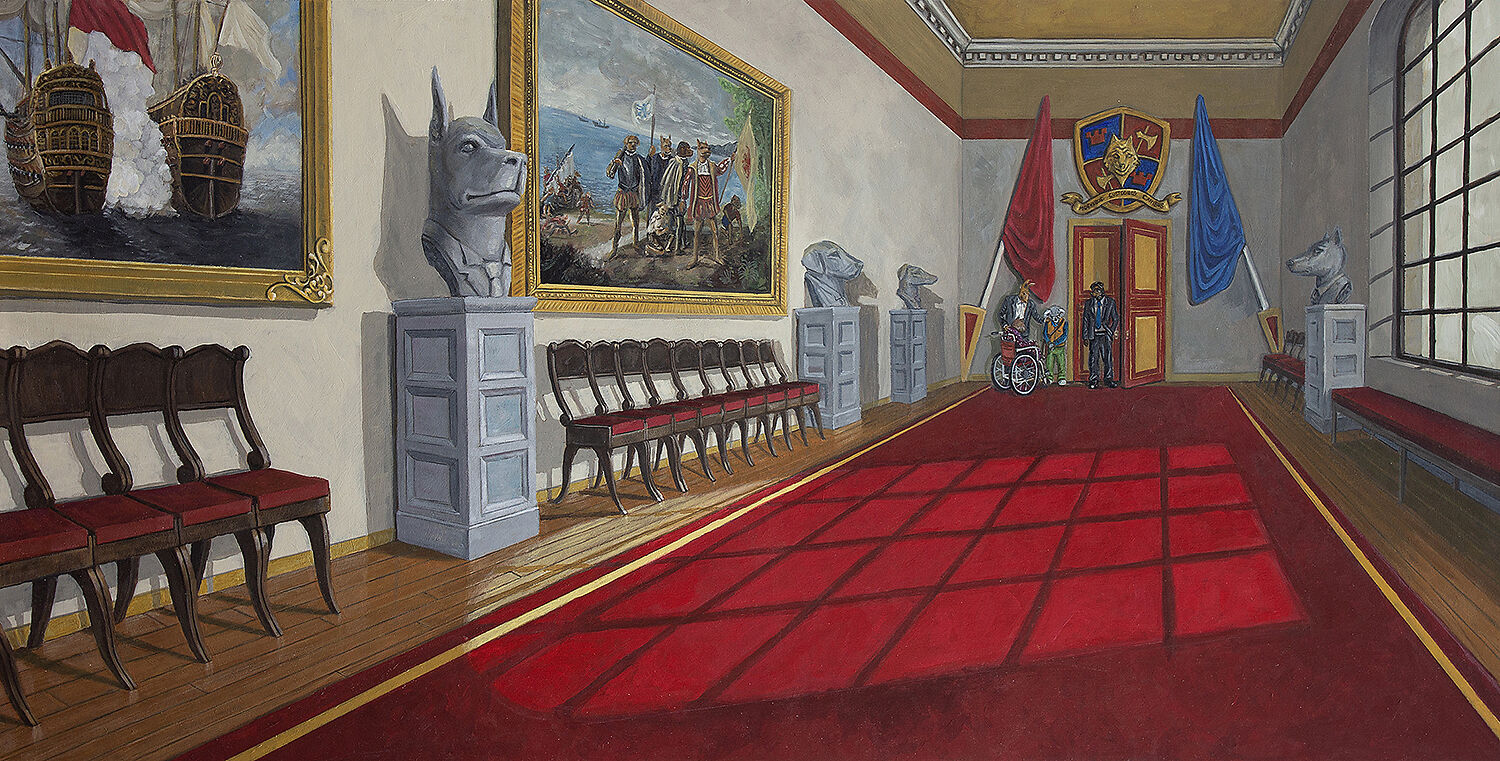
If the turnaround is tight, I simplify and make more deliberate use of space. If there’s more time, I’ll build that space into the image itself. It might be an interior, a stretch of sky, or some other part of the environment that can carry the text more naturally.
I used to physically place a piece of paper on the drawing to mark where the text would sit. Now that thinking happens much earlier. It’s already built in from the rough stage.
How has offering prints expanded the way audiences engage with your work, and what possibilities has it opened up within your practice?
I resisted prints for a long time because I wasn’t convinced there was real demand for my stuff in this way. Eventually I ordered some for my website, and both the quality and the response caught me off guard. I sold a few within hours of posting about them. And seeing how well they stand up as objects in their own right has made me think more seriously about what else I could do in this space. I’m now also likely to just say yes when asked about a print of any of my pieces.
Your practice moves between commissioned illustration, book projects, and standalone artworks for exhibition. How do these different modes of working inform one another creatively?
They overlap more than they don’t. Book work builds narrative thinking. Commission work builds discipline. Personal work gives you space to follow something without needing to justify it. They’re all connected by a slightly uncomfortable compulsion to make the work in the first place.
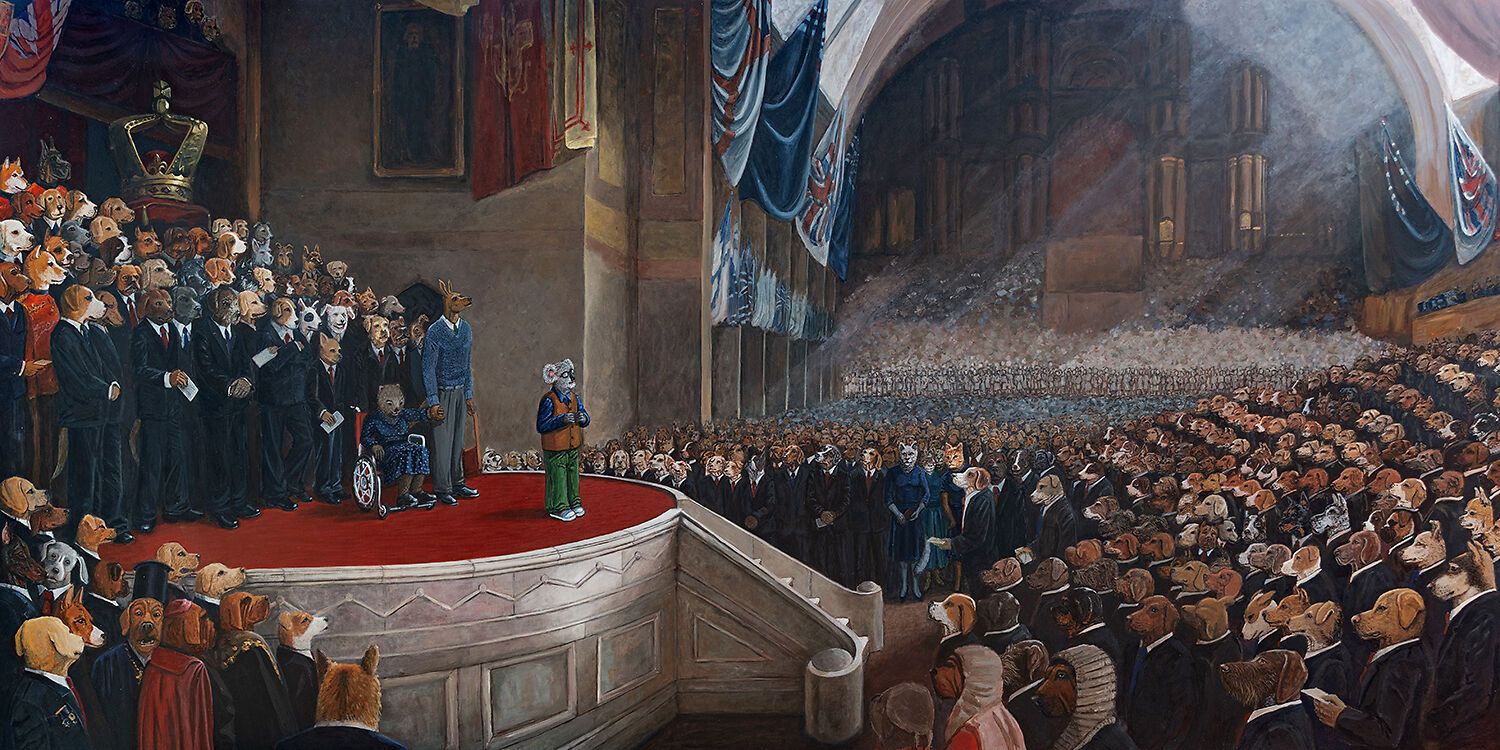
Then there’s repetition. A few years ago I worked on a picture book where I painted over 300 dogs and cats. It was shortlisted for the Bologna dPICTUS Unpublished Showcase. When you spend that long researching, looking, composing, drawing and painting the same subject, the knowledge starts to settle into your hands. They begin to anticipate what you want. So when I took on my first pet portrait commission after that, I already knew what to do.
Looking ahead, are there any upcoming books, exhibitions, or projects you’re particularly excited about in the coming year?
I’ve just finished work on the picture book The Day of Stolen Bicycles with Amicus Ink in the US, which is coming out in August this year, so I’m champing at the bit to see that out in the world, though I still don’t know if it’ll have an Australian distributor.
Alongside that I’m focusing more on exhibition work particularly with the Victorian Artist Society (their upcoming 9 by 5 show is my next), and of course continuing to look for and develop other writers projects in the children’s book space.
To keep to date with artist news, follow Warren on Instagram at @embiggenbooks, or shop his collection of prints at www.wdbonett.com. Contact him here for all enquiries about commission work.