Featured Artist: Susannah Low

Please welcome Susannah Low of Wishpom, a Melbourne-based artist, book designer and collector of vintage ephemera with a passion for art and social history. Something of a bower bird in nature, Susannah combines historical treasures with her unique design aesthetic to explore themes of nostalgia, belonging, identity, and place, often through the lens of the feminine perspective.
Growing up in the Blue Mountains west of Sydney, Susannah always knew she wanted to do something with a creative heart and an element of storytelling. Upon graduating with a Bachelor of Design in Visual Communication majoring in Photomedia, Susannah soon fell into the career of her dreams, combining her lifelong love of books, photography and stories by finding her niche as a successful book designer.
We were transported by Susannah's fantastic digital collages when printing for her recent exhibition, New Leaves, a joint venture with friend and fellow artist Debra Billson. Fusing traditional crafts with contemporary techniques, the show aimed to breathe new life into lost and discarded objects by intertwining fresh stories into the remnants of the past.
And now, without further ado - on to the interview!
Hi Susannah! Thank you for chatting with us today. Can you share with us a brief overview of your creative journey to becoming an artist and designer?
Hello, lovely to chat with you! I always knew I wanted to do something creative and upon leaving school I studied a Bachelor of Design, majoring in Photomedia. I immersed myself in alternative photo processes and photo illustration, spending hours in the darkrooms and studios. I really thought I’d be making Polaroid transfers and tinkering with my 5x4 camera for the rest of my days, however after obtaining my degree I landed a job as an Artroom Assistant at Scholastic Books and this changed my career trajectory. I became a Book Designer which allowed me to combine my creativity with my lifelong love of books. When the studio closed I moved to Melbourne and worked in educational publishing. After a few industry design awards I took up a position in the design studio at Penguin Books which felt like realising a dream.


I think storytelling is integral to my practice and I like the idea of transporting people to other eras and sometimes enchanted worlds. I try and create a connection through the objects and symbolism I use that may trigger nostalgia and sentiment.
In 2019 after freelancing for the publishing industry for many years, I hit a wall and my work was no longer filling my creative bucket. I was fortuitously given the opportunity to do a course called ‘CREATE’ at The Northern College of Art and Technology (NCAT) in Preston. The course was intentionally designed for mature age students and mid-career creatives wanting to reignite that spark or shift their creative career focus. It sounds like a little bit of a midlife cliché, but it has been life changing and came at just the right time. Through that process I have met many wonderful creatives, friends and mentors and have been able to put the focus back on my artistic practice and my photography. I have come full circle and I feel very fortunate!
Can you share the story behind what first sparked your interest in collecting vintage ephemera? Was there a particular event or piece that drew you in?
I grew up in a family that encouraged collecting, I have many fond memories of visiting antique stores and second hand book shops with my folks. They also shared with me their passion for social and family history. So really I think it has always been there bubbling away under the surface for my entire life. Many of my first photographic studies included family treasures and old bits-and-bobs, things like typewriters, clock cogs, old game pieces. I have always been drawn to that antique and vintage aesthetic.
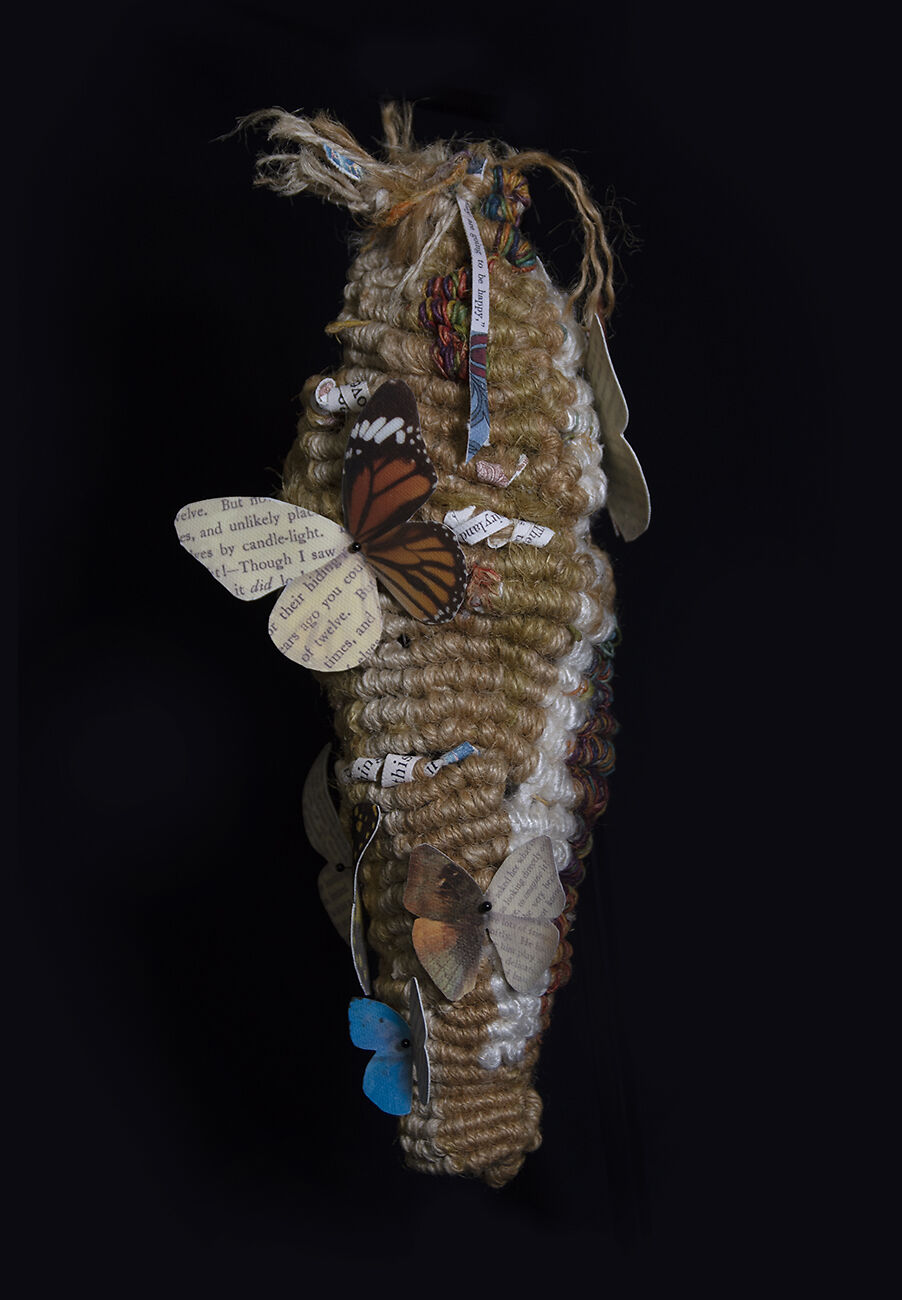
I do remember the first ‘non family’ ephemera I rescued. I was working at Penguin on a brief for a children’s book cover that was set in the Victorian era. I remember driving to a small antique shop on my lunch break to try and conjure up some inspiration and there I purchased two things, a letterpress style tray and a small bundle of ephemera tied together with string that included postcards, photos and letters. It was like an ephemera lucky dip opening that bundle. Something clicked. There was no stopping me after that purchase, twenty five years of collecting and it still excites me finding captivating antique photos and uncovering their stories.
What is it about vintage ephemera and social history that captivates you creatively? Are there certain pieces or categories of historical items that you feel a strong personal connection to?
Oh so many things, the list is endless and sometimes hard to articulate! Originally I was lured in because it was a great source of royalty free imagery that I could use to enhance my own graphic design practice. But what this actually means in reality is that there is no limit to what I could potentially collect! It could be a foxed page in an old book or a rusty old tin that sparks my imagination and sews the seeds of an idea. Often it is wanting to know the story of the person gazing back from an antique photo, or a beautiful or quirky handwritten note on the back of a postcard or in an autograph book. I enjoy bringing faded photographs back to life and rescuing long forgotten illustrations. I am particularly drawn to things that show people and their pastimes and I also collect ‘while you wait’ style photography using faux sets like paper moons and other props. I actually think a lot of the themes I am drawn to have strong correlations to things that fascinated me growing up.
I grew up in The Blue Mountains and I have a wonderful growing collection of souvenir postcards showing people sitting by the waterfalls, many dressed in their long Edwardian skirts. I think having grown up in the mountains that these are particularly captivating to me. The letters written on the back of these cards offer real insights into what life was like, and it feels like such a treat to read first hand accounts of their adventures.
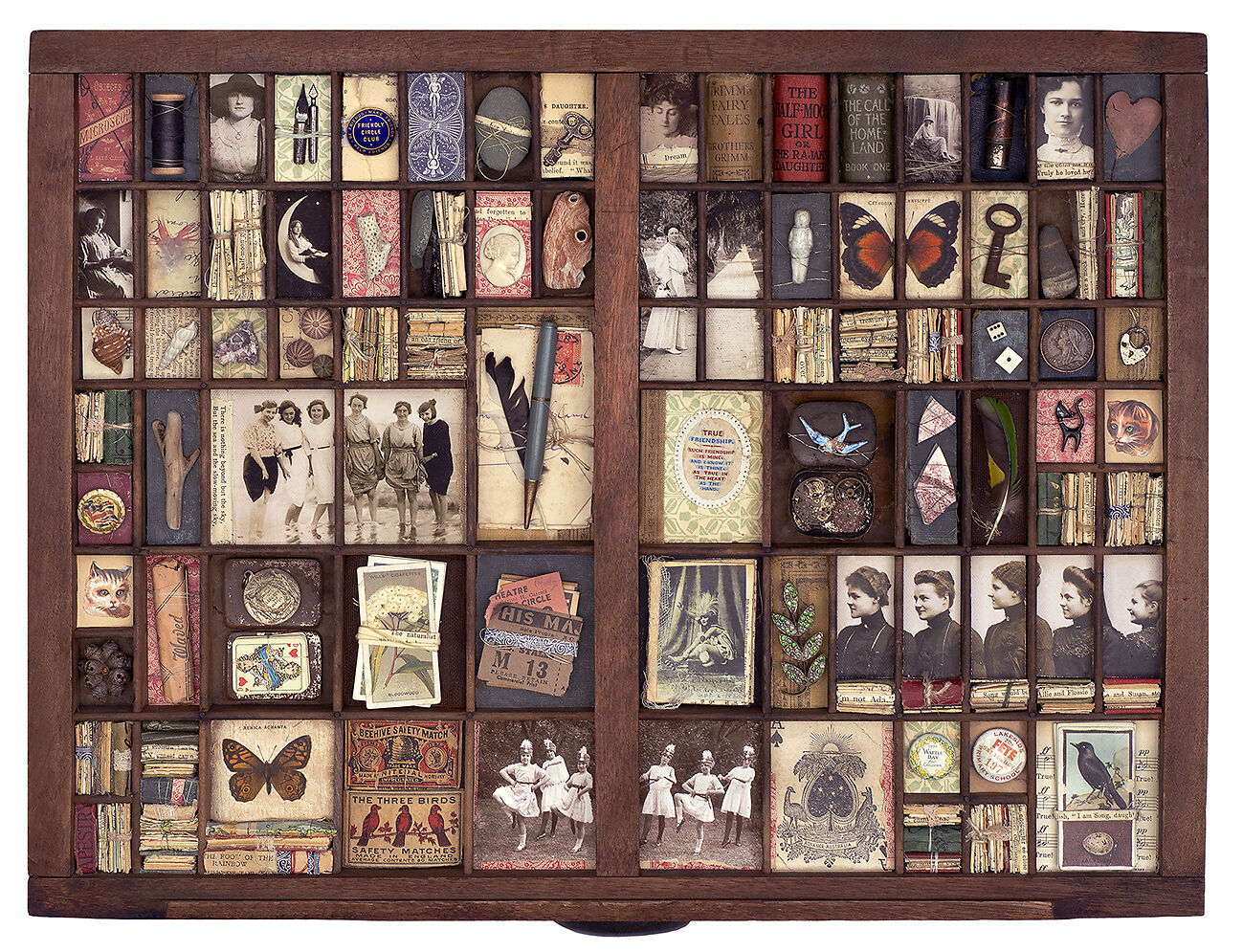
Your recent exhibition ‘New Leaves’ focused on breathing new life into discarded and forgotten objects, encouraging viewers to discover fresh stories woven into reimagined elements. What role does storytelling play in your art, and how do you use found historical materials to craft reimagined narratives while still honouring their origins?
I think storytelling is integral to my practice and I like the idea of transporting people to other eras and sometimes enchanted worlds. I try and create a connection through the objects and symbolism I use that may trigger nostalgia and sentiment.
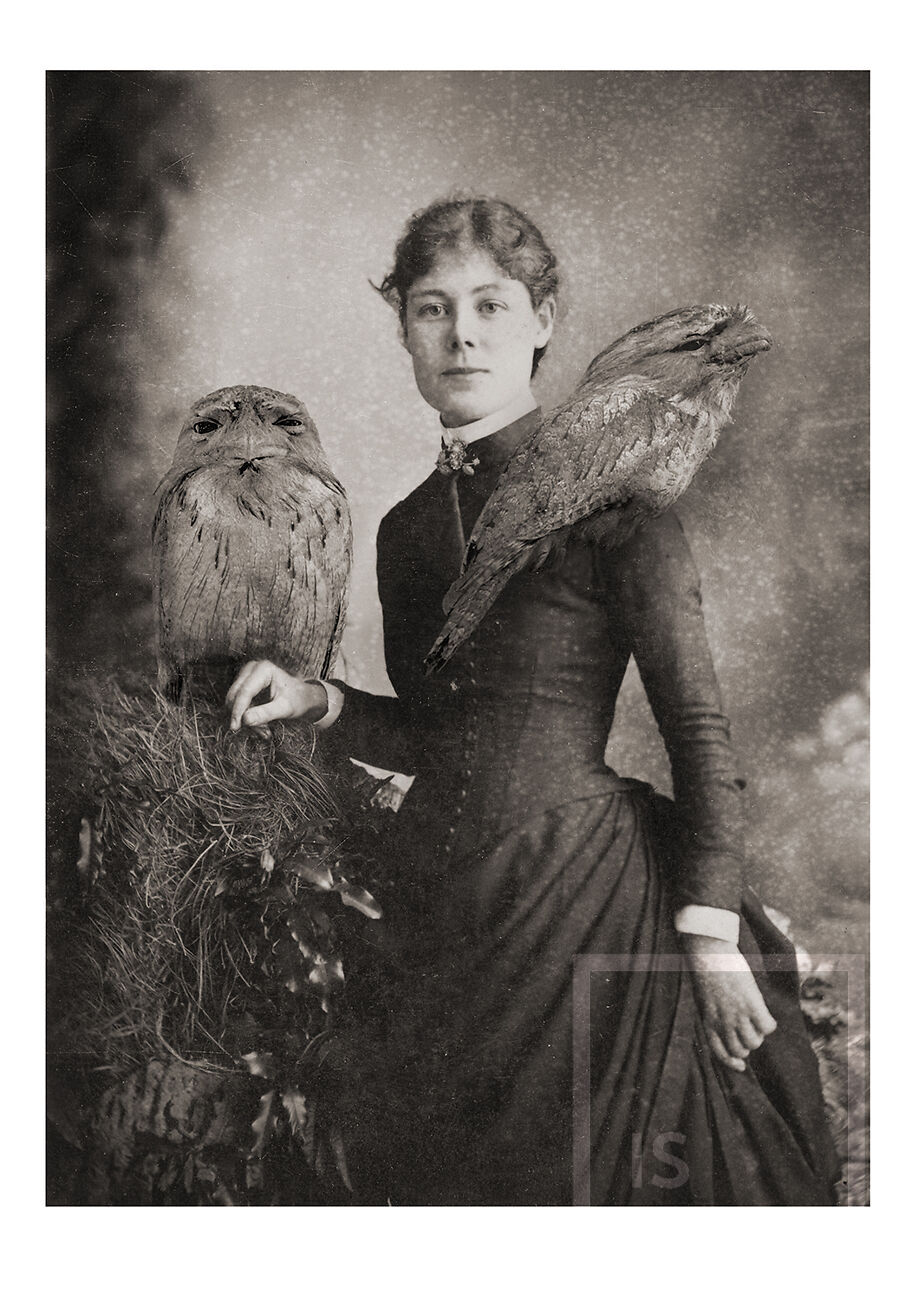
Often the people in the photographs are unable to be identified and I try to be respectful in my imagined narrative. In a way I like to think of my pieces as story prompts. Prompting people to ask the questions ‘Who are they? What is their story?’ and use their imaginations to fill in the gaps. I do like creating narratives that teeter on the edge of reality where something looks almost plausible but perhaps isn’t and is more fantastical. Like the ‘With the Birds’ series for example, we know that the scenario of living so closely with Tawny Frogmouth friends is not ‘real’ but it doesn’t seem too unimaginable to not feel somehow possible. Just stopping shy of complete anthropomorphism. I sometimes describe my work as little windows into other worlds.


Are there any specific cultural, historical or personal themes that you keep returning to in your art practice? What draws you to explore these topics?
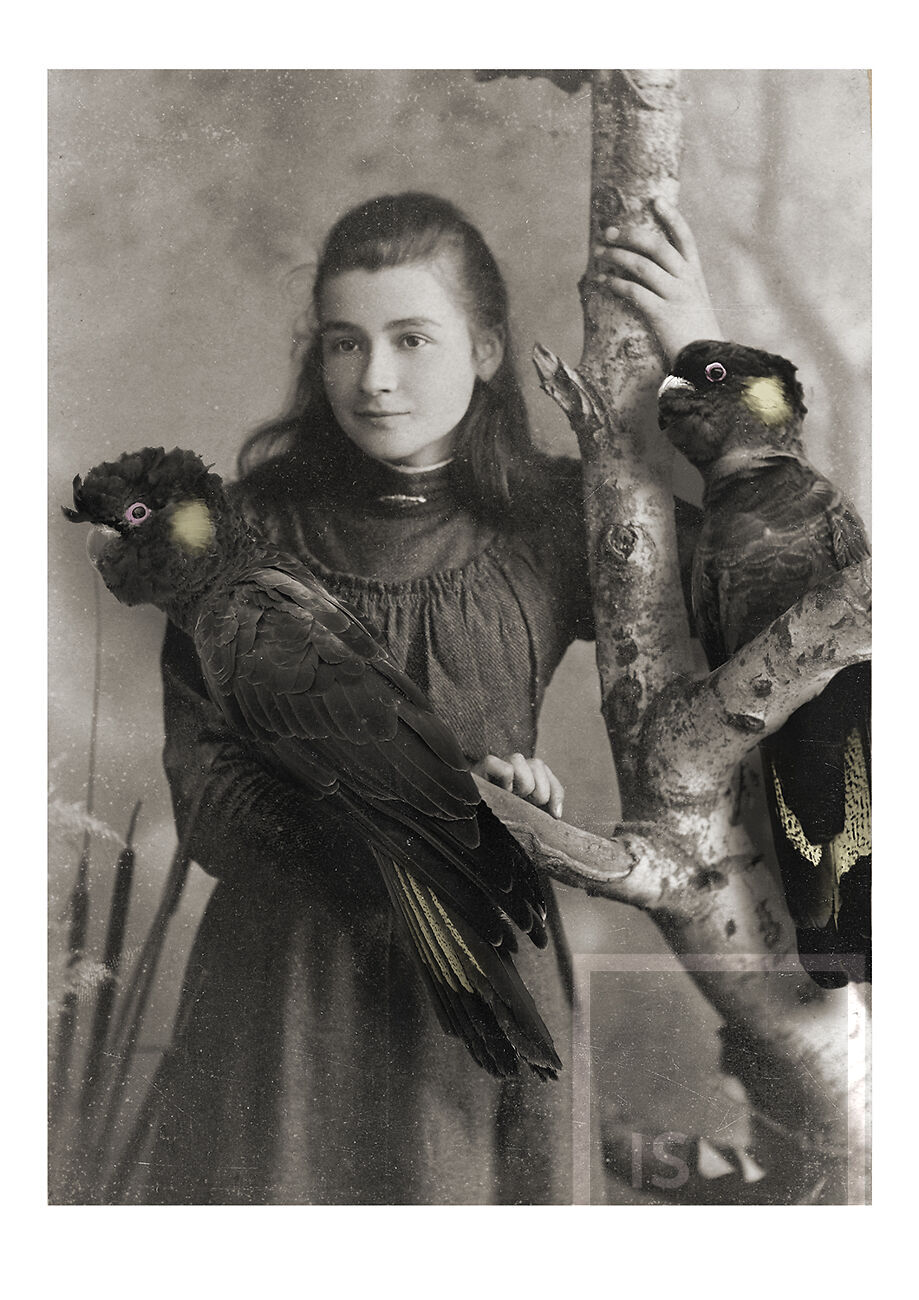
I am definitely drawn to our shared experience with nature and the environment, and I like the idea that it is relatively unchanged and can link us across generations. Growing up in The Blue Mountains it is hard not to feel that connection with the natural environment. You can sit in the bush and it possibly sounds the similar, feels similar and smells similar to what it did 100 years ago. Sometimes I like to contrast quintessentially English antique images with the Australian bush.
The feminine perspective also appeals. Maybe triggering my own childhood nostalgia, relatability and sense of connection and familiarity. As a result many of the things I have collected relate to themes like trips to the seaside, fairs and fetes, fancy dress balls, roller skating, reading in the garden, picnics, waterfalls and cups of tea! I am particularly drawn to the Victorian and Edwardian era through to the 1930s.
Initially it was definitely a family connection that gave objects their special quality. Not necessarily objects of monetary value but small trinkets that had been saved, used and treasured for whatever reason. Things like a small tin repurposed by my grandfather with a hand rendered label has the ability to evoke a really strong connection to the past and the hands that held it. Echoes and threads that reach through time and place to speak to us and link us together in some way.
When an object sparks my imagination I am usually thinking: Who did it belong to? Why did they keep it? What is it? Where is it from? How old is it? Likewise antique photographs can send me down rabbit holes on Trove to gain more understanding and to piece together stories using what little clues I have at my disposal. There is so much to be discovered!

Your art beautifully blends historical ephemera with upcycled found objects and elements from the natural world, such as leaves and feathers. How do you go about sourcing the materials for your pieces?
Initially it was definitely a family connection that gave objects their special quality. Not necessarily objects of monetary value but small trinkets that had been saved, used and treasured for whatever reason. Things like a small tin repurposed by my grandfather with a hand rendered label has the ability to evoke a really strong connection to the past and the hands that held it. Echoes and threads that reach through time and place to speak to us and link us together in some way.
When an object sparks my imagination I am usually thinking: Who did it belong to? Why did they keep it? What is it? Where is it from? How old is it? Likewise antique photographs can send me down rabbit holes on Trove to gain more understanding and to piece together stories using what little clues I have at my disposal. There is so much to be discovered!
Your art beautifully blends historical ephemera with upcycled found objects and elements from the natural world, such as leaves and feathers. How do you go about sourcing the materials for your pieces?
Thank you! I find things all over the place! I enjoy perusing antique shops, markets, online marketplaces and op shops. I live way too close to a certain fabulous big recycle thrift store here in Melbourne (laughs). It’s hard to resist the slogan on the wall “1000s of new items every day!” and it provides me with a steady stream of creative inspiration! For me it is the perfect combination of a relaxing mindful wander peppered by inspiration and the occasional dopamine hit if I find something particularly intriguing that transports me on a journey into the past.


The natural elements are a bit of a minefield ethically and legally, so I tend not to use these directly in my original artworks as I do not have a license to sell them. I photograph and scan these elements to use in digital work. Some elements like waratah seedpods were photographed in situ. The native bird feathers have mostly been found in my backyard, second hand stores or purchased through licensed sellers who ethically source from sanctuaries. Likewise most of the shells are from childhood fossicking, marine museums or op shops. Some of my fondest memories are our yearly family visits to ‘the shell lady’ in Currarong on the South Coast of NSW. I think collecting ‘treasures’ has a lot of nostalgic feel good triggers for me. My first Brownie badge was my collectors patch for my ‘rock and shell’ collection and I am partial to fossicking for sea pottery and sea glass on the shoreline. I dream of finding my own pudding doll/frozen charlotte in the sand and I am not ashamed to admit I am a bit addicted to watching ‘mudlarking’ videos online!
You are clearly passionate about uncovering the stories of the people in the ephemera you collect. What is your favourite piece of ephemera or historical item in your collection and the story behind it?
Social history is really important to me and I often feel it is overlooked or not given much value. Perhaps my most exciting find to date was discovered nestled inside a random book from an opshop. It looked like an old letter but upon inspection it was a four page hand written poem (or song?) by a young girl on board the Utopia from Liverpool bound for Melbourne in 1861. Each verse references a different crew member. It is very special and I am delighted I could rescue it.
My favourite object is possibly our tiny E.W. Cole Smallest Dictionary in the World housed in a metal locket. I do believe if I could travel back in time the Coles Book Arcade in Melbourne would be top of my list of places to visit!

Can you walk us through your creative process when starting a new piece? Is it an intuitive process led by the historical elements in your work, or do you usually start with a predefined idea?
Because I am out and about a lot I initially document a lot of my ideas in the notes app on my phone. It is quick and easy and always with me and available through all my devices. I also tend to take photos and do a lot of ‘gathering’ of things. I would say it is mostly intuitive although sometimes I have a very clear theme I want to portray or a particular piece I want to showcase and then I hunt through my collection for other elements that may be suitable. I like to shuffle things around on my work desk and sit with them for a while until I get the balance right.
I feel like I am starting to find a good balance of photographic, digital and hand pieced art that all sits somewhat comfortably alongside each other visually and thematically. I am also really interested in my exploration of how to represent collections visually and I am continually looking for creative ways to use the things I collect without damaging the originals. This is why using fine art printing on different paper surfaces appeals to me and I often include these prints in my hand pieced originals or work into the printed image ‘mixed media’ style.
What impact do you hope your art has on viewers, especially in terms of how they see history, memory, and identity?
I hope that I can encourage people to question why we keep things and what we keep. It can be particularly challenging in today’s world where minimalism has been a trend for so long. Not everything is useless clutter. I feel the idea of identity, memory and nostalgia through the objects we keep is really valid and can be a really special experience. Things do not have to have monetary value to be worth keeping.
I like to challenge concepts of beauty by including things in my work that are not always seen as traditionally beautiful. Things such as broken books that are often thrown away. There can be beauty in decay, peeling paint, cracked book spines and other signs of history and wear. It tells a story.
I’d be thrilled if my work piqued interest in social history, particularly Australian social history. There are so many stories waiting to be discovered and told. I learn something new every day that surprises me about our past.
What direction do you see your art practice taking in future? Are there any upcoming projects or creative experiments you’re excited to explore?
I am looking forward to throwing myself into the creative process and expanding my body of work and seeing where it takes me! The ‘New Leaves’ exhibition was the first time I had put my own artwork out into the world on such a scale and it has been a very worthwhile experience with really encouraging feedback. I am so used to working to a brief that it was quite a daunting prospect at first, however it has been really positive and I am excited to share more.
I have a long list of concepts that I now want to explore and push, so I will definitely be looking for more exhibition opportunities and meeting more like minds! I might even have a book concept or two in the works.
To see recent work and to keep updated about upcoming exhibitions, follow Susannah on Instagram at @wishpom. For all other enquiries, contact Susannah through her website.