Featured Artist: Natascha Stellmach
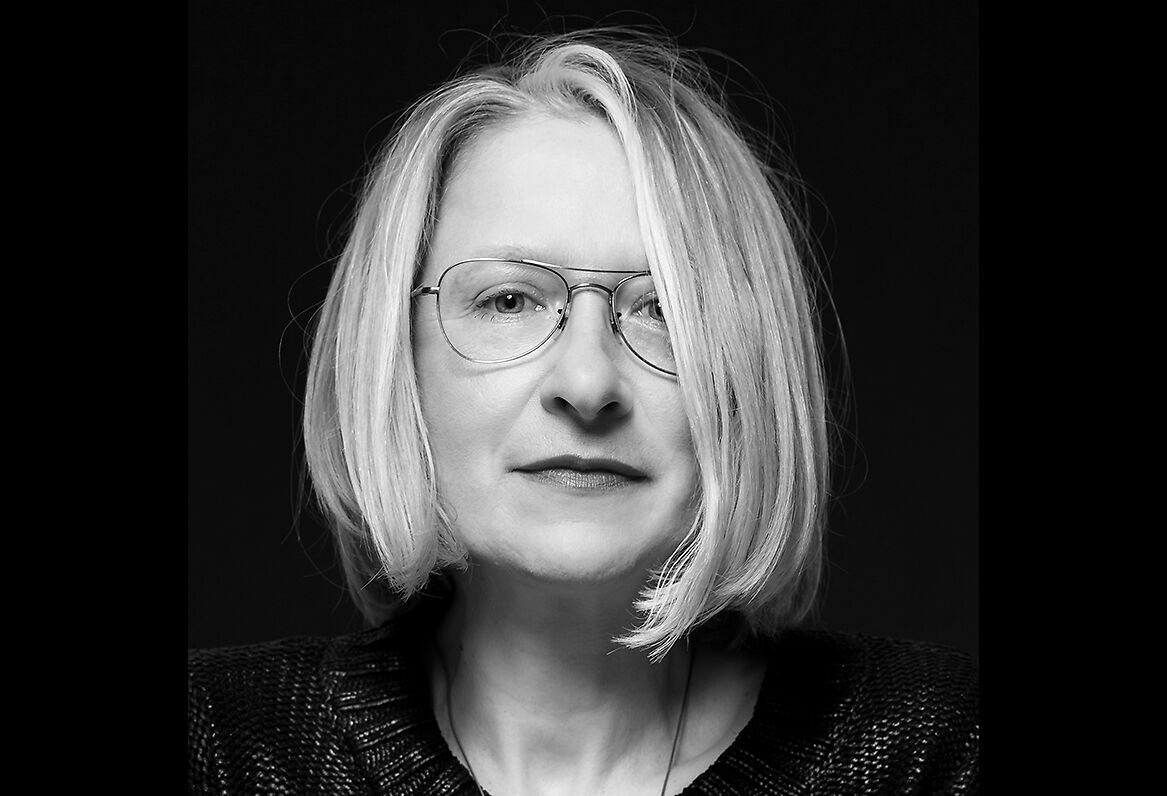
For more than three decades, contemporary artist Natascha Stellmach has worked across film, photography, installation and performance, exploring fear, vulnerability, taboo and the complexities of being human.
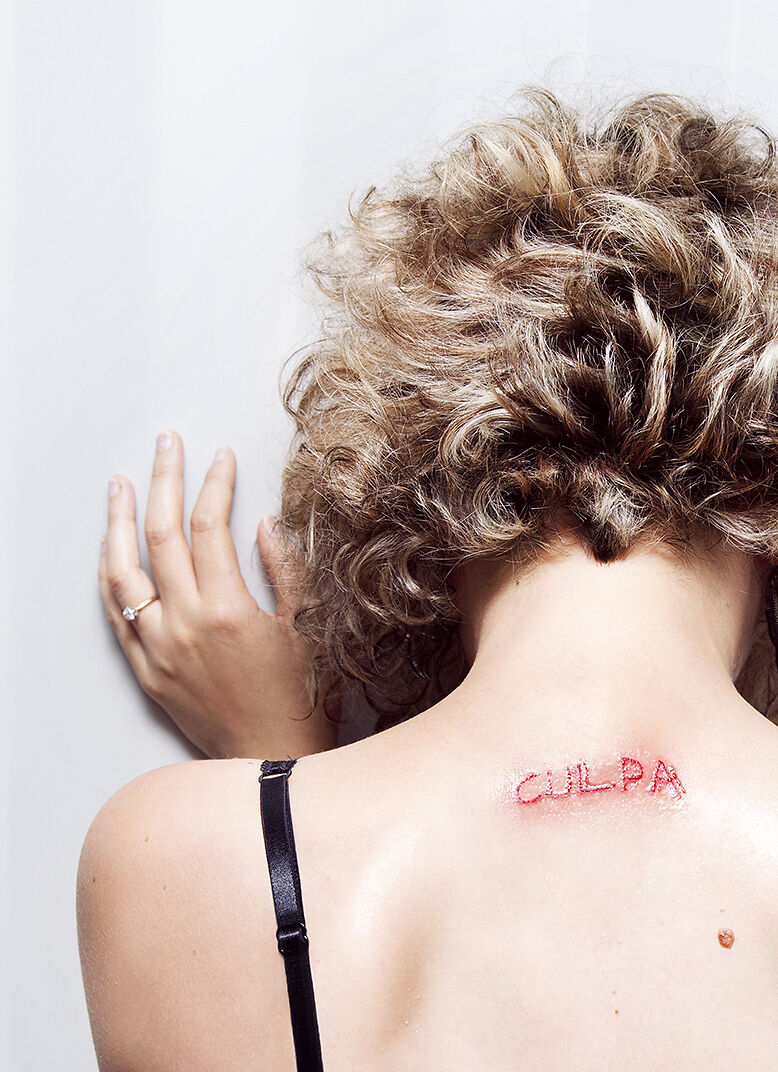
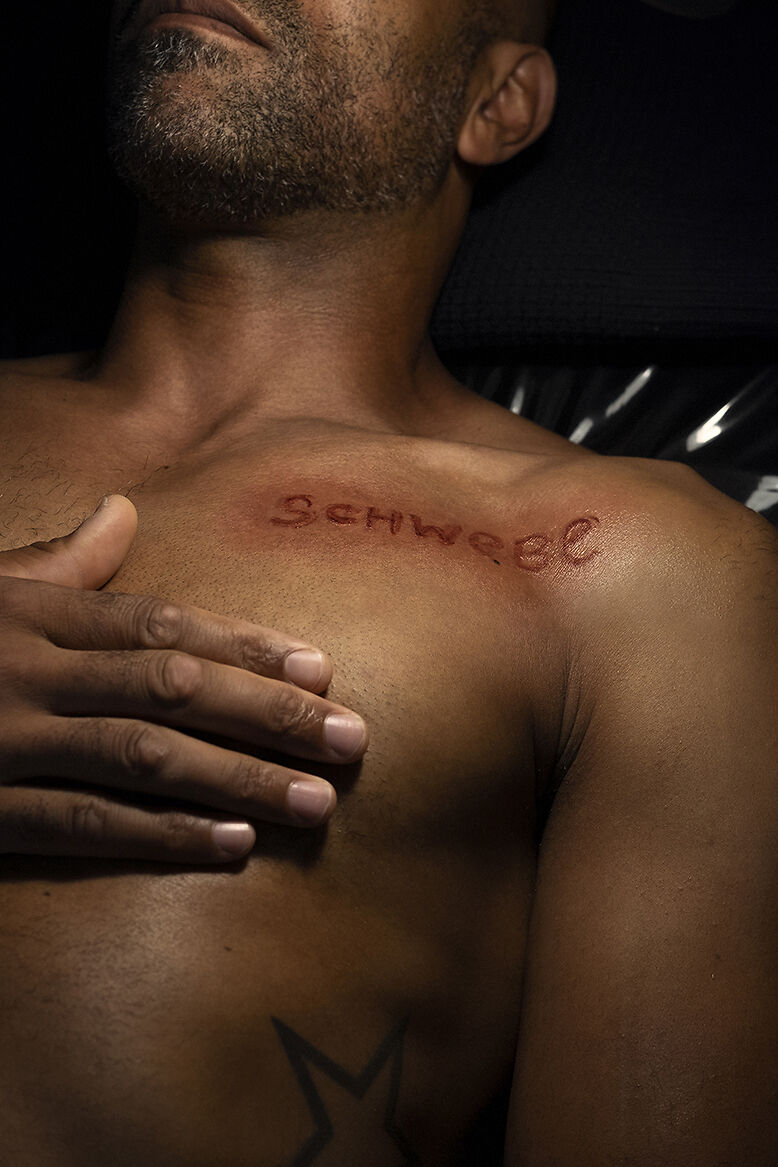
Her most significant project to date, The Letting Go, began in 2012 with a simple question: “What would you like to let go of?” What followed was a 14-year artistic enquiry involving more than 130 intimate Letting Go sessions, in which participants confronted something they carried, whether it be grief, fear, shame, regret, or other personal obstacle, and explored what it might mean to release it.
The project has now culminated in a major new artist book and exhibition at Linden New Art, The Letting Go (2012-2026), running from 20 August to 8 November 2026. The exhibition brings together mixed media, photography, and a 352-page book, transforming the accumulated archive of the project into an immersive experience that invites visitors to slow down, reflect and consider what they themselves might be carrying.
Image Science is proud to have supported The Letting Go through our sponsored printing partnership, producing fine art prints for the project and contributing to it's presentation at Linden New Art.
We spoke with Natascha about the origins of her interdisciplinary practice, the 14-year journey of The Letting Go, and what it means to let a project evolve and to (perhaps) let it go.
Your creative practice brings together an extraordinary range of disciplines, spanning photography, health sciences, and contemporary art. Looking back, where did your creative journey begin, and how did it evolve into the interdisciplinary practice you have today?
It all started in childhood. I first began painting characters on walls — with mum’s liquid eyeliner –– which horrified my parents and was promptly painted over, sadly never documented. Perhaps that explains my ongoing fascination with forbidden surfaces and, occasionally, smashing things on gallery walls.
But to return to those beginnings: my dad was an obsessive family documentarian, always filming us on Super 8 or taking photographs, and I grew up surrounded by images—not on walls, but as part of everyday life. I now realise they weren't simply records of our family; they were teaching me about visibility, attention and memory. My parents had emigrated from Germany with one suitcase, leaving behind family, language and home. Our shelves were full of albums containing faces and places I didn't know, yet somehow belonged to me. When I was six, I travelled to Germany for the first time, and that journey was pivotal. I began to understand that photographs could hold time and distance—bridging Australia and Germany—and that they could carry longing as much as joy.
Not long after, dad gave me his old Agfa camera. The camera had arrived, but photography itself took longer. Before I learned to see through a camera, I learned to feel through the body.
Dance was one of my earliest languages. It taught me about movement, rhythm, presence and the intelligence of the body—an awareness that continues to shape my practice today. I studied Occupational Therapy (and worked as one in Melbourne and London) and it deepened my understanding of care, pain, vulnerability and the extraordinary complexity of being human.
But my education was never confined to one discipline. I followed other creative impulses, trusting they belonged together: singing and playing percussion in an indie band, sharing music as a DJ on Triple R FM, and falling in love with film. After leaving Occupational Therapy, I committed fully to life as an artist (precarious yes—but also adventure-packed). I studied Applied Photography at RMIT, immersed myself in the darkroom, began exhibiting, and became completely absorbed by Super 8 filmmaking. I loved the physicality of it—cutting film, splicing it together, adding sound, hearing it through the projector and discovering that meaning could emerge between images as much as within them.
I also began making essayist and photo films, curating film festivals that toured to Taiwan and India, and working as a photographer and copywriter. None of these threads felt disconnected. I was simply following the questions. For a long time I hid behind the camera. It helped me navigate social situations because, truthfully, I was super shy. But it also became a way of offering people something: the possibility of seeing themselves—sometimes their beauty, sometimes their pain, often both at once.
The cameras grew. Still, moving-image, and eventually the camera itself expanded into text, installations, books, performances and rituals. Photography never left me; it became one of many languages through which I create encounters.
I've never been particularly loyal to mediums; I'm loyal to the questions. If I listen deeply enough, the form reveals itself. Which is why I learnt tattooing for The Letting Go—but more on that later.
My path into the art world was unconventional, and I'm grateful for that now. I didn't study under a celebrated professor or apprentice with an established artist. I learned by making work, making mistakes and staying curious. Much later, I completed a Master's in Interdisciplinary Art Practice at the University of Melbourne’s Victorian College of the Arts, by which time I was living between Melbourne and Berlin—a duality that has shaped both my life and work for 23 years.


My formal studies were invaluable. They didn't teach me how to create encounters, but they taught me how to think more rigorously. They sharpened my questions, strengthened my BS barometer, and reminded me that intuition and critical thinking are not opposites. The deepest education, though, has always happened through doing— and non-doing. Meditation has been one of my greatest teachers.
Looking back over five decades of making, I can see that I’ve been circling the same questions: the taboos that make us human, how we witness one another, and how we learn to live with impermanence—the strange, beautiful absurdity of trying to hold on to what is always changing.
What first inspired your interest in photography as a way of documenting human experience?
My father gave me the camera, but my mother taught me another way of seeing: through care. Photography became less a way of documenting human experience and more a way of witnessing it—of creating spaces where something hidden could become visible.
Your background in health sciences, mental health and trauma management gives your creative work a unique perspective. How has that shaped the way you think about making art?
I don’t think I’ve ever done anything conventionally! My years as an Occupational Therapist shaped how I understand people, vulnerability and the body. Occupational Therapy asks profound and holistic questions: How do we live? How do we adapt? How do we care? And how do we find meaning when our bodies, circumstances or identities change?
I’ve worked across mental health and chronic pain, including facilitating relaxation and meditation groups long before these approaches became mainstream. Those experiences deepened my understanding of the nervous system, emotional regulation and the invisible landscapes people carry. Pain is never simply physical; it is connected to memory, identity, relationships, work, society and the stories we tell ourselves and each other. That understanding has stayed with me throughout my artistic practice.
Although my work often involves intimate encounters with others, my primary interest is artistic enquiry rather than therapeutic intervention. I’m interested in creating conditions for attention and presence—for moments where people can encounter themselves and one another differently.
The work may have a punk edge, but underneath it’s carefully composed. Every stage exists for a reason.
Looking back to when the project first began in 2012, what questions were you hoping to explore? Did you ever imagine it would turn out to be such a significant project in your career?
When The Letting Go began in 2012, I wasn’t setting out to create a fourteen-year project. I was following a question: what happens when we pay deep attention to what we carry, rather than simply trying to ignore or move past it?
The project centres around the question, “What would you like to let go of?” But arriving at that question involved a great deal of rigour. It was never intended as a simple prompt; it emerged from years of enquiry, both personal and through performing Agent Provocateur in galleries and spaces such as Documenta. I became increasingly interested in creating the conditions (outside of traditional therapeutic settings) where a person could approach an obstacle they carry—perhaps a grief, shame, fear or regret—and see it differently.
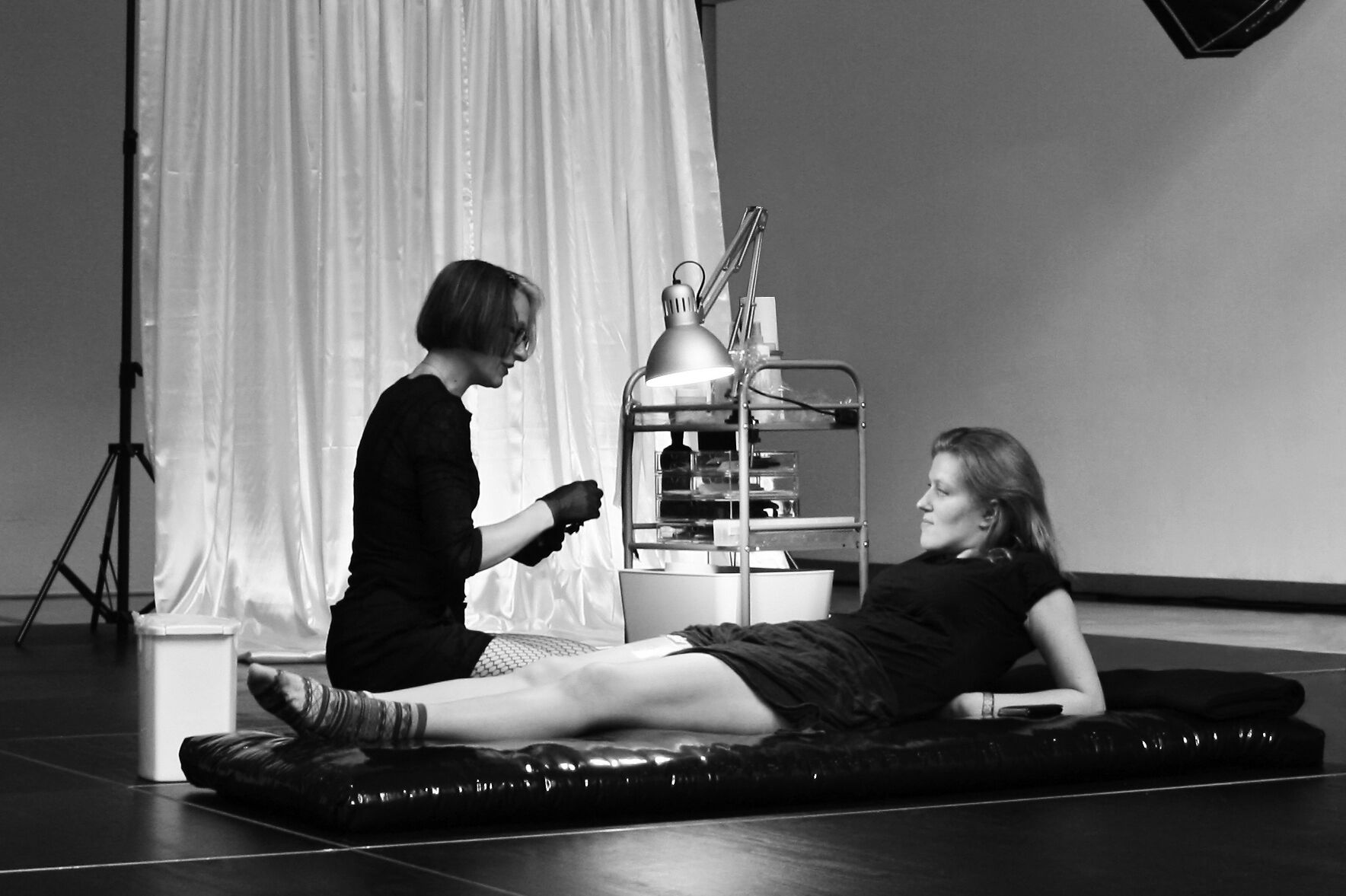
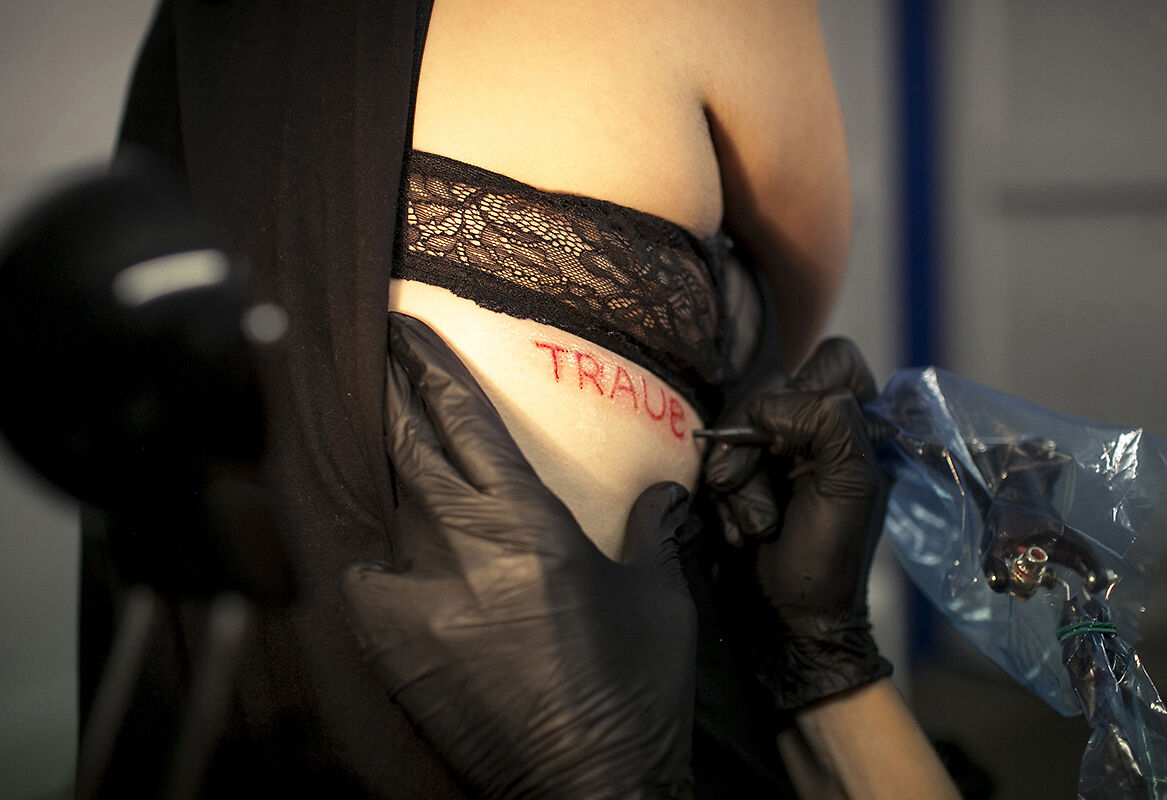
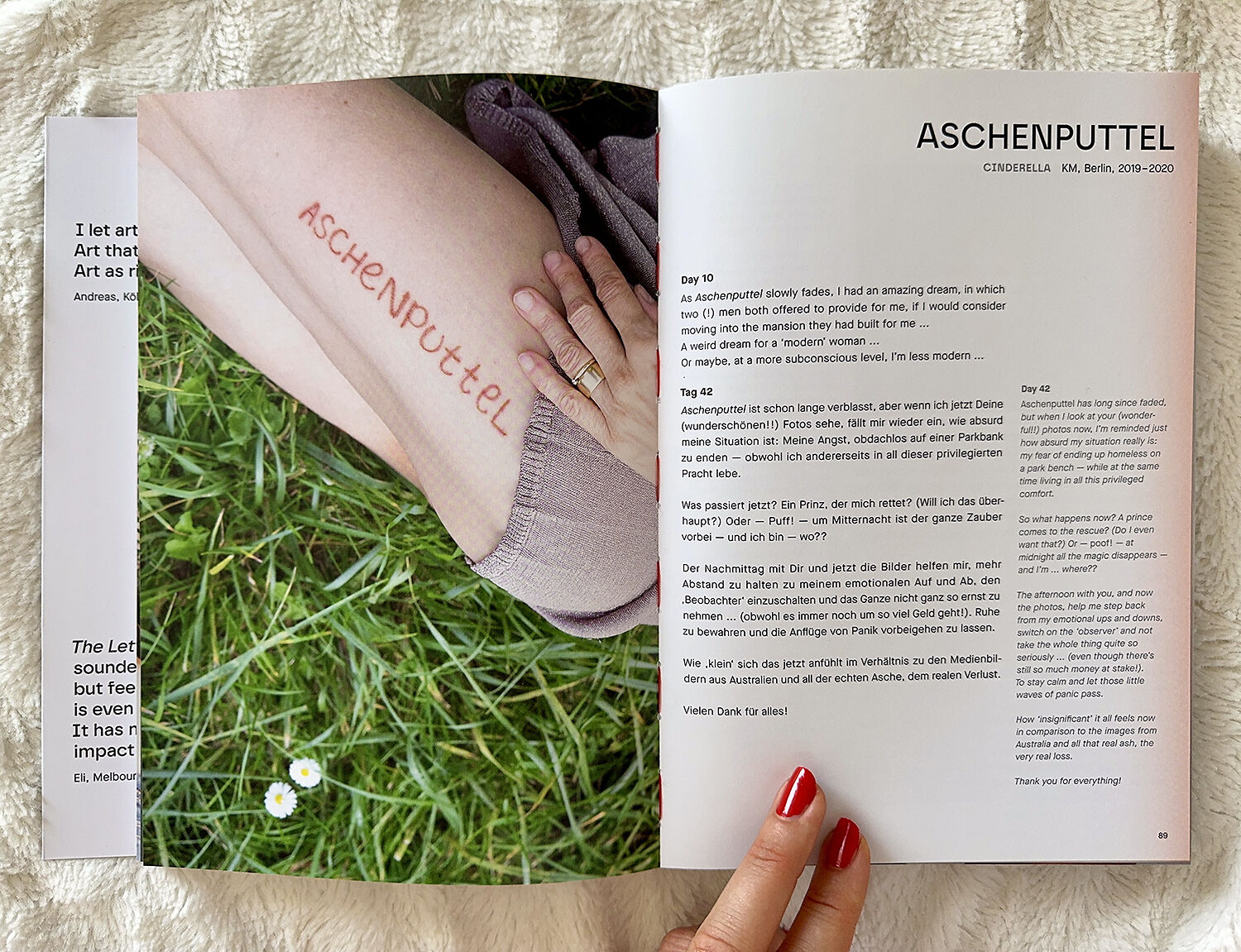
To do that, I needed to get under the skin. That led me to study tattooing and also spend time with the Sak Yan tattooing monks of Thailand. The process is described in depth in the book because the ‘performance' is only one part of a much larger enquiry.
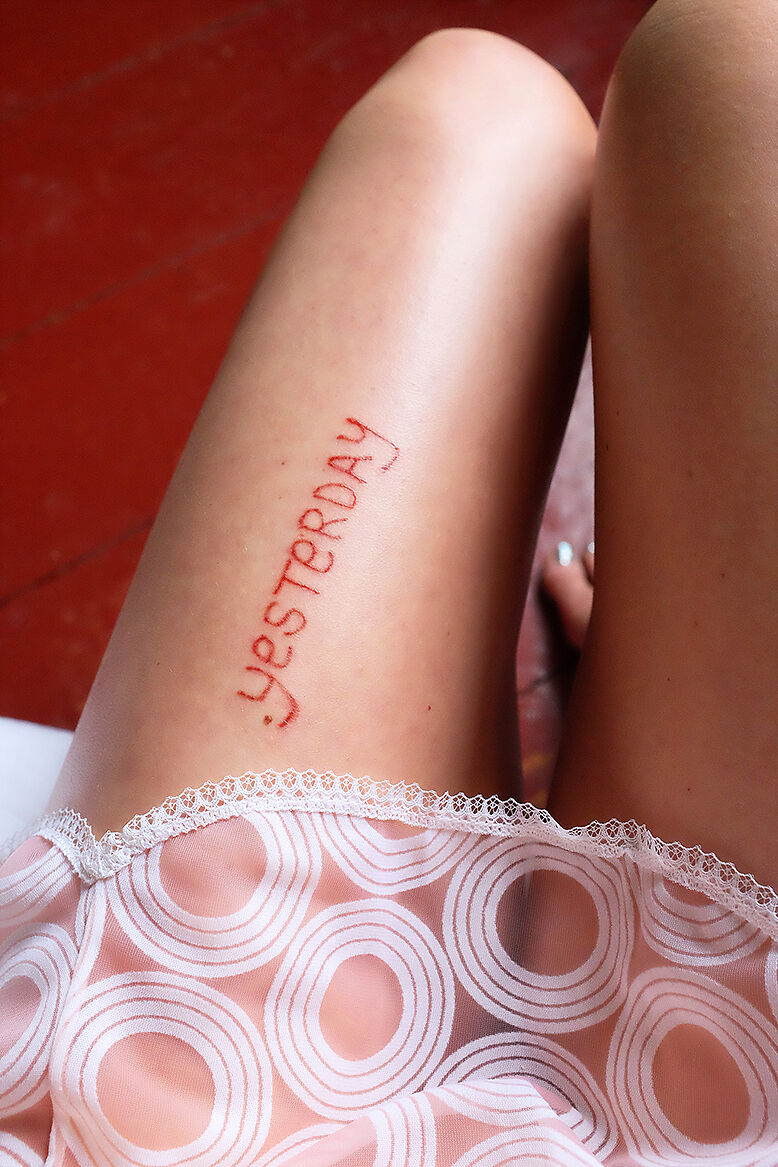
Over time, I’ve become fascinated by what I call “the wonder in our wounds”: those places where vulnerability, beauty and human complexity meet. The German language captures this exquisitely—the word Wunder (wonder) contains Wunde (wound).
Did I imagine it would become this significant? That’s not the sort of question I even entertain when I begin something. I simply follow the questions. The project kept revealing more than I expected, and I kept listening, researching and learning. Fourteen years later, I think that is still what The Letting Go teaches me: that the deepest shifts often begin with the act of paying attention to what is asking to be seen.
The portraits in The Letting Go capture incredibly personal moments. How do you create an environment where participants feel comfortable being photographed at such a vulnerable point in their journey?
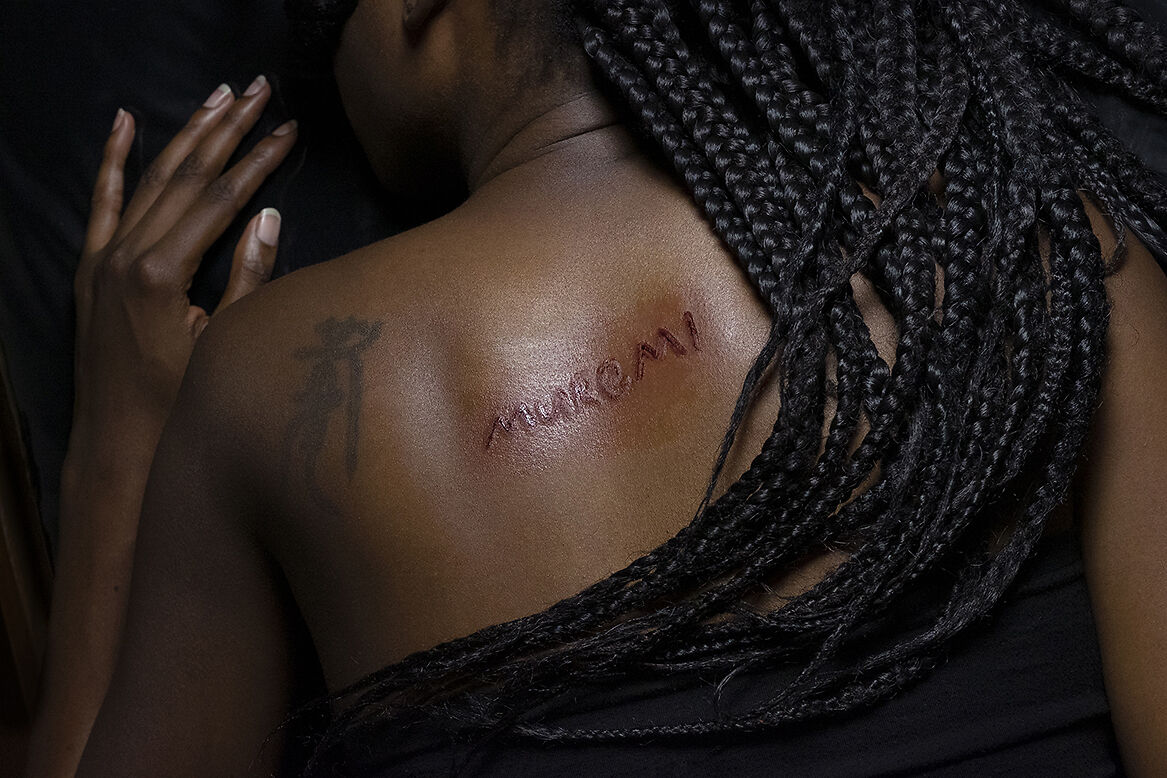
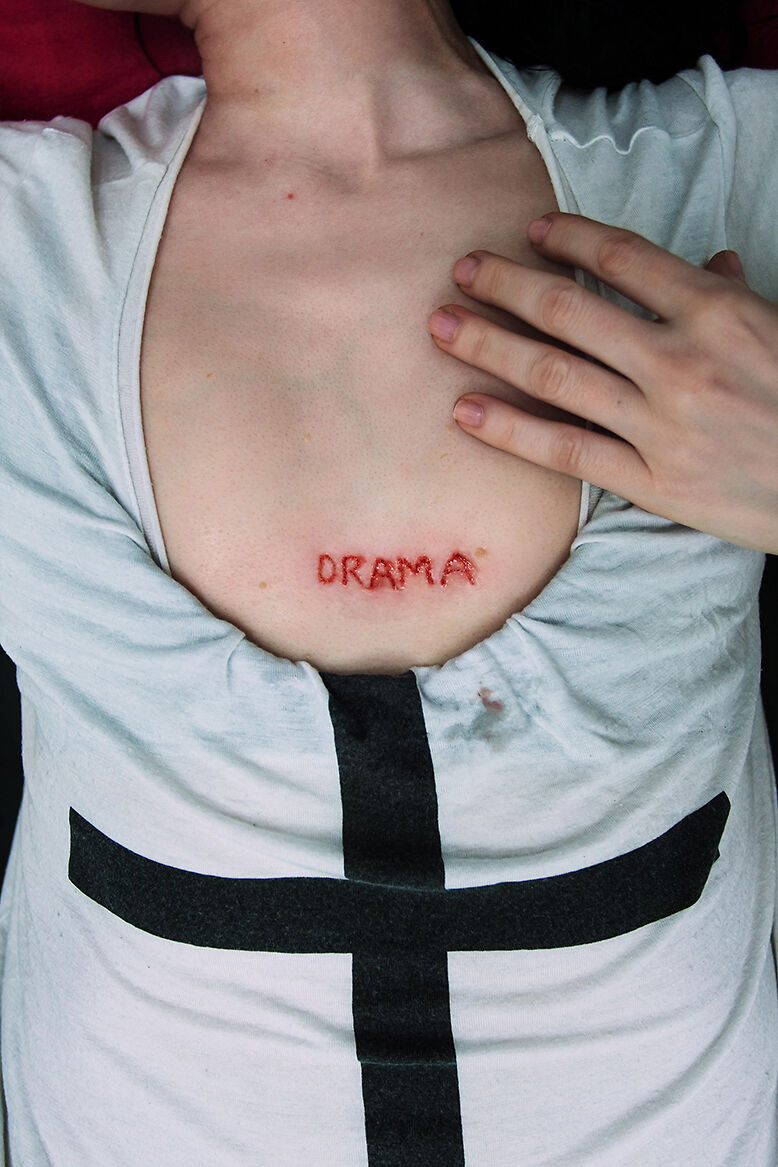
Photography is an important part of the process and performs many roles. By the time we reach that point in the session, a great deal has already happened—both that day and in the days or weeks beforehand. My photographic portrait happens after I tattoo the word-wound, but it’s not the end. Participants take their word-wound home with them, and in many ways this is where The Letting Go begins.
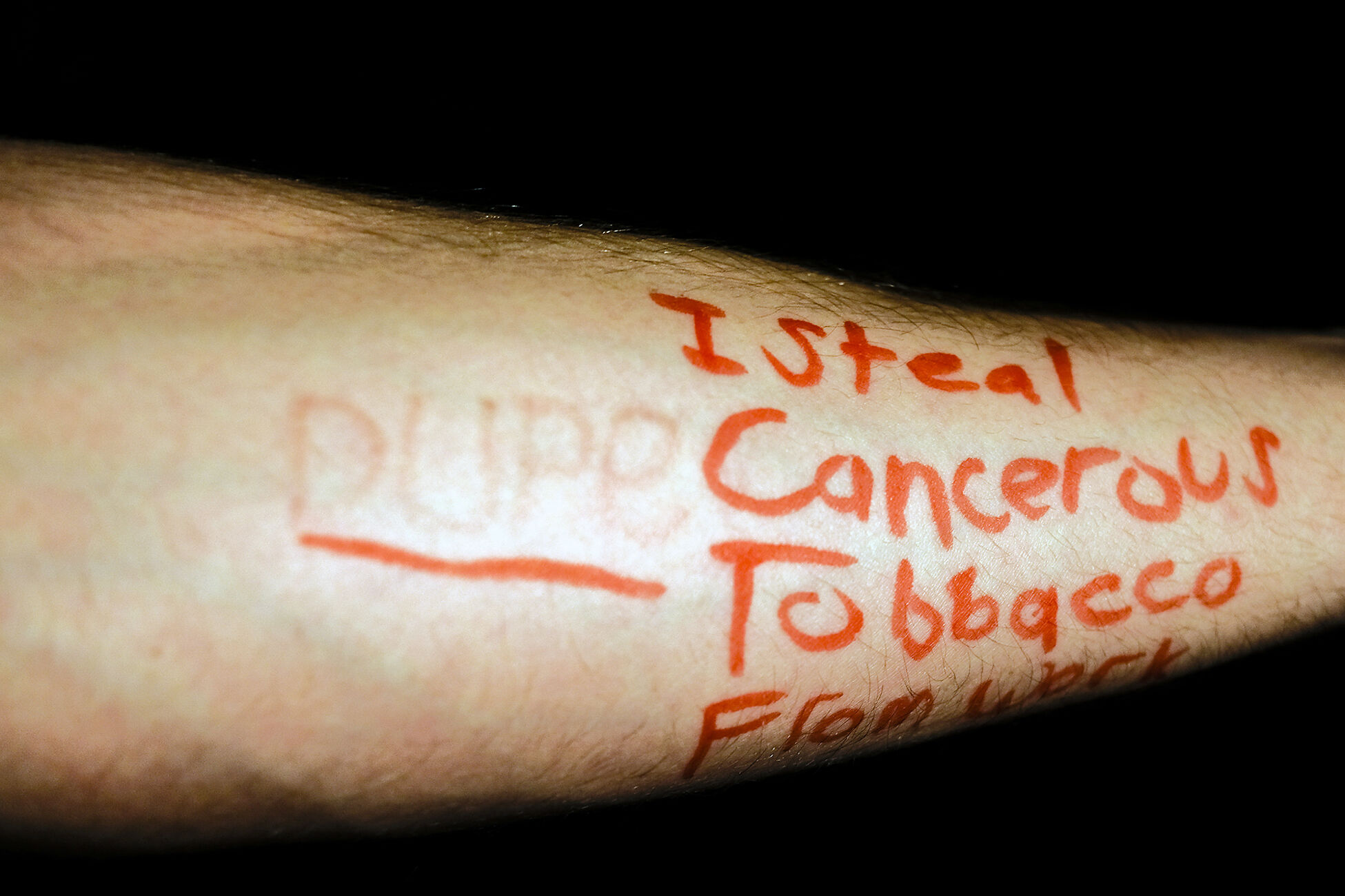
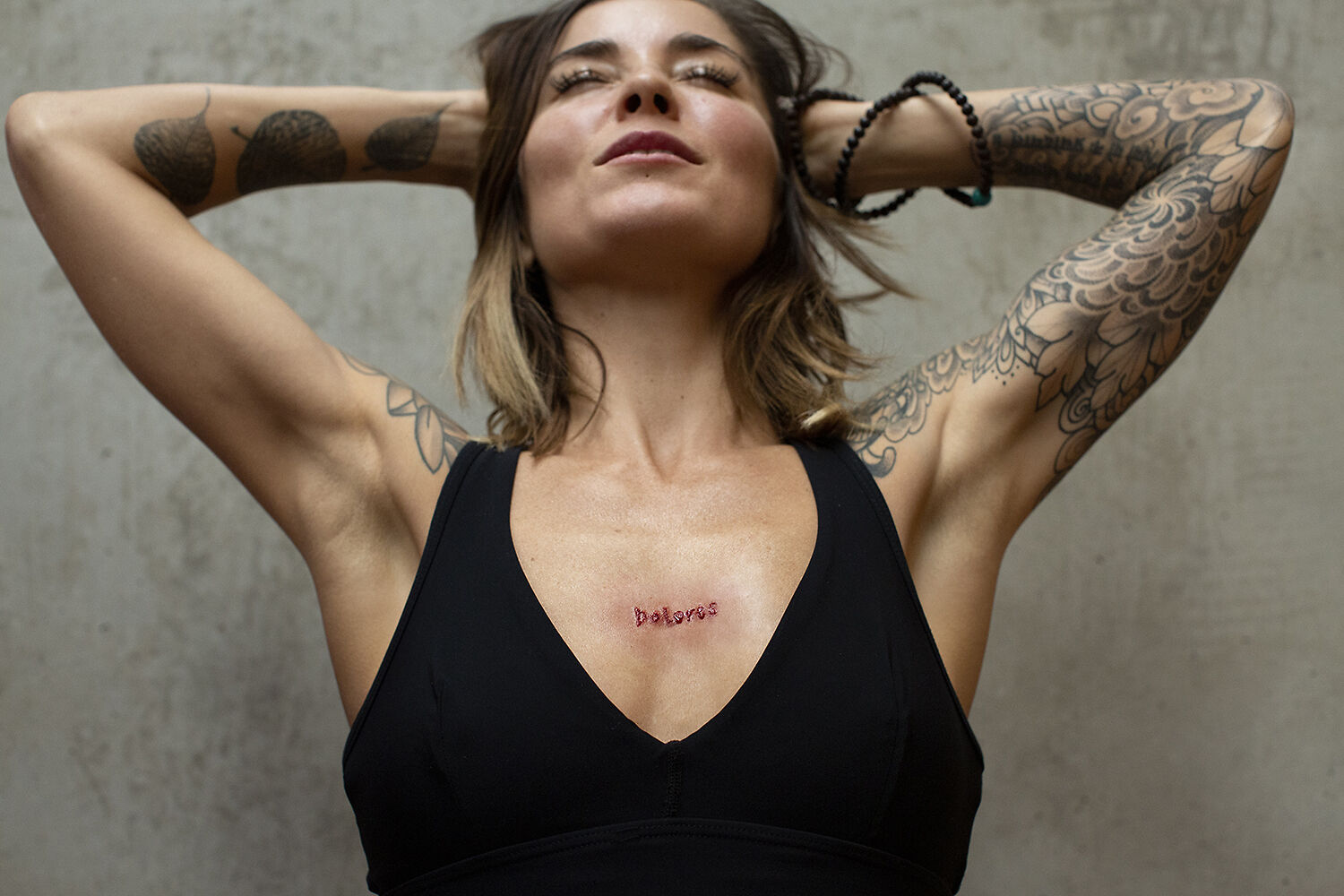
Trust comes from not treating someone as a subject. I’m not aiming to capture a vulnerable or dramatic moment; I’m part of an exchange. The camera becomes a way of honouring what has been shared.
Every participant is different, so the portrait responds to the person. Sometimes I photograph only the site of the word-wound; sometimes I include a face. Faces are powerful and immediately tell us so much, but quieter details interest me too—a hand, jewellery, clothing, posture. Sometimes what remains partially hidden is just as important, allowing a person to retain both mystery and privacy.
Participant selfies are also a valuable part of the process and I write about their significance in much greater depth in the book. The photograph, in all its forms, becomes many things: it’s a record of a significant encounter, a personal marker of change, an artwork in its own right, and a tangible reminder of both the body’s capacity to heal and the impermanence of our bodies, emotions, thoughts and identities. It becomes a kind of remnant: evidence of what has taken place, while acknowledging that everything continues to shift.
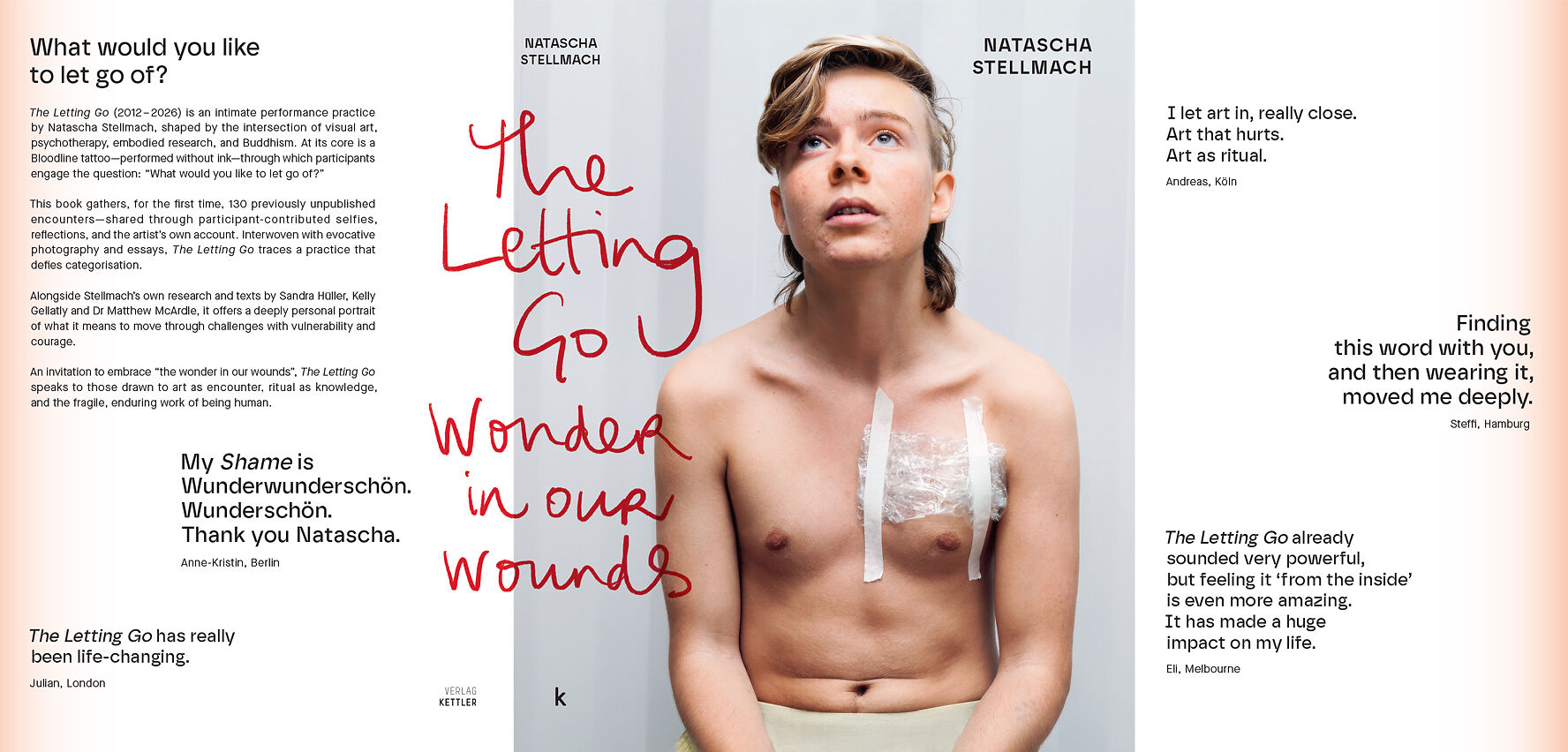
The Letting Go exists as both a book and an exhibition. How do these two forms relate to each other, and what does each allow you to explore?
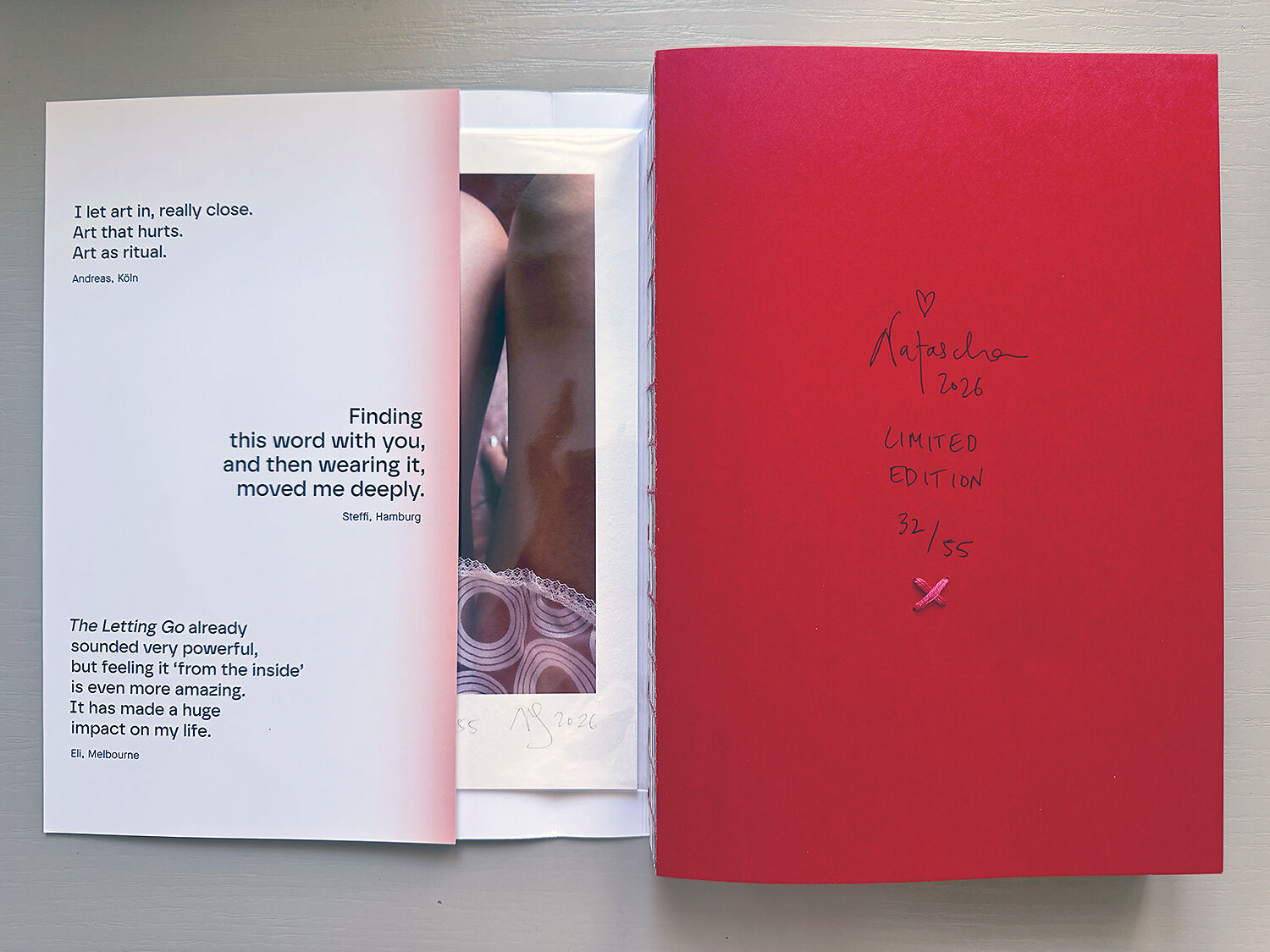
The book is the source. The site-specific exhibition at Linden New Art grows out of it, rather than a book being a record of an exhibition. I rarely make catalogues; I make books. This is a way of working I’ve explored before, including in The Book of Back, where the book became the foundation from which the exhibitions emerged.
I’m not interested in simply translating a book onto gallery walls—that would be too literal. A book and an exhibition have different languages. The book allows for depth, sequence and intimacy; it holds essays and the participants’ stories, photographs and reflections in a way that invites slower engagement. The exhibition creates another kind of encounter: it allows the body to enter the work through space, scale, material and atmosphere.
For The Letting Go, I’ve chosen carefully what belongs in each form. The book contains the broader archive of the project, while the exhibition offers a more experiential passage through some of those ideas and images. They are connected, but they are not the same thing.
Ultimately, I’m interested in creating conditions for attention. Whether someone encounters the work through the book or the exhibition, I hope they are invited to slow down, ask questions of themselves and notice what arises.
Your upcoming exhibition at Linden New Art marks the final chapter of your long-term project The Letting Go, a culmination of 14 years of ‘Letting Go’ sessions and shared experiences. What does it mean to finally bring this chapter to a close, and what can visitors expect from the exhibition?
The word “final” is interesting, because The Letting Go was never really about finality. It was always about impermanence: understanding that everything changes, while still honouring what has been.
After fourteen years, more than 130 Letting Go sessions, and countless encounters, this exhibition marks a culmination—but it feels less like an ending and more like a threshold.
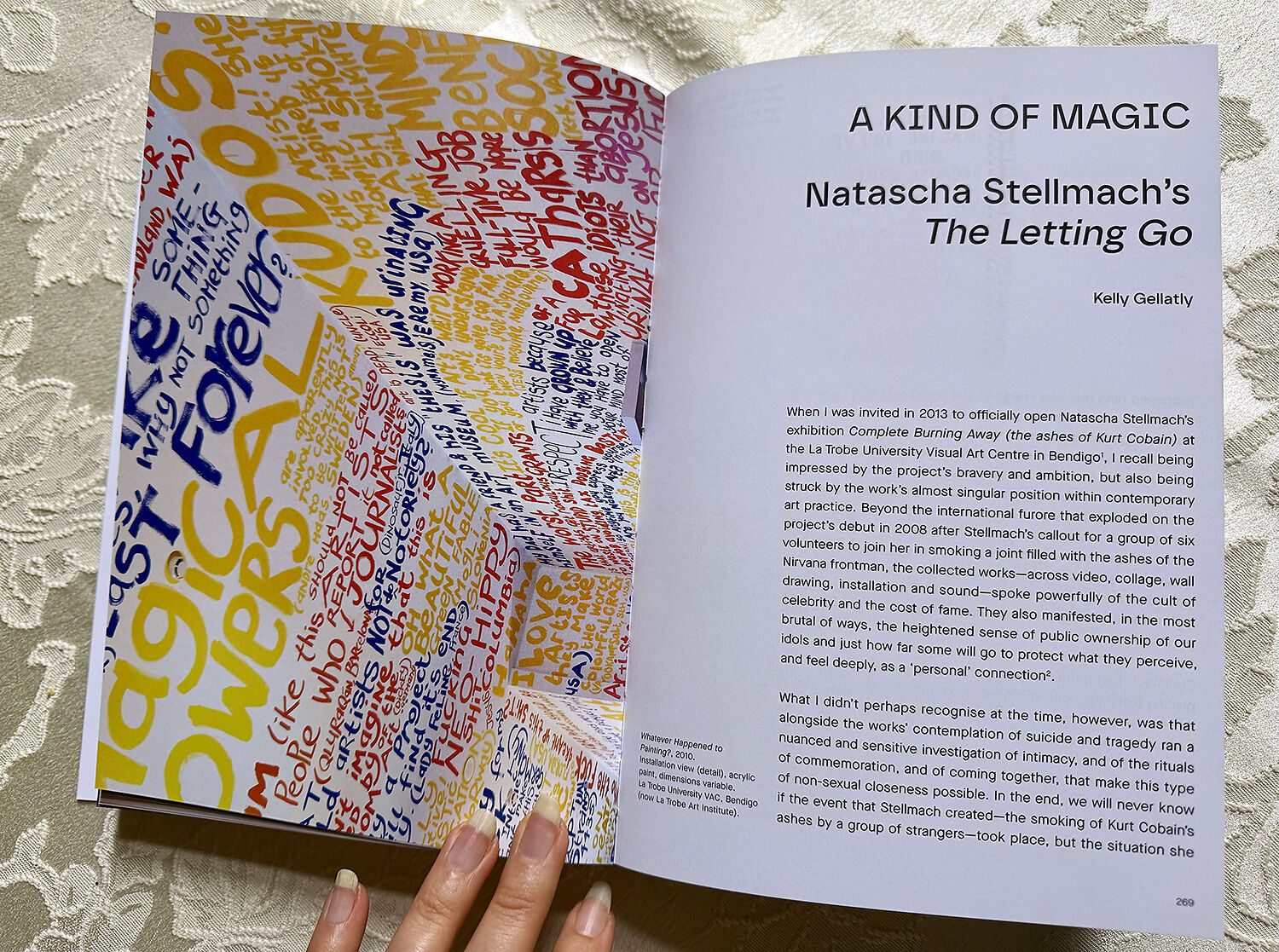
For the exhibition at Linden, we’re creating spaces that feel both intimate and expansive. The opening work is a ‘curtain of skin' created from photographs of my own letting-go performances. Decades ago, at the Australian Centre for Photography, I presented an exhibition where visitors had to walk through a wardrobe to enter a space that was pitch black. Now it’s a different threshold, but the invitation is the same. From there, it unfolds through mixed media, photography, a 352-page book, and works that invite the body into the act of seeing. I’ve always been interested in what happens when a gallery becomes more than a place to look—when it becomes a place to experience. The book features participant stories alongside essays by psychiatrist Matthew McArdle, writer/curator Kelly Gellatly and actor Sandra Hüller.
CONFIDANT, for example, asks whether an object made from my own DNA and a rare earth element can evoke an emotional encounter even when the artist is not physically present. In some ways, it returns to questions I explored in my major project with Kurt Cobain’s ashes, Complete Burning Away: the emotional charge of remains, the ways we commemorate and the human desire to connect with something beyond ourselves. It draws on ideas of relics, ritual, confession and letting go. I’m less interested in attempting to provide answers than creating the conditions where something might reveal itself.
I'd encourage people to spend time at Linden. Sit with the works. Lie with the book. Then notice what stays with you after you’ve left. That’s where the exhibition really begins.
What has this project taught you about yourself, about others, and about the act of letting go?
Surprisingly, The Letting Go has taught me a lot about wonder.
Over fourteen years, I’ve witnessed how differently people approach grief, shame, fear, identity, loss and change. Everyone’s story is unique, but the deeper questions are remarkably universal: how do we live with what has happened to us? How do we make space for what comes next?
Personally, the project has taught me to trust the process and resist the urge to wrangle with things or rush towards resolution. Some things need to be witnessed over time and from many angles before they can shift. Sometimes they never do—but our relationship to them can soften.
It’s also reinforced the non-binary, non-dual way I’ve always approached the world, teaching me to live with—and sometimes even love—the paradoxes that coexist in both my life and society: the German Herzschmerz of longing and the Aussie black humour that recognises how bloody absurd being human can be. They aren’t opposites; they hang out with each other.
After the closing of such a significant chapter, what creative directions are calling you next? Are there any new directions you are excited to explore?
I don’t really think in terms of chapters closing. Curators call my practice ‘durational’ and ‘generative’. It’s always been more like a conversation—one question leading to another.
The Letting Go has reminded me how much people are seeking experiences that invite them to slow down, pay attention and engage more deeply—with art, with one another and with themselves.
Alongside new artworks and research, I’m developing masterclasses, public conversations and new forms of encounter. These include my October 10 Linden workshop, Directing People: The Art of Trust, as well as conversations and tours, such as the Goethe-Institut event on October 21. I’m also continuing my work with women creatives through The Moon Sessions, my monthly online group cultivating emotional resilience, nervous system regulation, and the juicy questions that shape our lives and practices.
These aren’t separate from my artistic practice; they have grown directly out of it. I’m interested in sharing not only finished artworks, but the ways of thinking, questioning and seeing that have shaped my own life and practice. Oh and many people have already asked whether The Letting Go sessions will return. They just might.
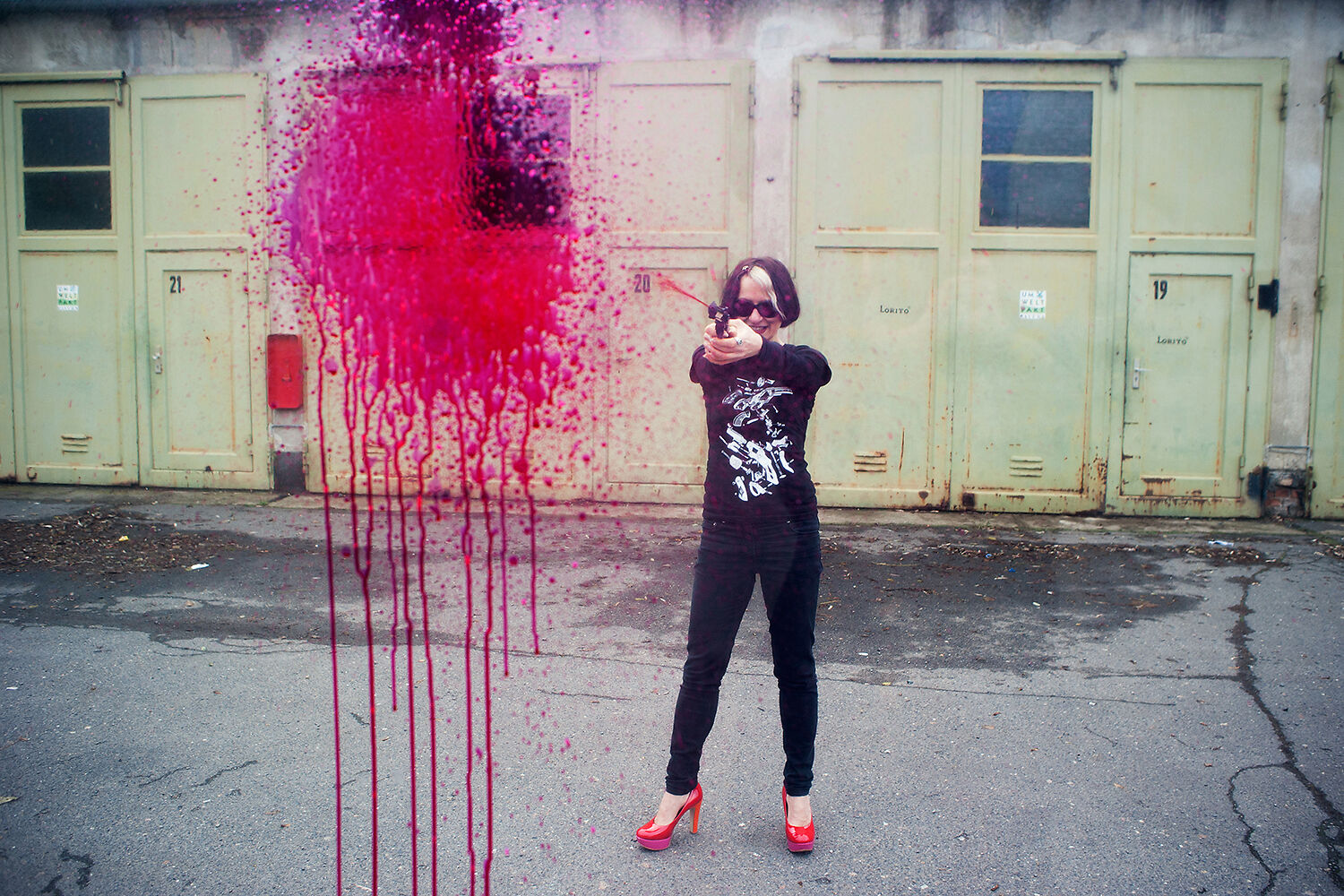
Natascha Stellmach: The Letting Go (2012-2026)
- Where: Linden New Art, 26 Acland St, St Kilda VIC 3182
- Exhibition Dates: 20th August - 8th November 2026
- Exhibition Opening: Saturday 22nd August, 2026
See full details about the exhibition here.
Visit Natascha's website here to find out more about her practice, and to purchase her book The Letting Go. Also, follow Natascha on Instagram here to keep up to date with artist news.