Featured Artist: Marina Rosenfeld
Marina Rosenfeld is an American composer, sound artist, and visual artist whose practice has continually expanded the possibilities of music and auditory experience over the past three decades. Based in Brooklyn, New York, Rosenfeld works at the intersection of sound, performance, installation, and visual art, exploring the material conditions of listening and the social life of sound itself. Her projects have appeared at major institutions including the Museum of Modern Art, the Whitney Biennial, documenta 14, and the Gwangju Biennial, and she has performed widely as a turntablist using her own custom dub plates.
A key part of Rosenfeld’s practice is her work with dub plates - hand-cut acetate records created from her own recordings of voice, instruments, and found sound. In live performances and installations Rosenfeld uses these one-off plates as compositional material, turning the record’s physical surface into an active participant in the music. As the dub plates are played, scratched, and worn, the sound literally changes; the medium’s degradation becomes part of the work’s unfolding. This means that no two performances are alike, and the imprint of each interaction - scratches, thumbprints, dust, and wear - bears witness to sound’s material history.
Image Science were proud to print a series of photographic images of dub plates for Rosenfeld's new exhibition Material Issue, which capture precisely this story of degrading materials. The scratched grooves, thumbprints, and surface details of the dub plates are not just visual motifs but physical traces of sound’s passage through time - a fitting echo of the artist’s broader inquiry into how sound is recorded, inscribed, and transformed.
Read on as we grab Marina for a quick chat about her exhibition Material Issue, now showing at Substation art gallery and performance space.
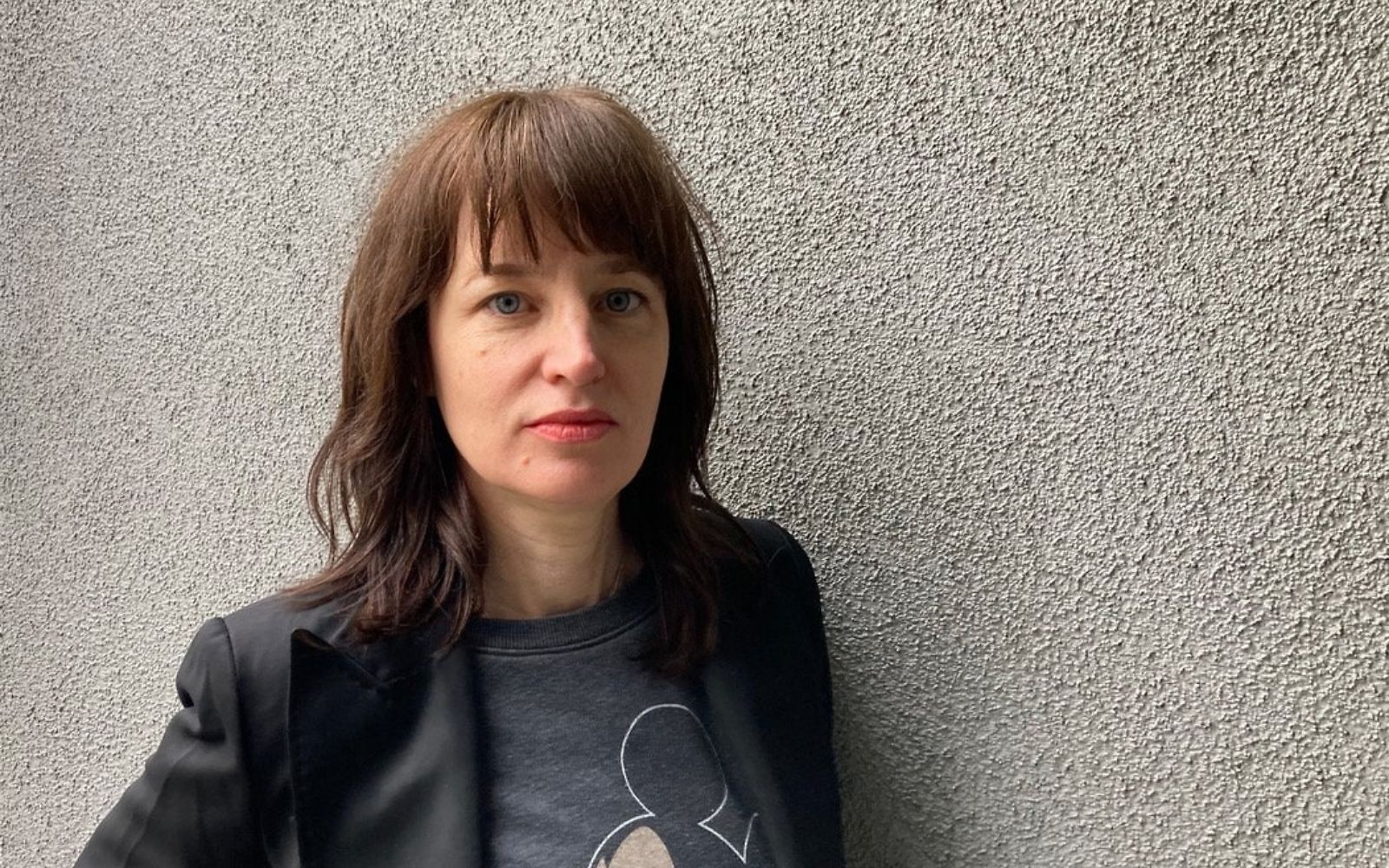
This survey exhibition at The Substation marks a significant moment presenting your work in the southern hemisphere. Looking back across three decades of practise, which defining aspects of your work, both sonic and physical, felt most important to foreground in Material Issue?
The exhibition has a certain lightness: two video installations, a suite of printed images tacked straight to the wall, some works on draped and suspended silk fabric. It references a long and diverse practice with sound and performance but also the ways I’ve sometimes translated that history into works that sit lightly in the material dimension. The space allows the sound of several works to bleed into the space where the Worlds series of photographs is on view, which I like. There is purposefully no real hygienic separation attempted or achieved.

Many of your works unfold through shared listening or distributed authorship. What interests you about the space between individual gesture and collective experience?
I think of a work of art, whether it exists in the temporal register or not, as a transactional space. The experience of the viewer or listener is the unknown part of the equation, if you will. It cannot be accounted for. It’s really a gift from the future. In my early works making temporary collectives— sometimes I called them orchestras— I invited improvisation and interaction into the work. Participation was one way to do that. Later works invite forms of listening and navigating that still, I think, offer the possibility of a kind of authorship from the viewer, choices about attention, position, and so on. Collective experience is a condition we associate with live music but I suppose it can also happen non-synchronously as viewers pass through a space, or contemplate an image. It's a fundamental and tantalizing question that I think artists pose: what about what I hear here or see here, can be offered to another person, what can be actually shared from my being to yours?
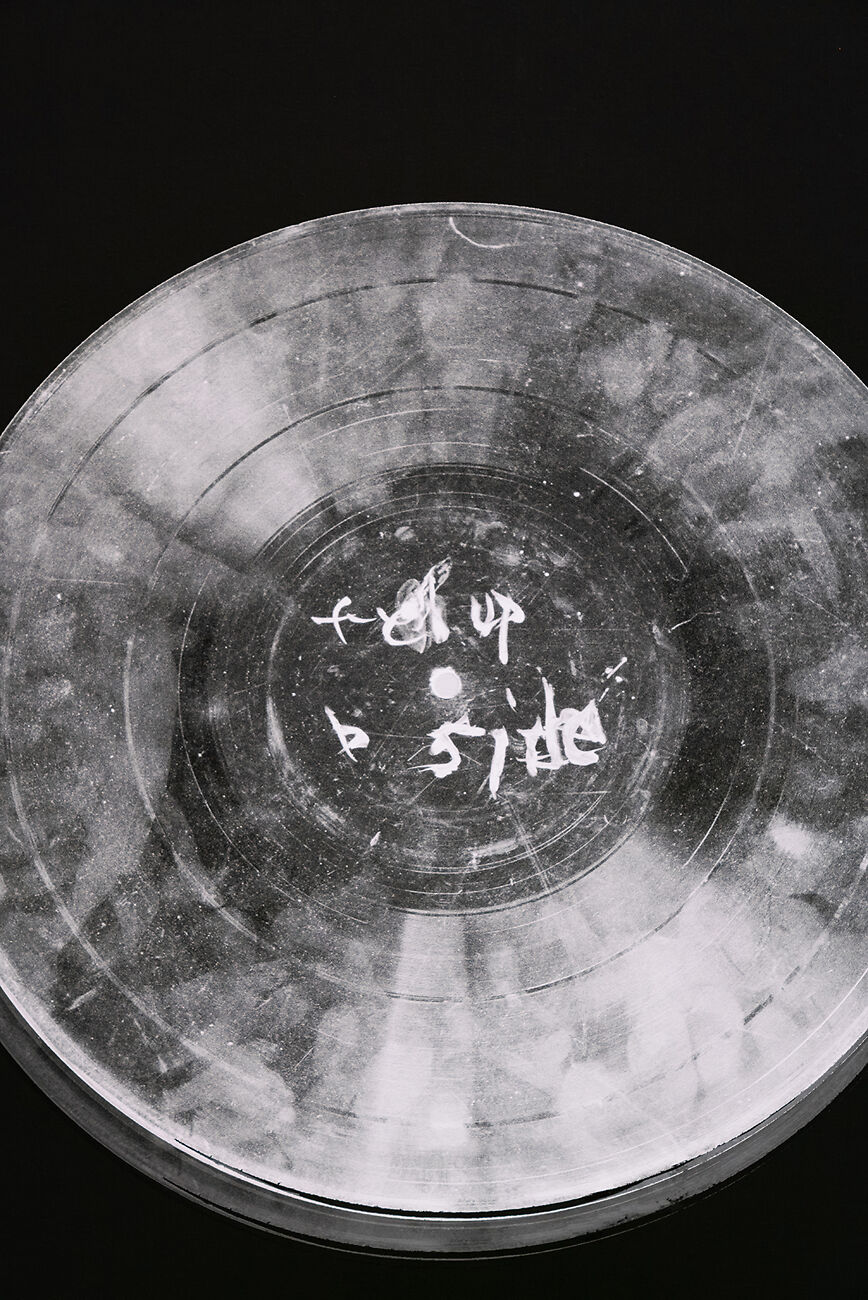
Your practise has long explored the social and relational dimensions of sound. How do the dubplates function within this expanded field? As musical objects, archival vessels, or something more performative and sculptural?
These objects entered my work in around 1996. I was introduced to them as a way of making a one-off or unique object quickly and cheaply— back in the day— that would allow a DJ or dance music producer, usually, in the context of Los Angeles in the 1990s, to take a private, newly formed idea from the studio and bring it into the club to see how it goes. Does it make people move? Does it sound good on the sound system? As a young artist, I realized this was a way I could introduce a new temporal frame into my compositions, that I could make them “live” in front of a public. The added feature that the plates were very delicate and not intended to be played more than a few times, meant that a second temporal condition inhered to them as well: they had a tendency to quickly degrade in fidelity. Playing them wore them out, much more quickly than a mass-produced vinyl record.

Material instability seems to be a recurring interest in your practise, from degrading dubplates to feedback systems and recursive playback. What draws you to forms that physically transform, erode or resist being fixed over time?
I’ve always been interested in ways that inert materials— metals, textile, recorded sound— become temporal or suggest temporality. This happens in many interesting ways. The Worlds series pictures some of my most beloved dub plates, that I use in solo performance, that have accrued visible forms of degradation through use. Other works, such as µ (pronounced ‘mu-’) offer looping sequences of different lengths such that the overlaps of image and sound are constantly evolving, unstable and unrepeatable. For this to work, of course, one must be open to an expanded range of possible outcomes, clumsy ones, elegant ones, strange ones. Any viewers inside this work should know that they are getting an essentially unique version happening for them in real time.

How do you hope Australian audiences will move through and experience Material Issue as a whole?
I mentioned that I believe the experiential side of the equation has to be, or is maybe definitionally, off limits to the artist. People are free of my expectations inside the space of the work. But I am offering them some glimpses of my sensibility about sound, about how music offers a model for forms of sociality, about how materiality and temporality are braided together in different arrangements in different works. And in a body of images derived from the time when I was mounting temporary orchestras, I am putting the female body into the visible space of representation of the music-making, instrument-playing body.
Material Issue Exhibition
Marina Rosenfeld’s Material Issue is her first survey exhibition in the Southern Hemisphere and etches out a profoundly individual terrain within which she has mapped and defined a way of being in, and around, sound.
For over 30 years, her hybrid work across media has traced the emergence and expansion of sound as a strategy of relational and social practice, from her experimental orchestras of the 1990s and oughts, to her longstanding engagement with the material culture of turntablism.
The exhibition, surveys works predominately form the past five years, and explores the material implications of her practice, interrogating where new positions might emerge from within performative or staged situations. Material Issue offers an atmosphere of possibility, where sound and its attendant technologies make possible collective action as well as intimate reflection.
Featuring large format video installation, photographic and textile works, the exhibition is a portal into a discreet realm where tactility, materiality and richly embodied sound co-exist with the traces and residues of yesterday’s parties.
Material Issue is curated by Lawrence English.
Material Issue
Where: The Substation, 1 Market Street, Newport
When: 20th February - 2nd May, Wed-Sat, 11am - 5pm
Cost: Free entry to exhibition
About the Substation
Amplifying artworks that transcend form, The Substation’s multi-artform spaces are illuminated with the most urgent contemporary arts to inspire us to refigure problematic histories, imagine possible futures, and forge new connections. The Substation is the nation’s leader in multi-arts and experimental practice. Substation connects our continent’s most diverse local communities in Naarm/ Melbourne’s west to the world through a program of international, national and local presentation, development and engagement opportunities.
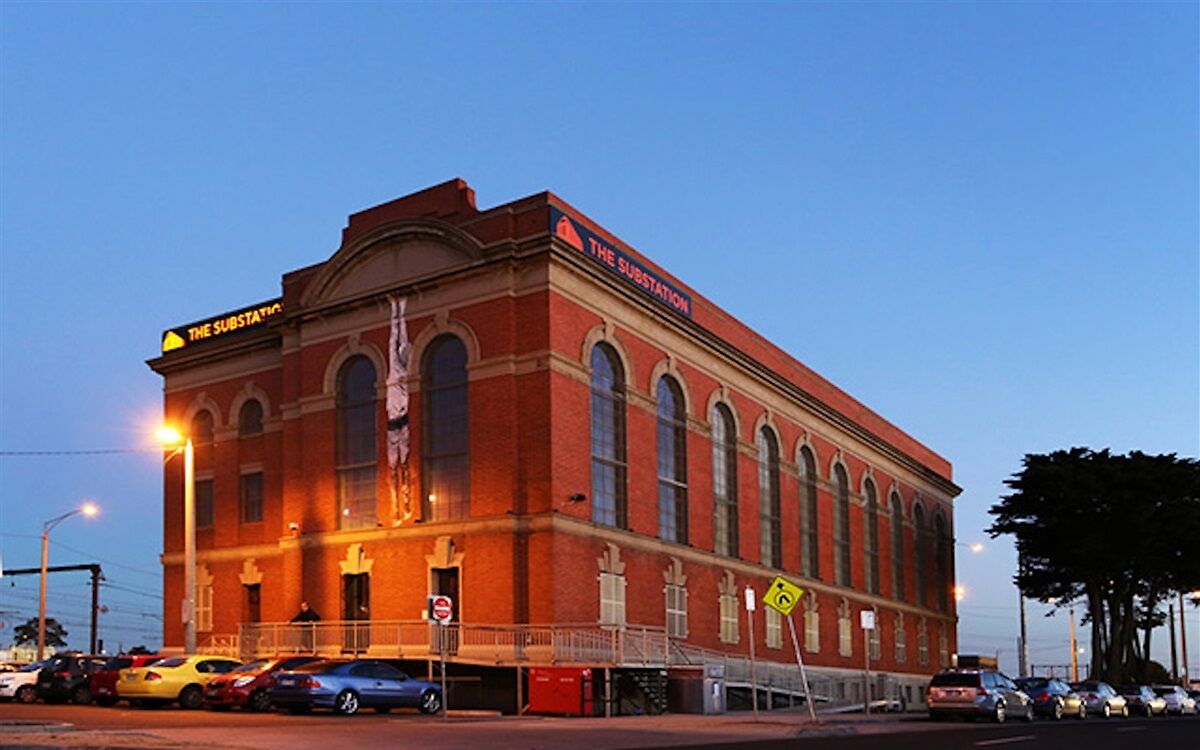
This article was made in partnership with The Substation.