Featured Artist: Mac Hewitt
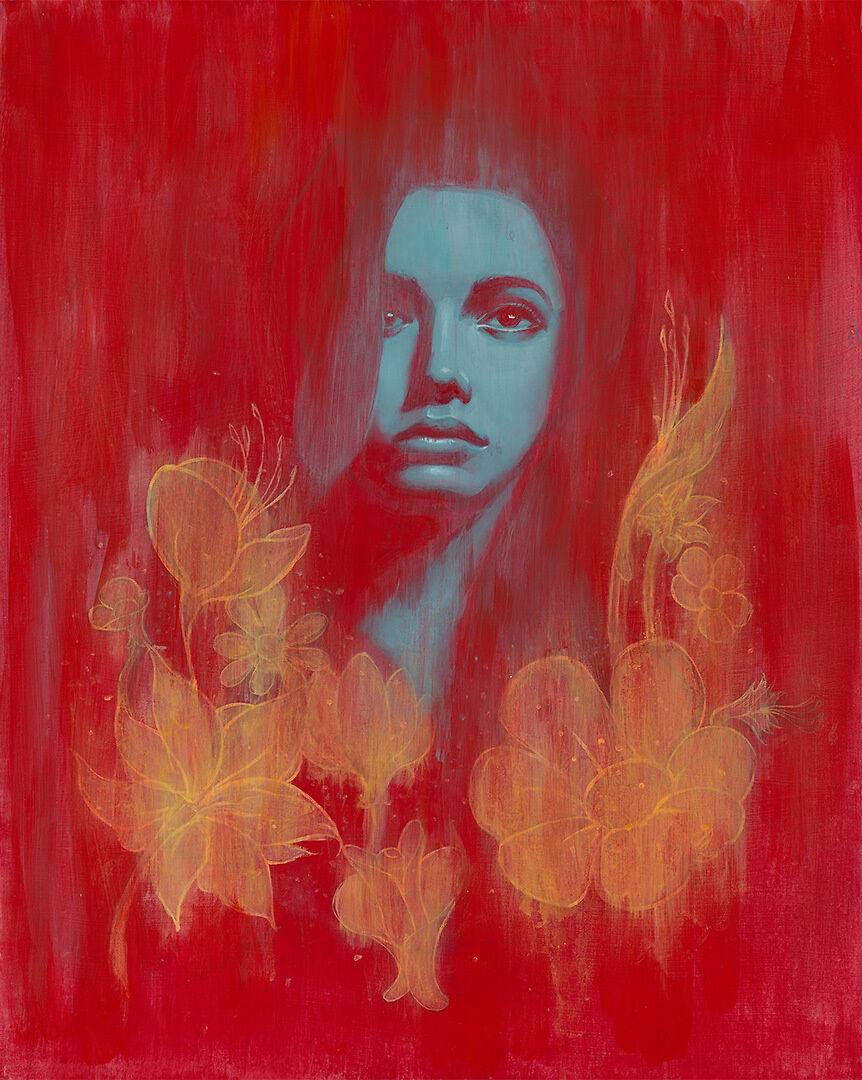
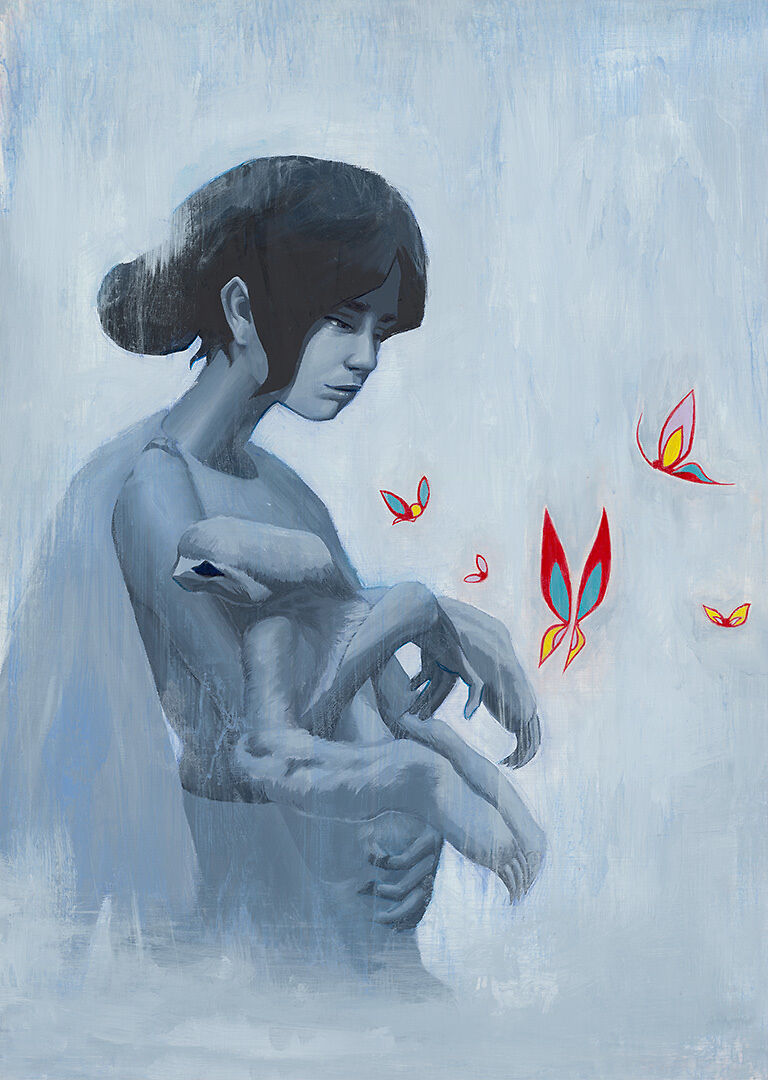
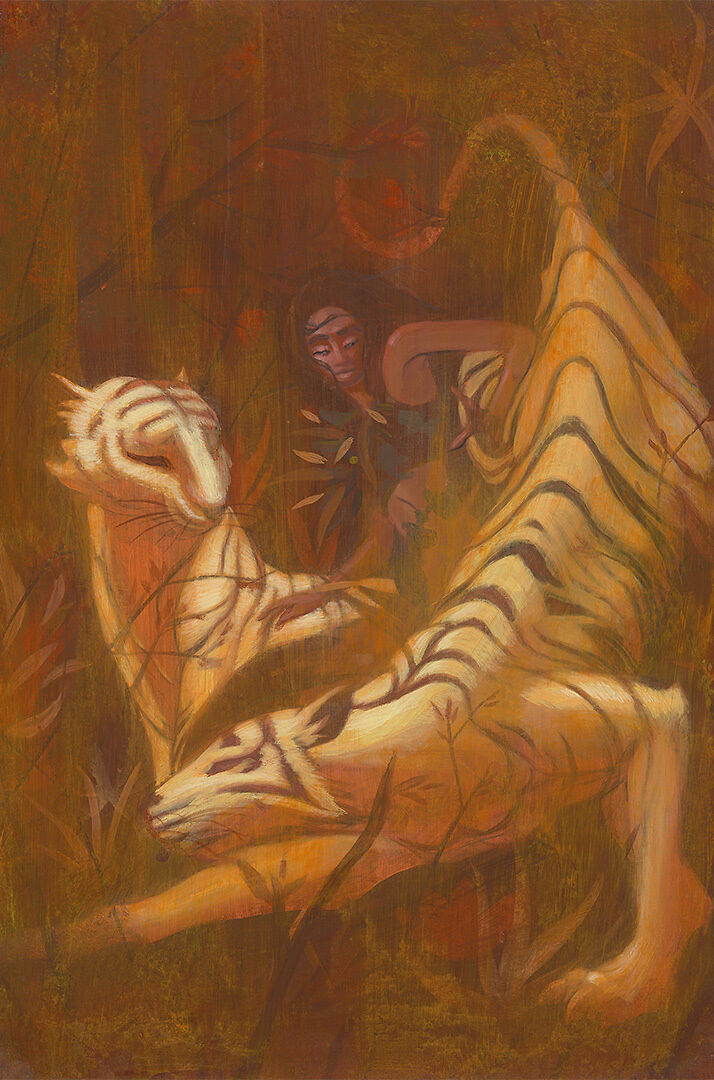
Mac Hewitt is a Melbourne-based visual contemporary pop surrealist painter who uses the narrative power of fairytales to depict a harmonious bond between humankind and wildlife.
Inspired by Japanese Superflat and Neo-Pop art, Mac's art is characterised by it's flat, graphic linework, traditional painting techniques and blend of hard and soft edges. The characters in his surrealistic fantasy worlds are richly detailed, a homage to Mac's interest in primitive human experiences, indigenous cultures and their spiritual bond to the animal kingdom.
Mac has been a client of Image Science since 2018, and we've enjoyed scanning and printing his engaging and beautifully painted artworks so much that we offered him a job! Mac is now a well-liked member of our team and helps us once a week with our fine art printing services.
Read on to find out more about Mac's artistic journey, creative process, and the inspirations that fuel his captivating work.
What initially inspired you to become an artist, and how did you develop your creative skills?
I never really thought it was a viable option to make a living through my art. I went to university to study industrial design and one of the projects I needed to draw a figure as a placeholder. I discovered that I wasn’t really good at drawing humans or organic objects. I found an artist called Kim Jung Gi and I was blown away about how he could infuse so much energy and life into his artworks. I wanted to pursue that skill and decided animation was the best direction to take to achieve artworks with such life. After university, I wanted to improve my animation skills so I practiced figure drawing more. I fell in love with using the overhand grip and moved away from digital art and animation, towards traditional art. Rather than struggling with a drawing, I would take out a sketchbook and study every aspect of what I was drawing. Then return to the original artwork and be able to move it in perspective, distort it and simply draw it exactly how I want it from my imagination. I really enjoy this method and I think it allows me to be loose and experimental, knowing I could at anytime paint over my artwork and draw it in again.
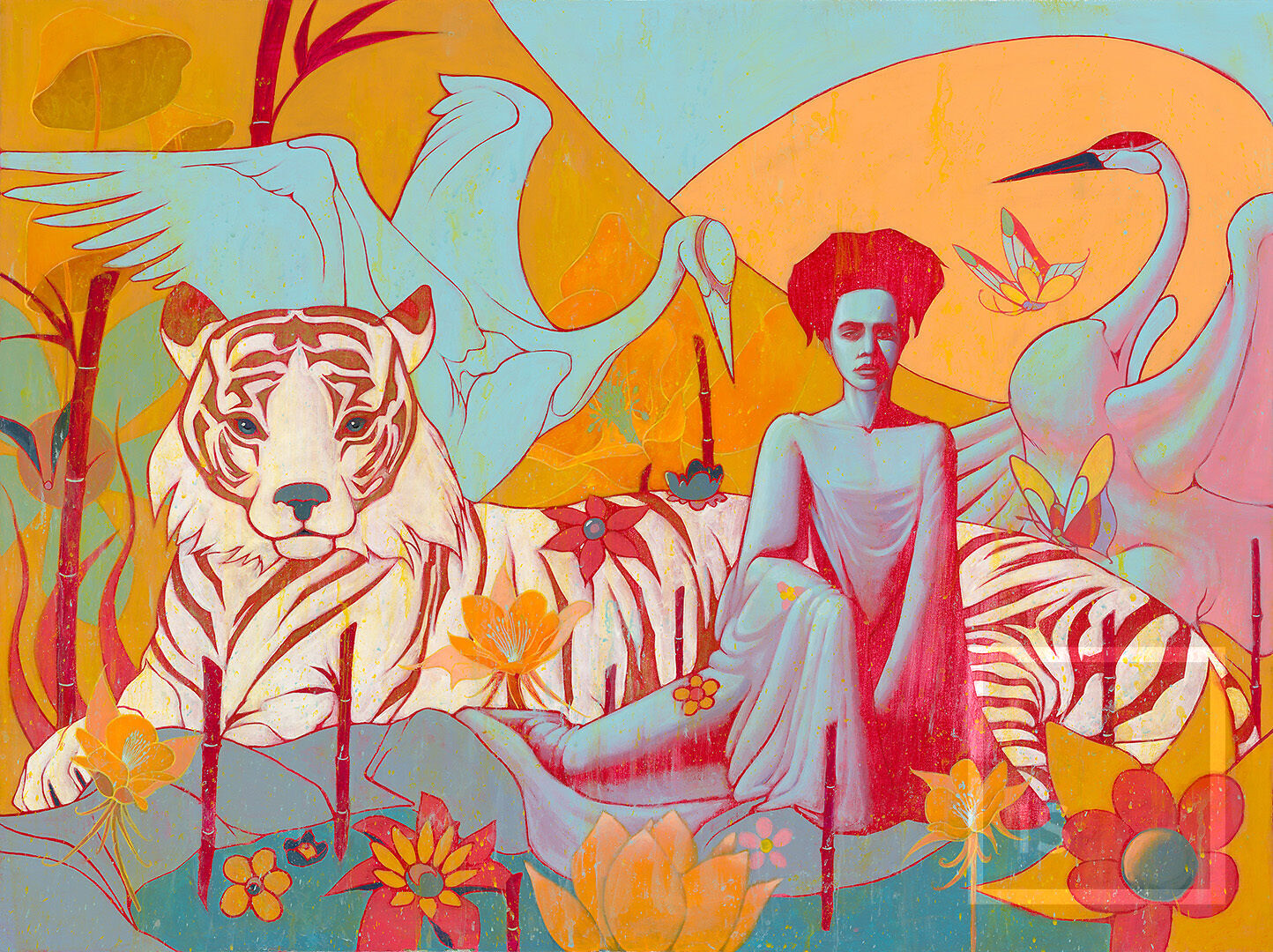
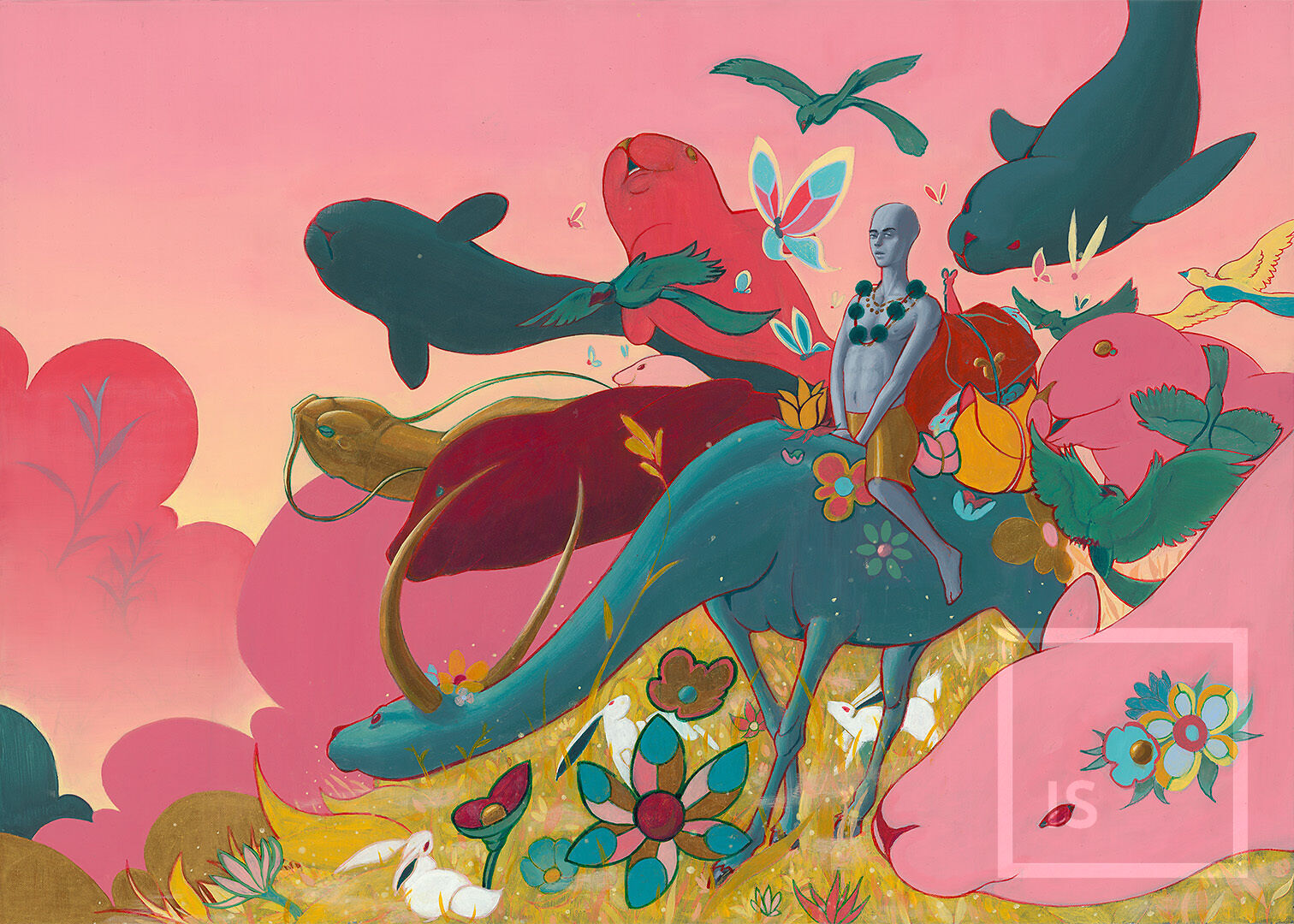
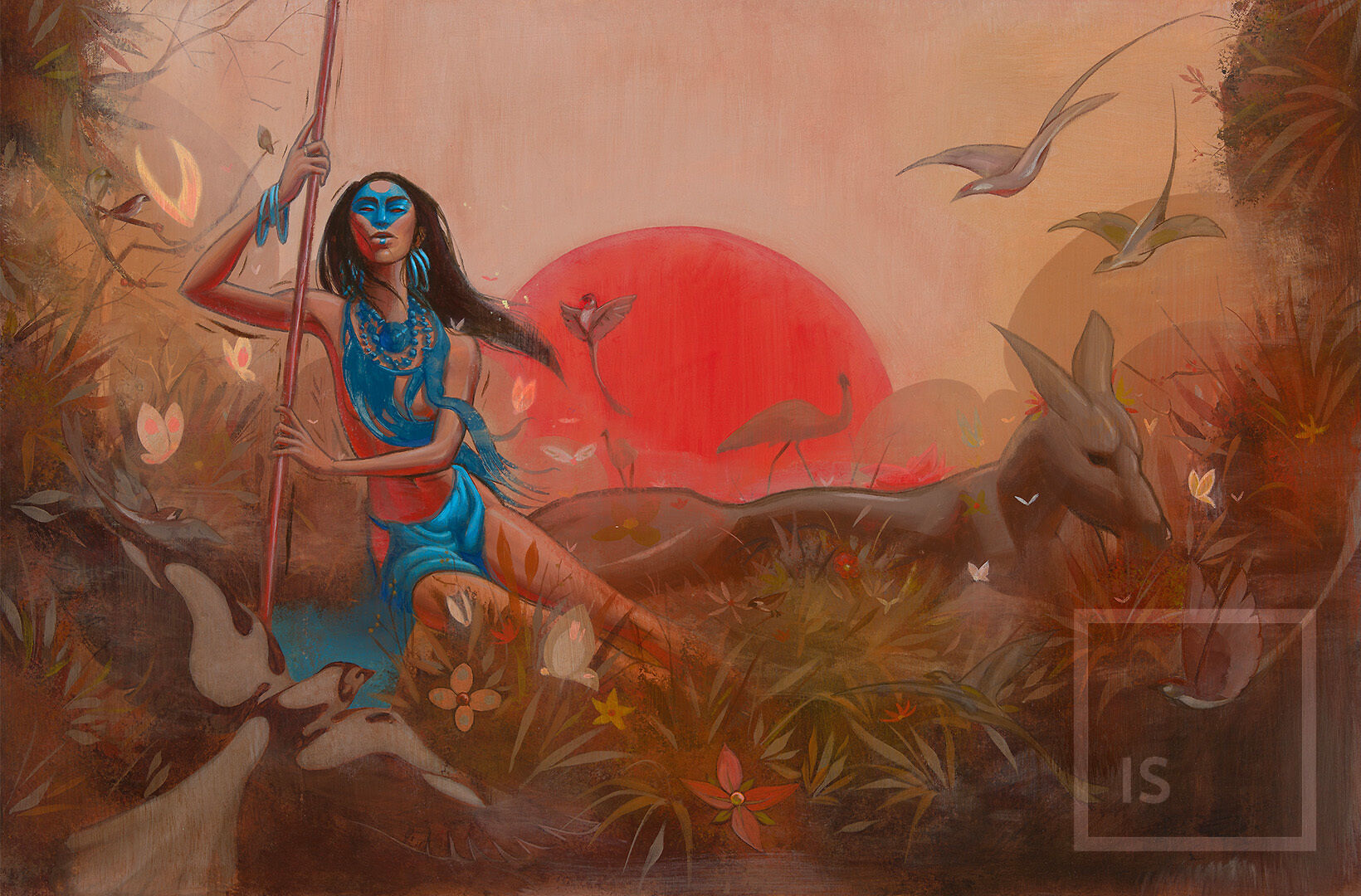
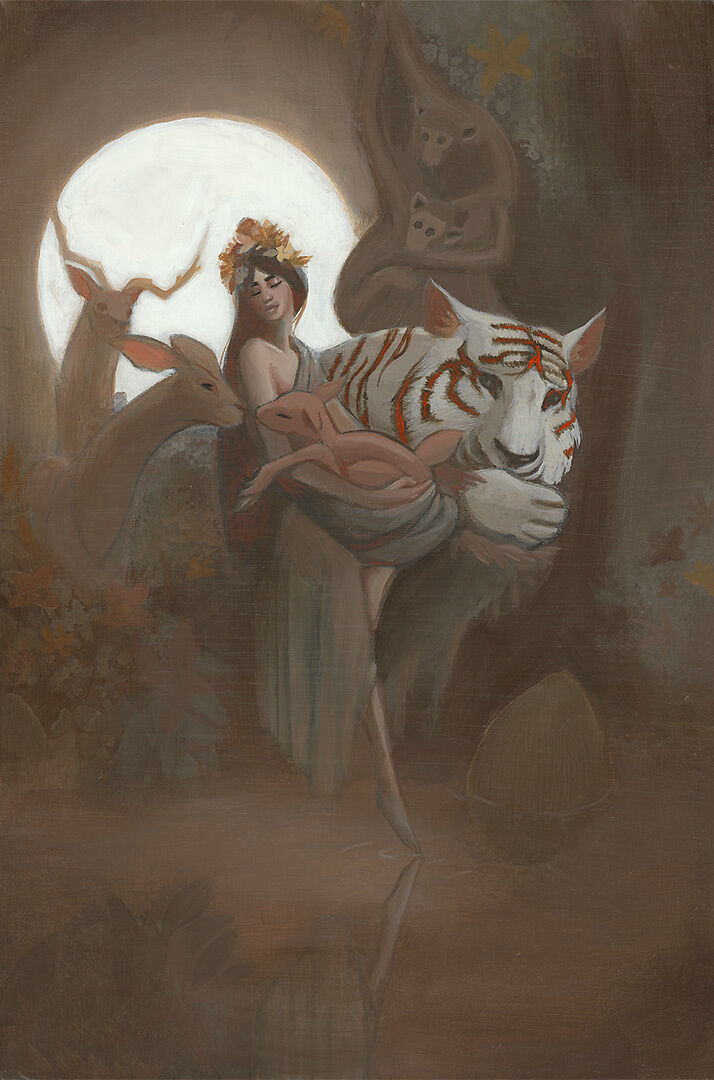


Animal-centric symbology and fairytales are strongly thematic in your work, and often explore deeper allegories about the special bond between humankind and wildlife. What draws you to explore these themes?
For me, storytelling is the foundation of my work. It informs the figure’s initial pose and the composition. The gesture communicates the narrative and informs the design of all the elements as they come together.
Primitively we have a close relationship with animals. A harmonious bond between us is something I want to show in my work. I think it’s very instinctive and a widely shared emotional response. Same goes for stories. Narratives have entertained us, connected us and educated us for as long as we have communicated. I think fairytales have an interesting history. The way these stories have developed, mirrors the times each iteration originated. I wanted to revisit some of these stories with a modern approach and aesthetic. My approach to art is only possible due to the internet. Being able to, at a moments notice, look up a video of a tiger, an image of a butterfly or the anatomy of horse. Only recently could we do this. I think revisiting these old fairytales with this approach is a time capsule for our present day.
Your artistic technique combines aspects of Japanese neo-pop graphic art aesthetics and a more traditional, representational painting style. What are some important influences that have helped develop your unique art style?
I grew up interested in anime and Japanese history. Drawing was the most accessible art form for me when I was young, so there is no surprise that linework became a big focus early on in my art journey. But I think other artists, indigenous cultures, wildlife and primitive human experiences, all are huge influences in my art. Artists such as James Jean, Kim Jung Gi and Moebius became huge inspirations for my younger self. When I studied figure drawing, I started to appreciate a larger variety of edges. Artists such as Andriy Vynogradov, Steve Huston and Jeff Watts inspired me to take advantage of soft and lost edges. J.C Leyendecker style motivates me to use more simplistic shapes. There are 100s of artists that have played a role in shaping my style.
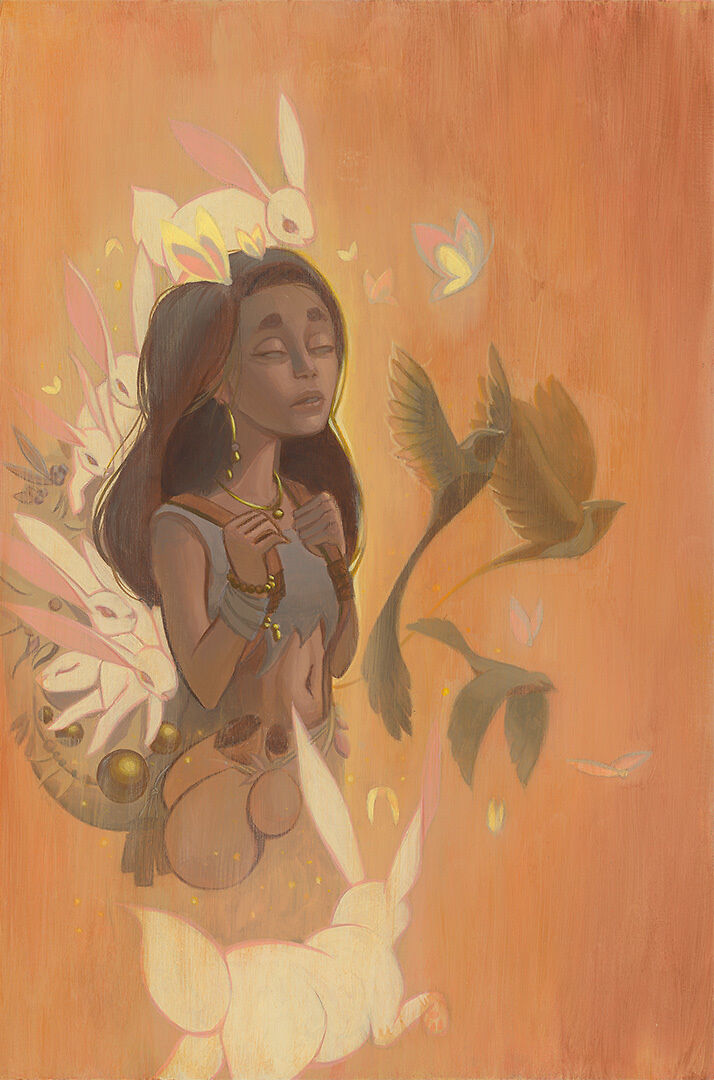
Your artworks possess a surreal, fairytale-like quality and there are often hints of a narrative taking place. What is the importance of storytelling in your art? Are there interconnected backstories between the characters in the worlds you create, or is each painting a standalone piece?
For me, storytelling is the foundation of my work. It informs the figure’s initial pose and the composition. The gesture communicates the narrative and informs the design of all the elements as they come together. It all flows out from that initial idea. I also like to hint at backstories within the piece so that the image feels like it’s a snap shot of something bigger. A jewellery’s design may hint to an aspect of the story or a character’s garment mirrors the themes of the story. These small things give the artwork a little more texture and life. I never really thought of connecting my characters into an artwork. For me, they exist in the same world but it’s so expansive that they never really meet. The animals, wildlife and sometimes spirits are the only things they really interact with.
I’d love to know more about your creative process and your approach to choosing medium, subject and colour palette. What kind of research or preparation do you do before starting a new painting? Are you methodical or more spontaneous?
I am very spontaneous haha. What I’ve realised recently is that I need to be inspired before creating a new work. I can’t start on an idea that I’m not passionate about since it destroys my momentum and drive. To get that inspiration I may read stories or search the internet for art or look back at an older renaissance painting. Something that motivates me to start. Usually I begin by drawing an idea then thumb-nailing different compositions. Then they slowly get larger. Lately I’ve been using tracing paper to test out how some things may fit into the composition. Then I transition it onto the canvas. Initially I have used projectors, grids or transfer paper, but nowadays I often just draw it again. Next I organise the values and pick a predominant colour. I like to have a soft background while the source of focus is a lot sharper. But from here on I just experiment. Often ruining the artwork. I use different mediums and different application techniques. Whatever comes to mind. It can be quite a roller coaster of emotions but I enjoy the uniqueness of the final outcome.


You and your partner are regular stallholders at the Rose Street markets each weekend, where you sell giclée prints of your art. How do you approach the business side of being artist, such as marketing and selling your work?
I love the market but I hate marketing. Trying to sell myself and my art is quite against my nature. I really don’t like how social media and this reliance to promote yourself is so fundamental to being an artist nowadays. It just feels like you’re yelling into a crowd of people and no one can hear you. Which sucks for an introvert. Rose Street is great though because I get to meet and talk to so many creative people. People just wander into the market without knowing what’s in there. They see artwork they like and they buy it. It’s a very different experience from an online interaction.
What are some of the biggest challenges you’ve faced as an artist, and how have you overcome them?
Definitely social media and promoting myself online. It feels like anytime a forum or group gets any sort of traction, someone buys it and puts it behind a pay wall. The way Instagram pushes their reels, shows us that they care more about TikTok’s threat than Instagram's own users experience. But they hold such a monopoly on our exposure that we can’t really thrive without them.
I was interested to learn that you also hold one-on-one art classes and art therapy sessions as part of your creative practice. How do you structure your classes, and what can students expect from a typical session?
Yeah so my partner and I run art programs for people with special needs. We cater the art lesson around the client’s interests and try to promote a space where they feel comfortable and free to explore different art mediums. Most of them just need that environment that accepts and is designed for their needs. We understand the power of art as a form of self-expression and communication. We are both dedicated to creating a nurturing and inclusive environment where everyone can thrive. Once they have access to that, they excel and do awesome work. We are very proud at what we are able to achieve with our students.
If you had to choose any project and artist to collaborate with, who and what would it be?
Well my partner Ellen Giannikos of course, we illustrated a children’s book earlier this year which was a fun experience. I would love to work on a comic/manga at some point and feel like the mood would be similar to G.R.R Martin’s work. Since I can flesh out some more of the story in that form. But I would also love to do a collaboration with Eiichiro Oda since I have been an avid One Piece fan for a very long time.
How do you envision your art career evolving in the future? Do you have any goals or aspirations for the next year or two?
I’m not sure. I’m happy with the work I’ve been producing and the direction I’m going. Maybe a goal is to figure out a way to speed up the process. To maybe refine the work into a very distinguishable style. Something a little more abstracted. But I’m enjoying the process. I wouldn’t mind doing a gallery show here or there either. I would love to see a room full of my artworks. But a lot of gallery’s a booked up for sometime so I’ll just have to wait.
To keep informed about new art, print releases and artist news, follow Mac on Instagram at @machewittart. To shop his prints or to make an enquiry, go to Macs website at machewittart.com.