Featured Artist: Kirsten Katz
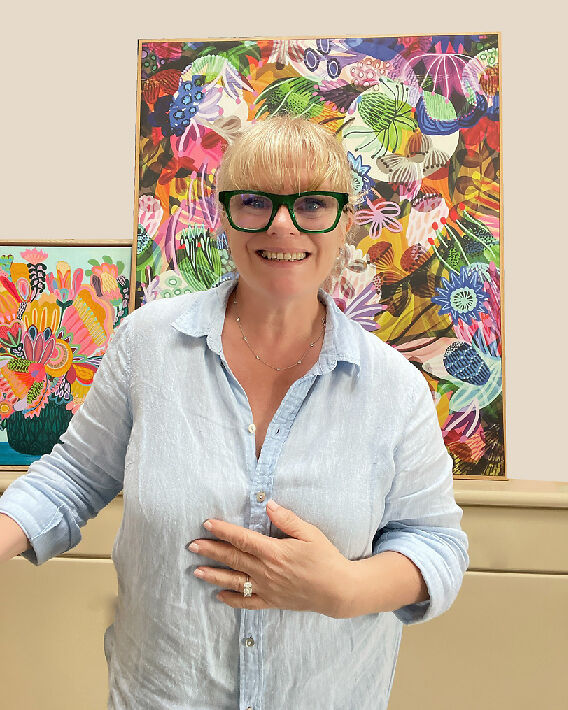
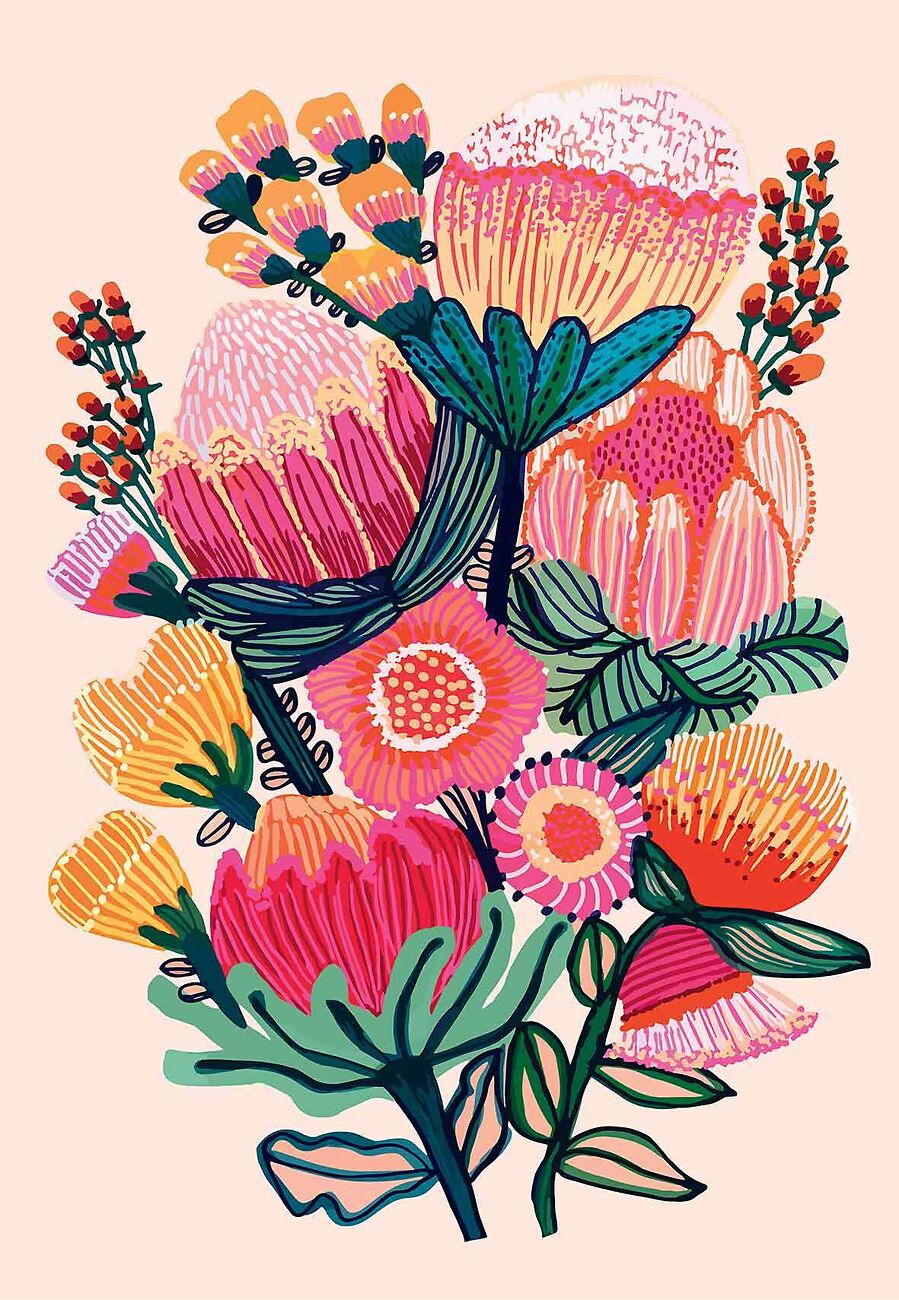
Kirsten Katz is an Australian artist, surface pattern designer, and creative entrepreneur whose work celebrates the vibrant beauty of botanical life through colour-drenched paintings and modern design. Bursting with vitality, Kirsten's art is inspired by Australia's diverse flora and exotic blooms, blending hand-painted art with contemporary mark-making and form in mediums ranging from watercolour to gouache. Drawing on her technical background in surface design, Kirsten transforms her artworks into a gorgeous range of fine art prints, homewares, textiles, stationary and gifts.
Kirsten has been a valued client with Image Science for over 6 years, initially starting out as a print customer then transitioning into setting up her own home printing studio. We were delighted to chat with Kirsten to explore her creative process and to lift the veil on the inner workings of her studio practice.
In this conversation, Kirsten reflects on the moments that shaped her creative path, from a childhood immersed in the arts, to the pivotal shift that transformed art from a lifelong passion into a committed, professional practice.
We’d love to hear about your creative journey to how you became the flourishing textile designer, artist and creative entrepreneur you are today. Can you describe the moment you decided to turn art from a passion into a professional career?
The turning point really came during COVID in 2020. When lockdowns began, I suddenly had time and space I hadn’t had before. I wasn’t going into the office, our family business had shifted entirely online, and I decided to use that time to paint and see what might happen if I took my work more seriously.
I started painting consistently, experimenting, and sharing work online. I started slowly and set up a small Etsy shop to test selling my art and then added my own website, offering a few paintings as art prints simply to see if people would respond. To my surprise, they did.
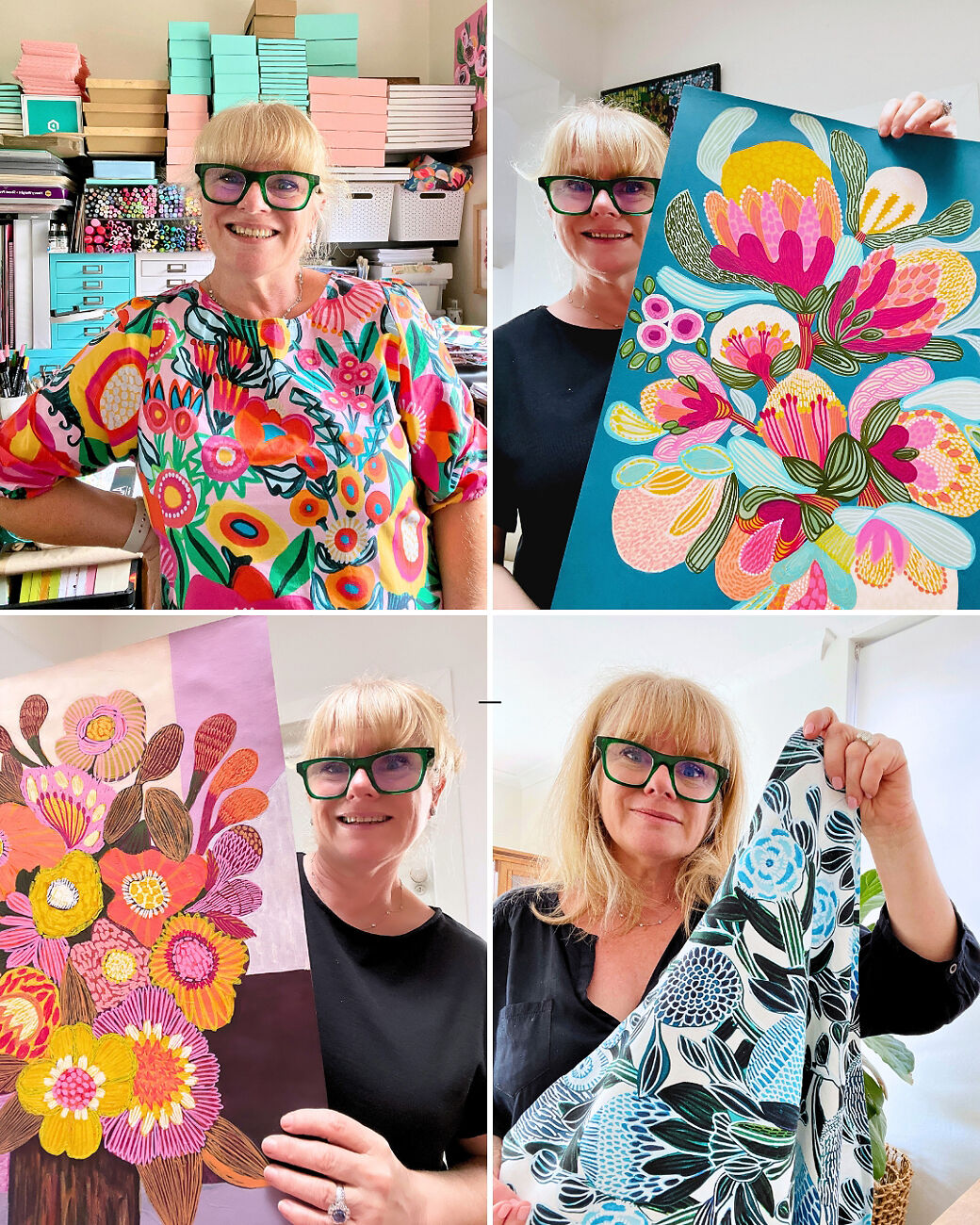
In many ways, that moment was the culmination of a longer journey. I studied textile design in 2012, explored pattern design, and learned about art licensing over several years. I’d exhibited and licensed work internationally before COVID. But 2020 marked a shift back to painting for myself — leaning into the work I genuinely wanted to make — and that’s when art moved from a long-held passion into a fully committed professional practice.
You’ve spoken before about how your love for art began in childhood and evolved over time. Can you tell us more about that early spark?
Art was always part of my world. I had an aunt who was a full-time professional artist, and growing up I watched her paint constantly — botanical still life, portraits, and often my own portrait. Being around that level of dedication and creativity made art feel normal and accessible, not something distant or abstract.
Creativity showed up everywhere in my life. I was drawn to art and craft from an early age, studied art throughout school, and began sewing my own clothes from the age of nine. As a teenager and into adulthood, I was always making — clothes, textiles, handmade objects — alongside exploring ballet and other creative pursuits. Making things with my hands felt instinctive.
Art was never something I “found”; it was something I lived with. It took time to recognise it as a profession rather than just part of who I was, but that long, steady presence is what ultimately gave me the confidence to commit to it fully later in life.
Nature is a recurring presence in your work, particularly the beauty of Australian native flora. What is it about this subject that continues to hold your attention and inspire new exploration?
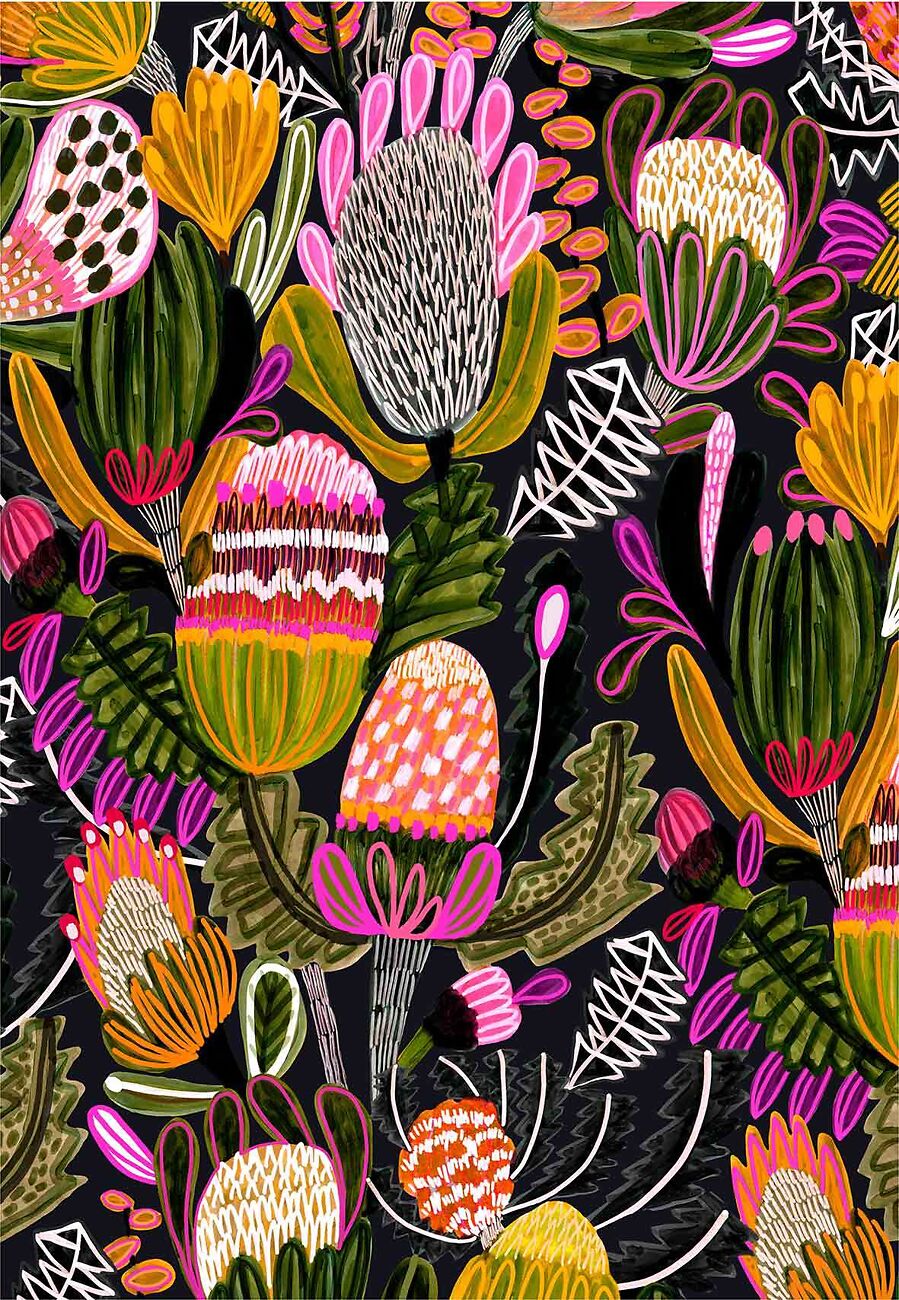
Australian native flora has always been part of my environment. I grew up surrounded by gardens and bushland — my grandparents’ carefully tended garden beds filled with seasonal flowers and fruit trees, and my mother’s garden rich with native plants like banksias, grevilleas, wattles and flowering gums. Directly across from our home was a bush reserve, which became our playground. We built cubby houses, ran through the bush, and spent hours immersed in that landscape.
Because of that, native flora never felt unfamiliar or exotic — it felt personal. Walking to and from school through the bush, native flowers were simply part of everyday life. Over time, I became especially drawn to them for their strength and individuality. They’re hardy, long-lasting, and visually striking in a way that feels distinctly Australian.
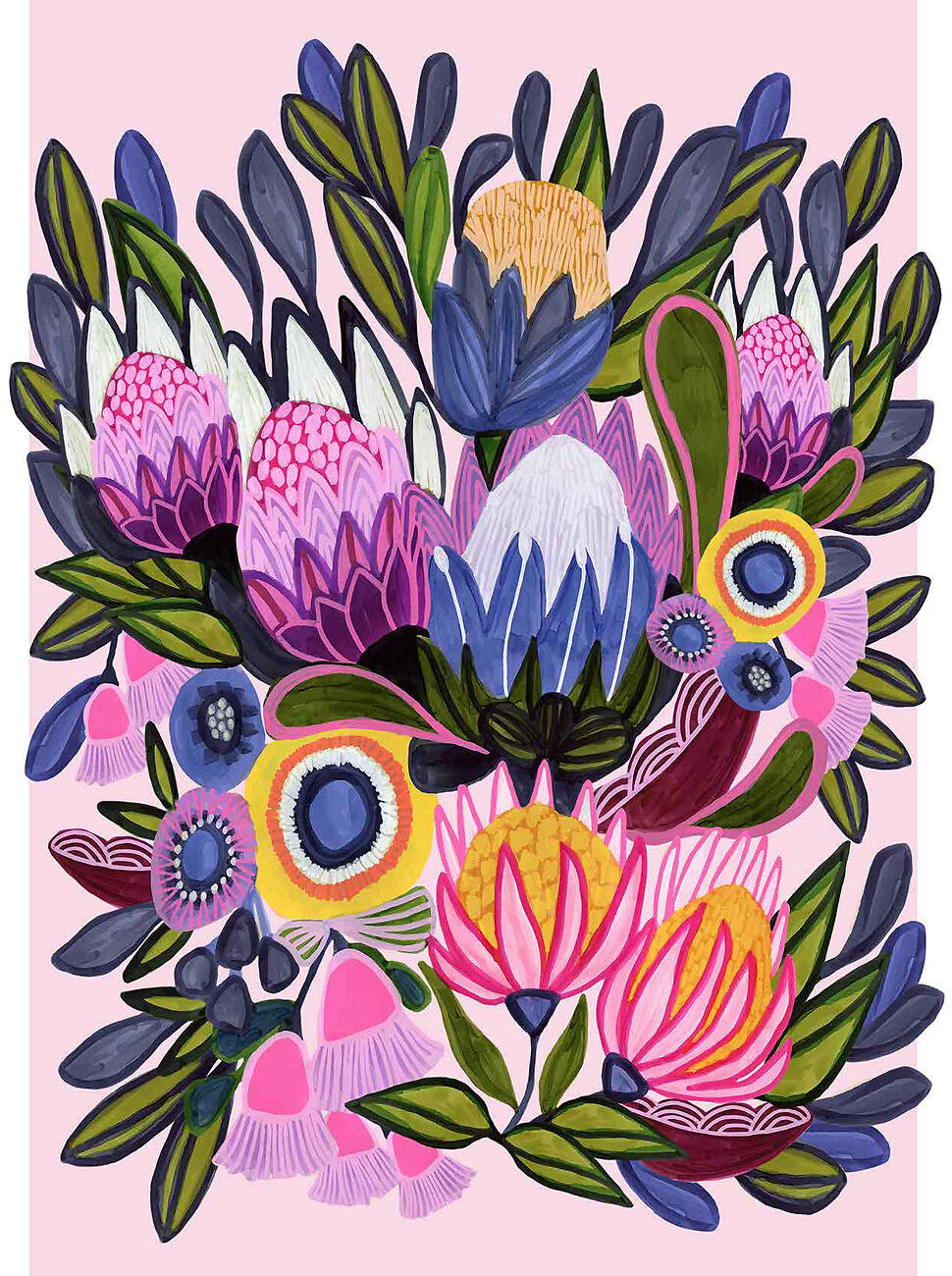
What continues to inspire me most is their sculptural quality. Flowers like banksias, waratahs, proteas and grevilleas have an architectural presence — layers, textures and forms that reveal something new from every angle. They’re not just beautiful from the front; they hold interest in three dimensions. That depth and structure is endlessly engaging to paint, and I never tire of exploring it.
During your creative process, where do you most consistently find joy? Is it in the initial discovery, the making itself, or in seeing the work take on a life beyond the studio?
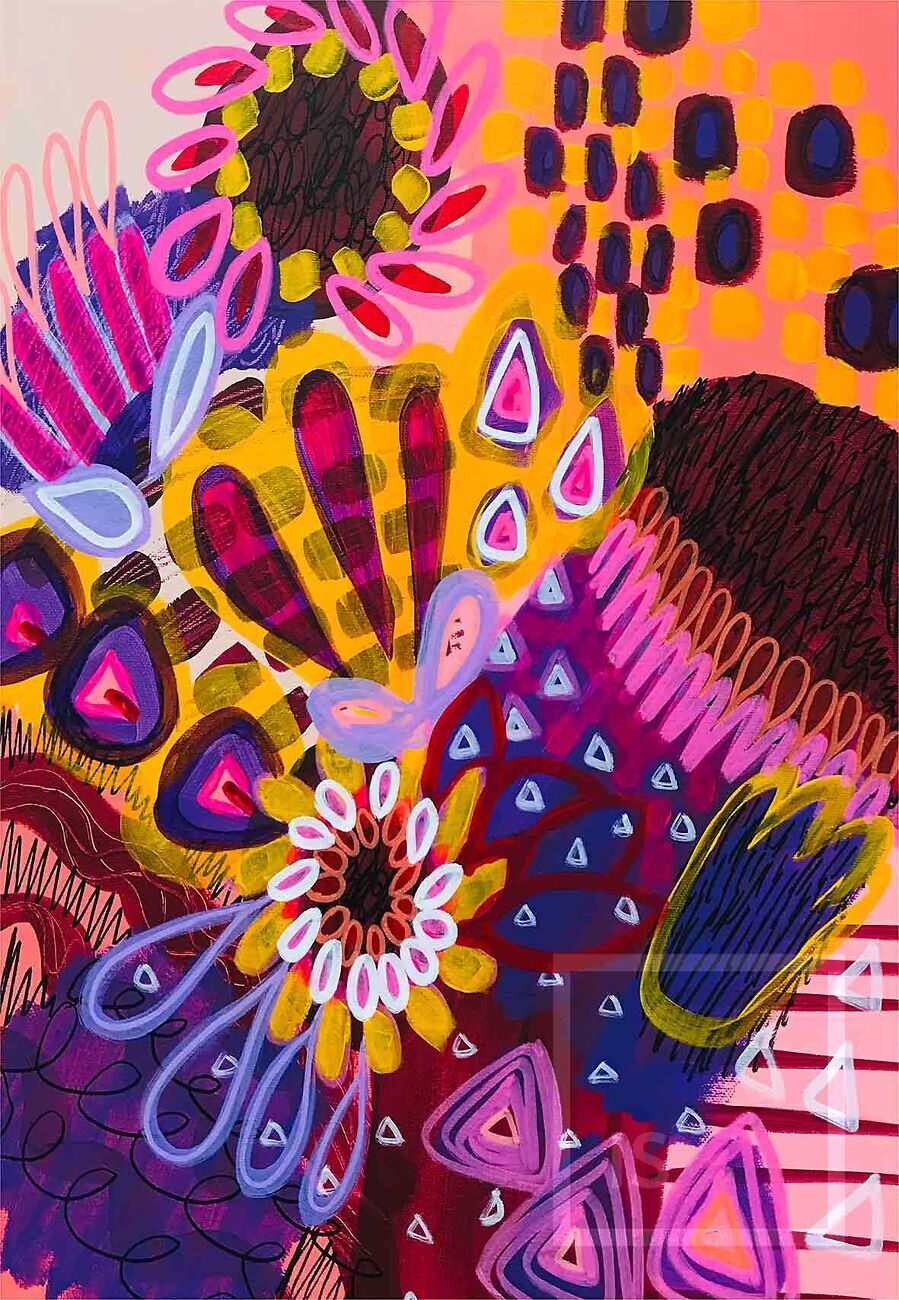
I find joy in two main places. The first is right at the beginning — sitting down with a blank surface and starting without a fixed plan. I don’t map paintings out in advance. I let them evolve. I’ll begin with colour, then a loose sketch, and allow the work to grow organically. That sense of not knowing where it will end up keeps the process alive and engaging.
The second comes later, in the resolution of the work. There’s a point where the painting moves from instinct and experimentation into problem-solving — refining layers, balancing colour, texture and detail until everything works together. That stage feels almost like a puzzle, and when it finally clicks, there’s a deep sense of satisfaction.
I experience a similar joy when translating artwork into textile or surface design. Building patterns manually and refining repeats is a slow, deliberate process, but seeing an artwork resolve into something functional — fabric, wallpaper, or a product — is incredibly rewarding. From the first mark to the final outcome, it’s the act of making and resolving that brings the greatest fulfilment.
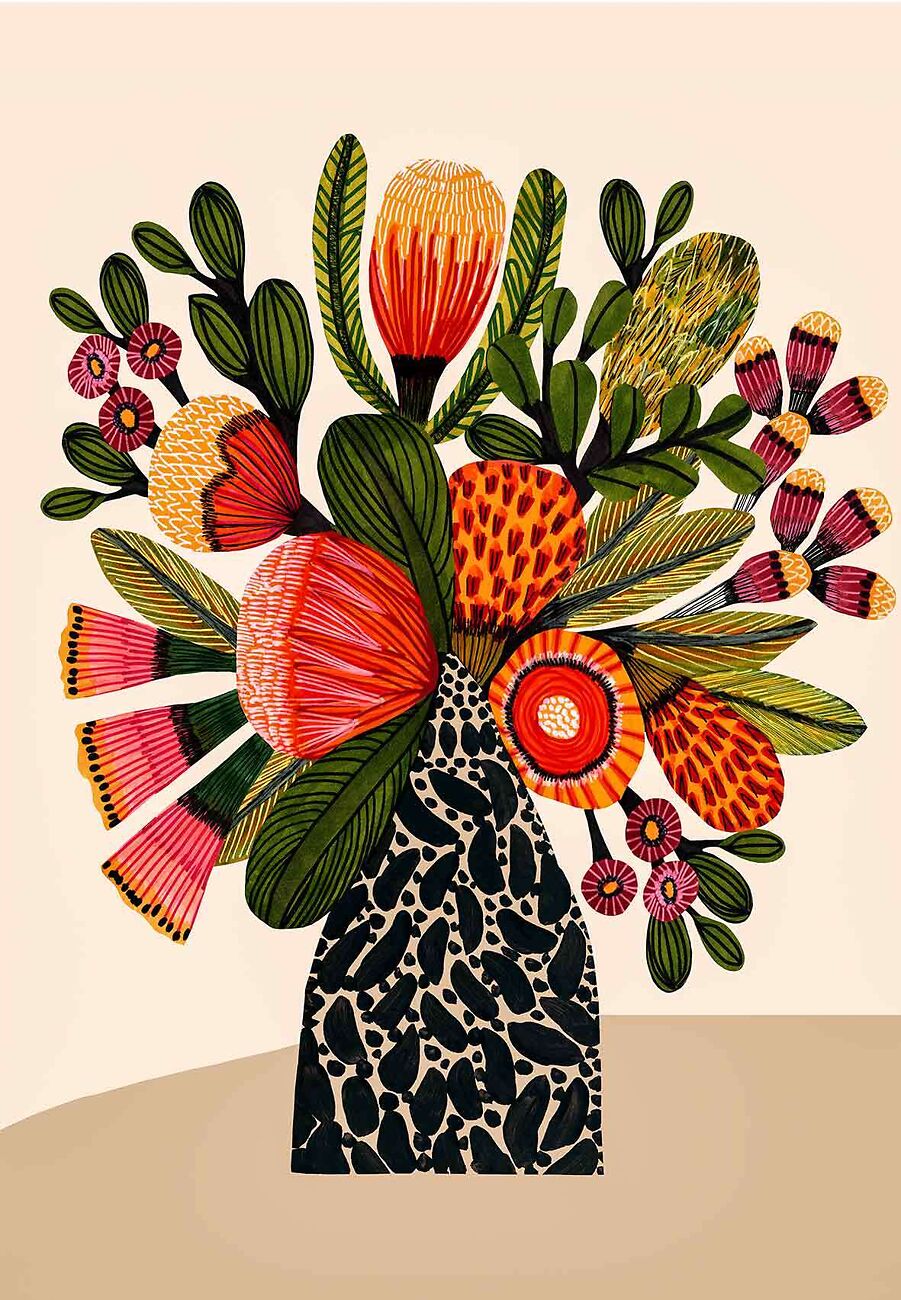
Your work often begins as a hand-painted piece before it’s translated into fabric or wallpaper. What draws you to the world of textile design, and what challenges come with adapting a painting into a repeat surface pattern?
From a young age, I was fascinated by the possibility of choosing fabric and watching it become something wearable — it almost felt magical. I learned to sew from my mother and began making my own clothes around the age of nine, largely by observation. Fabric quickly became something I was deeply drawn to, both as material and as visual expression.
One pivotal experience came when I was fourteen and living in London for six months with my parents. During that time, I spent hours at Liberty of London, completely captivated by the richness of the floral fabrics, colour, and design. I bought fabrics there and made dresses from them, pieces my mother still has stored away. At the time, it didn’t occur to me that this would be significant — but looking back, that experience planted a deep and lasting appreciation for textile design that only fully revealed itself decades later.
When I eventually studied print and textile design, I gained the technical foundation to translate painted work into repeat and surface design. One of the biggest challenges in that process is managing texture. Brush marks, canvas grain, and paper tooth can interfere with how a design reproduces on fabric. Often, a painting that works beautifully as an original needs to be reworked or repainted on a smoother surface so the artwork — not the texture — remains the focus.
Balancing the expressive qualities of hand-painted work with the technical demands of textile production is a careful process, but it’s one I find deeply rewarding.
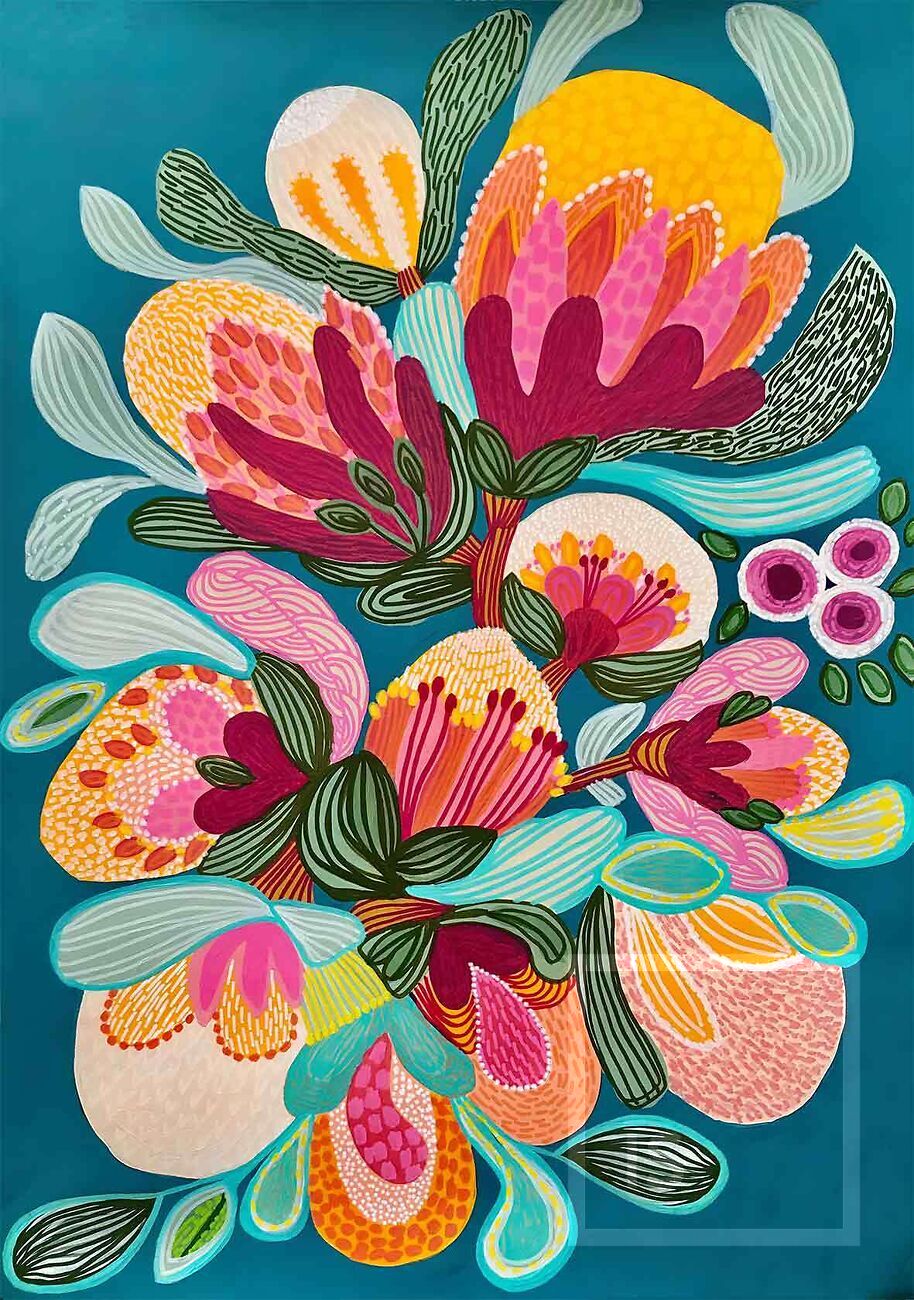
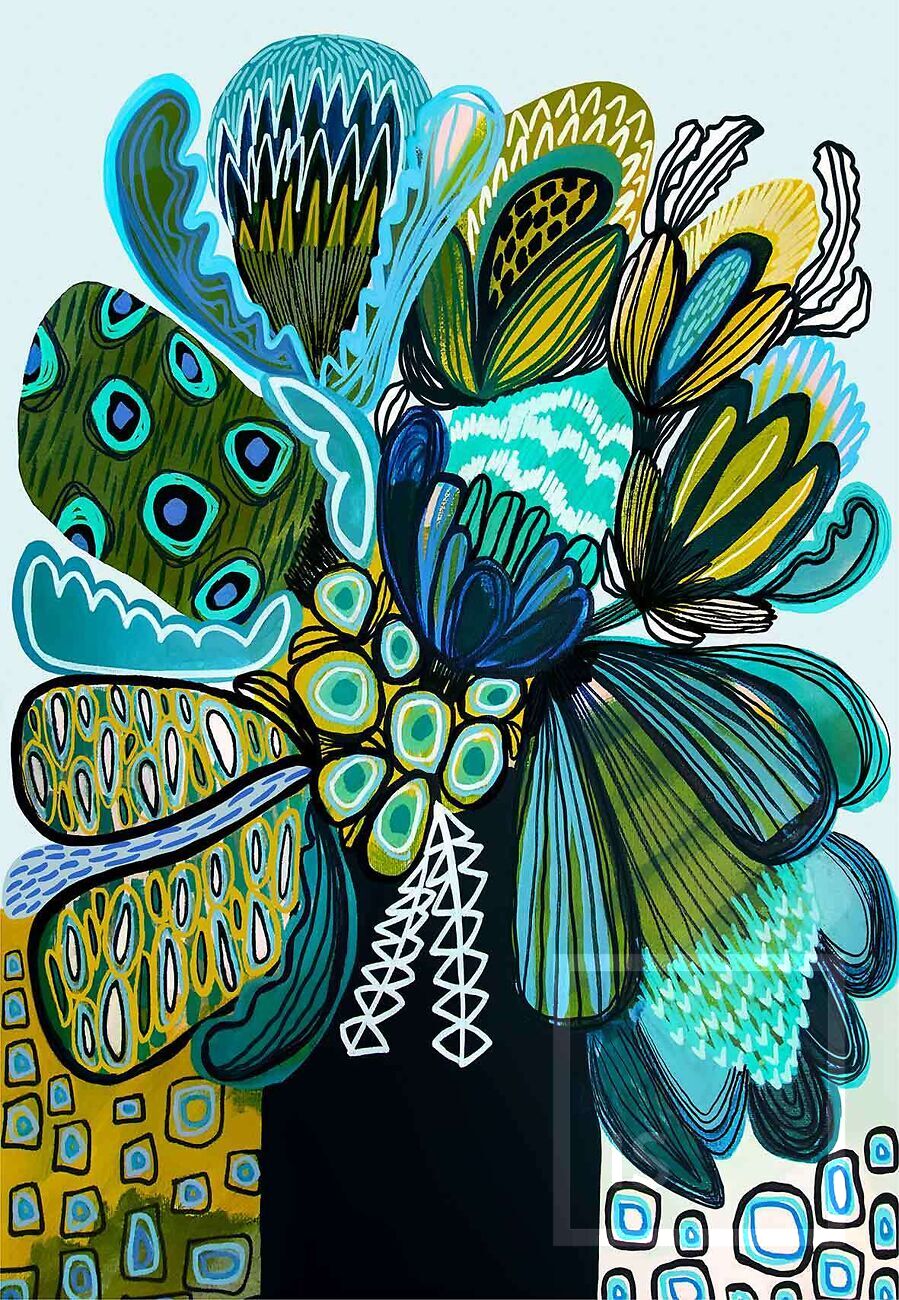


You’ve licensed designs and collaborated with brands around the world — how do those opportunities arise, and what advice would you give an emerging artist interested in licensing their art?
All of my licensing and collaboration opportunities have come about organically. Brands and companies have found my work, connected with it, and reached out to start a conversation. I’ve never actively pitched my portfolio or approached companies directly — not because it isn’t a valid pathway, but because my practice has evolved in a way where visibility and consistency have led to opportunities for me.
I’ve always believed that if the work is strong and you continue to put it into the world, the right people will find it. That approach has shaped the way I work and the kinds of collaborations I’ve taken on. It’s allowed relationships to grow from genuine interest rather than persuasion.
For emerging artists, my advice is to focus first on making work that you truly love and feel connected to. Spend time creating — not just practising individual skills, but developing a body of work that reflects how you see the world. Style comes from repetition, curiosity, and evolution over time.
I don’t follow trends, and I’ve never created work to fit a particular brand aesthetic. I believe originality and a clear point of view matter far more. When your work is genuinely yours, it carries a confidence and clarity that can’t be replicated — and that’s what ultimately attracts meaningful opportunities.
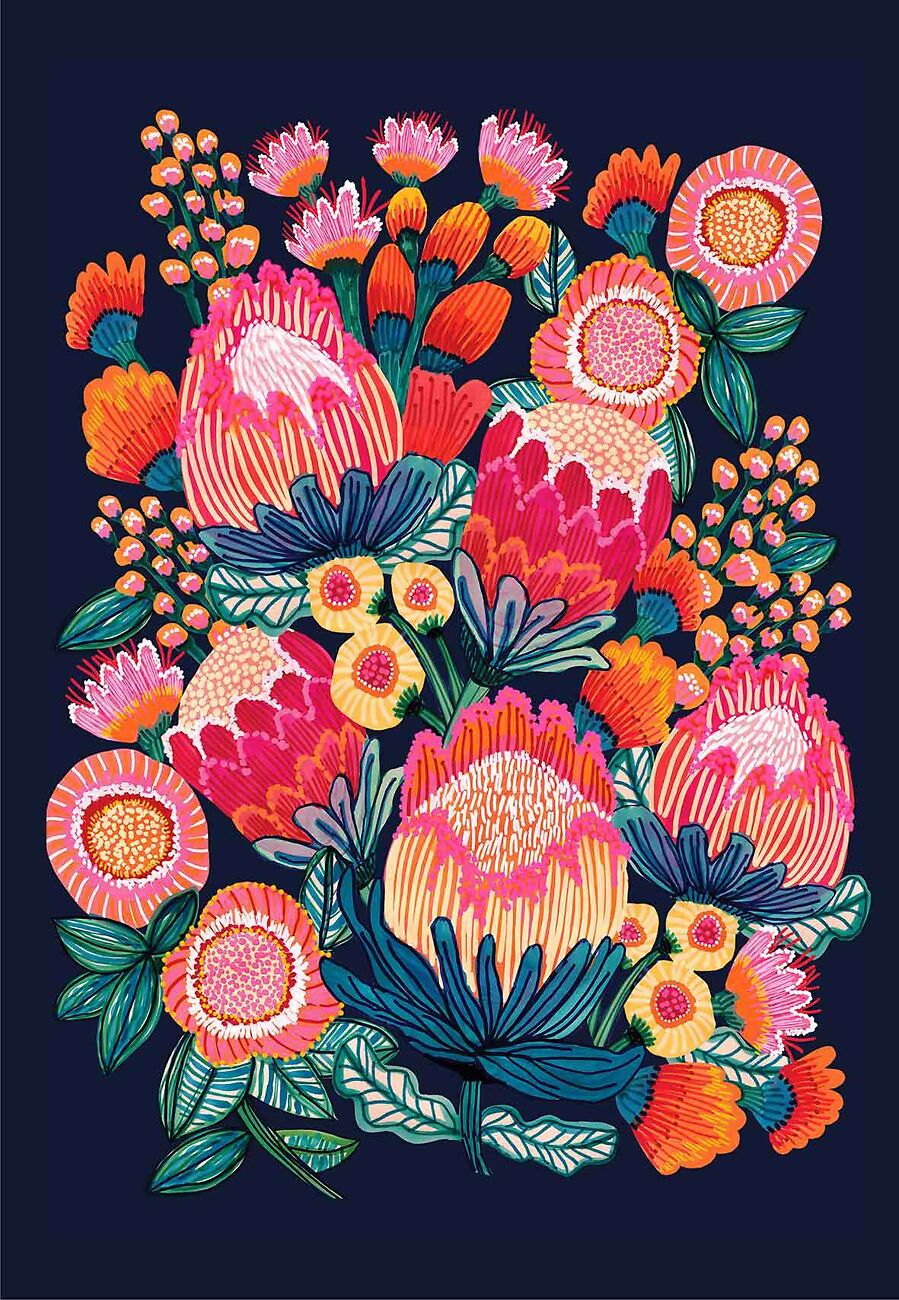
What kind of conversations or connections have you observed between your work and the people who live with it every day?
The strongest connection I see is with people who are drawn to colour, flowers, and expressive, modern art. My work tends to resonate with those who enjoy bold, statement pieces — people who aren’t afraid of colour and who see art as a way to bring energy and personality into their home.
For many, the artwork becomes a focal point in a space. It’s chosen not to blend quietly into the background, but to lift a room, brighten the mood, and create a sense of joy. I think the people who connect most with my work value creativity, individuality, and visual interest — whether that shows up in how they dress, decorate, or express themselves more broadly.
What matters to me is that the work feels uplifting. It isn’t political or confrontational, and it isn’t intended to provoke heavy conversations. It’s simply there to be enjoyed — to make a home feel warm, expressive, and lived in. In a world that can feel overwhelming at times, I want the work to offer something positive, comforting, and genuinely joyful to live with every day.
For some artists, creative block and irregular output are constant challenges, yet you appear to have mastered the art of creating with consistency. What habits or practises help to cultivate a reliable and sustainable creative rhythm?
I’ve never struggled with motivation or ideas — if anything, I have the opposite problem. Creativity has always been constant for me, and if I had unlimited time, I’d happily spend every day painting. The challenge has never been finding ideas, but balancing creative work alongside family life, business responsibilities, and the practical realities of running a studio.
That discipline comes from a long background in ballet, which taught me structure, repetition, and commitment from a young age. Creativity was always something I fitted into life — early mornings, late evenings, and quiet moments once everything else was done. That rhythm has stayed with me.
Rather than forcing a strict daily routine, I work in cycles. I often have multiple pieces in progress at once, allowing work to develop slowly. I also set gentle creative goals, like aiming to complete a certain number of pieces over a year rather than in a rigid timeframe. That approach gives me both momentum and flexibility.
Ultimately, my rhythm comes from consistency rather than pressure — returning to work regularly, allowing ideas to evolve, and making space for creativity as a rewarding part of everyday life.


Many people feel drawn toward a creative passion yet hesitate to fully pursue it due to the practical demands of stability and financial security. Drawing on your own experience, what advice would you offer to those who are contemplating taking that leap but are unsure how to begin?
The most important thing I can say is to be patient and give yourself time. When you’re starting out, it’s easy to look at artists who appear successful and assume they arrived quickly. What you don’t see is the many years — often decades — of work that came before that visibility. People don’t suddenly “appear”; they simply come onto your radar at a certain moment.
A creative career is built slowly. It requires perseverance, emotional resilience, and a willingness to work through periods of uncertainty, self-doubt and frustration. Progress doesn't come from one good piece or a single breakthrough - it comes from showing up repeatedly and doing the work, even when the results feel unclear.
Spend time making, experimenting, and learning what you truly respond to. Pay attention to what excites you and what doesn’t, and be willing to push through discomfort. Style, confidence, and consistency are developed through repetition. If you allow yourself the time to grow, the work will eventually begin to stand on its own.
Looking forward, do you have any creative goals for the coming year? Are there any new mediums, products or collaborations on your studio to-do list?
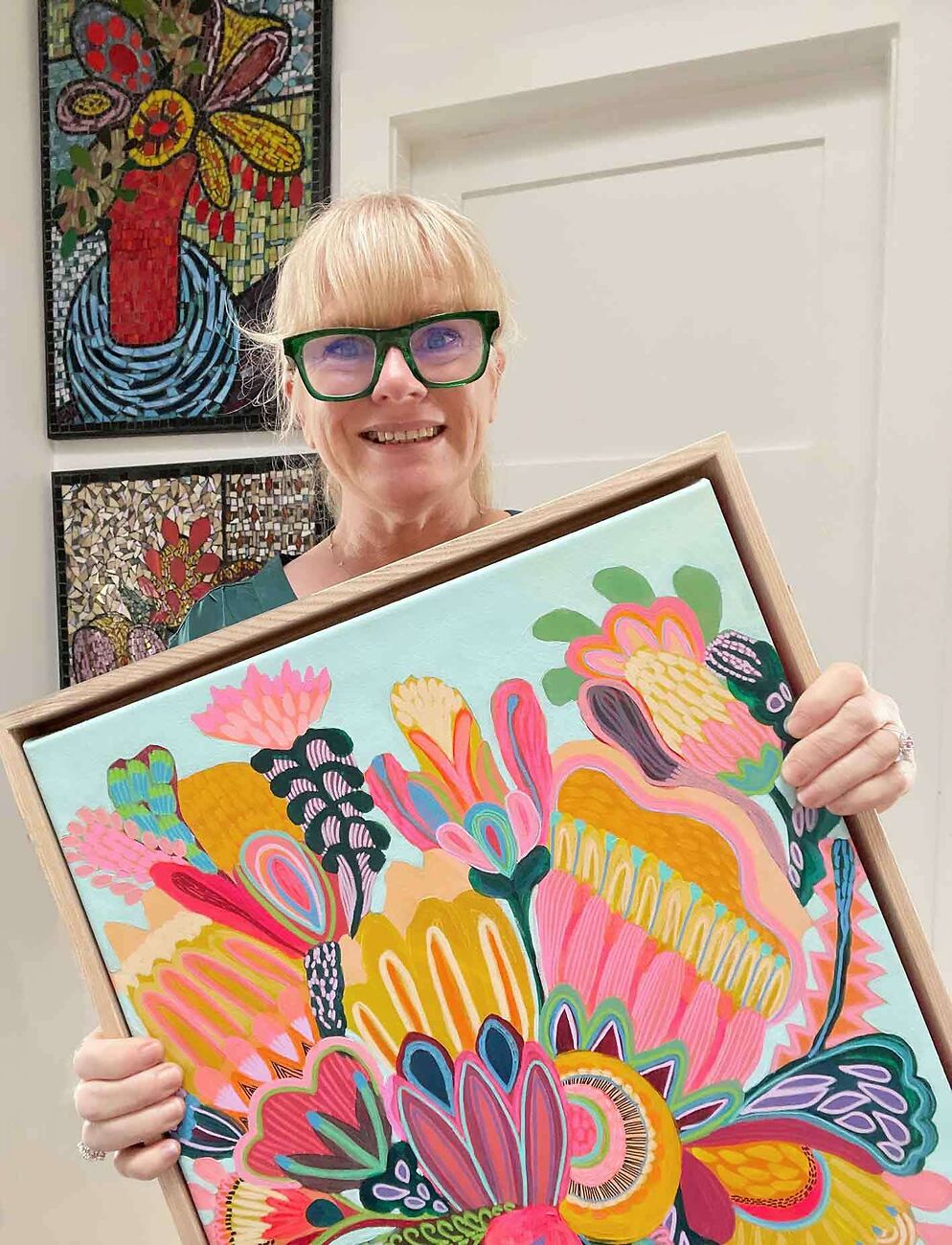
My focus moving forward is very much about doing less, but doing it more intentionally. I want to spend more time painting original works and allow them the space they deserve. Rather than producing constantly, I’m working towards creating a small number of carefully considered collections each year — likely two or three — built around colour, mood, or theme.
I’m also interested in working at a larger scale again and allowing selected pieces to naturally evolve into other applications and collaborations such as wallpaper, home décor, clothing and textiles, where it feels appropriate. The aim is to work more like a collection-based practice rather than responding to every possible product opportunity.
At this stage, it’s about balance — creating work that feels meaningful, resolved, and lasting. I want the focus to be on quality, longevity, and enjoyment, and on building a body of work I’m genuinely proud of over time.
Follow Kirsten on Instagram and Facebook to stay up to date with artist news and stay informed of new print and product releases. Head to Kirsten's website to browse her beautiful collection of fine art prints, textiles and homewares.