Featured Artist: Karen Standke
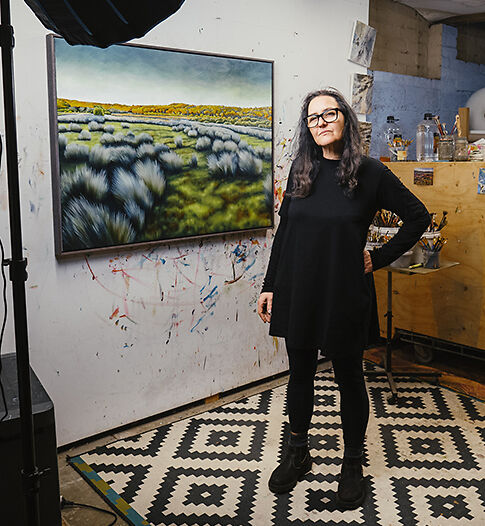
For more than a decade, Image Science has had the pleasure of working closely with Karen Standke, an exceptionally gifted contemporary landscape painter. Having based her practise in Germany, Austria, Japan, New Zealand, and Australia across the years, Karen brings to her work a combination of cultural depth, technical discipline, and a uniquely attuned way of perceiving the remote environments she is drawn to. Her paintings embody both the vastness and intimacy of these wild spaces, inviting us not to simply to observe a place but to feel its presence both spiritually and historically.
In the twelve years we've printed for Karen, one of our most stand out collaborations was producing a suite of her stunning artworks for a special installation at Brain Lab, Monash University’s research centre investigating psychedelic-assisted treatment for mental health. Explore the online gallery of this remarkable installation here.
In our conversation, Karen reflects on her journey to becoming the artist she is today, her evolving approach to landscape, and the intuitive process that guides her from first encounter to finished painting. We highly recommend following Karen on Instagram, so you can stay updated on newly released works and her upcoming Tree Spirits exhibition!
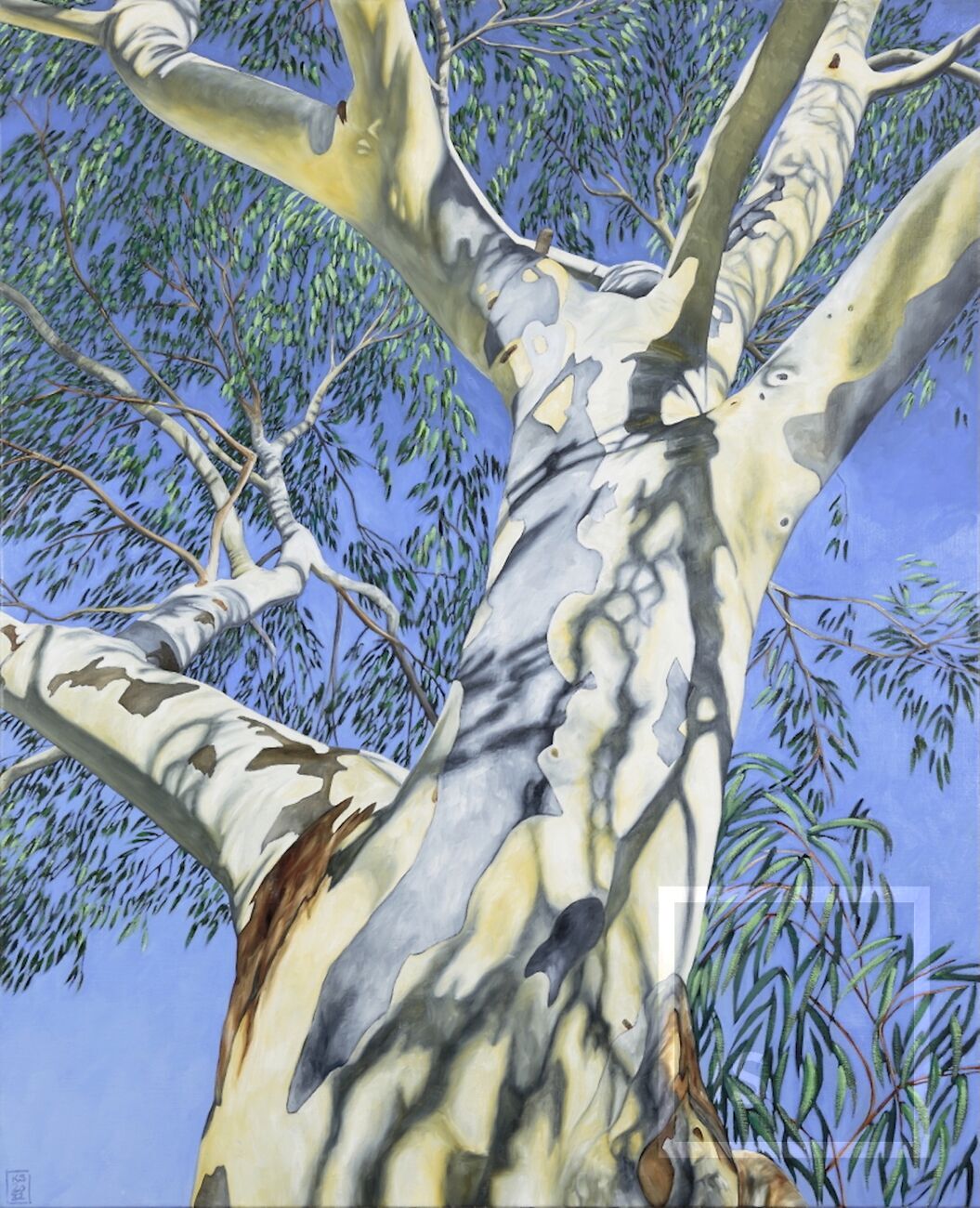
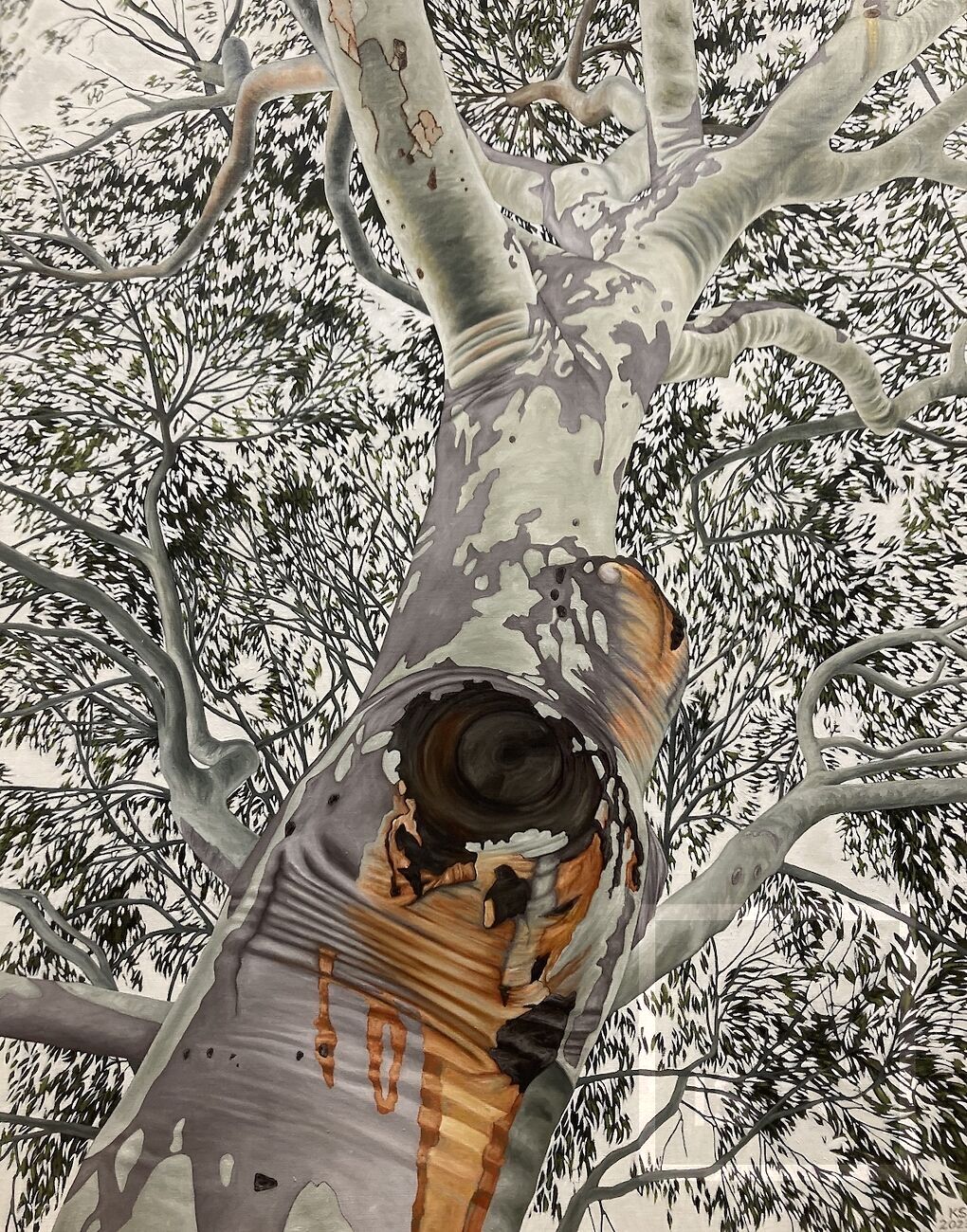


Your work beautifully captures both the vastness and fragility of the Australian landscape. Could you share a little about where your journey as an artist began and what first drew you to landscape painting?
I wanted to be an artist from my early teenage years, and after completing an apprenticeship in lithography I enrolled at art school in Munich, where my interest in depicting the world around me really began.
My first medium was ink on paper, which gave me a solid foundation in drawing and working with negative space, and ultimately sparked my desire to live in Japan. It wasn’t until I arrived in New Zealand and attended another art school there that I began working with acrylics, and later with oil paint, which has since become my primary medium.
You were born in Munich, Germany, and have lived in Austria, Japan, New Zealand and now Australia – each with its own unique geography and cultural relationship to nature. How have these different environments shaped the way you paint and perceive landscape?
Each country I’ve lived in has left its mark on me and on the work I made while I was there. Living in these places offered a rare opportunity to see, study, and understand local art and culture within their own contexts—a privilege, and something very different from encountering artworks in a museum without ever having visited the places they came from.
That said, I believe every artist inevitably brings their own cultural imprint to their work, and I, too, observe and interpret the landscape through this lens.
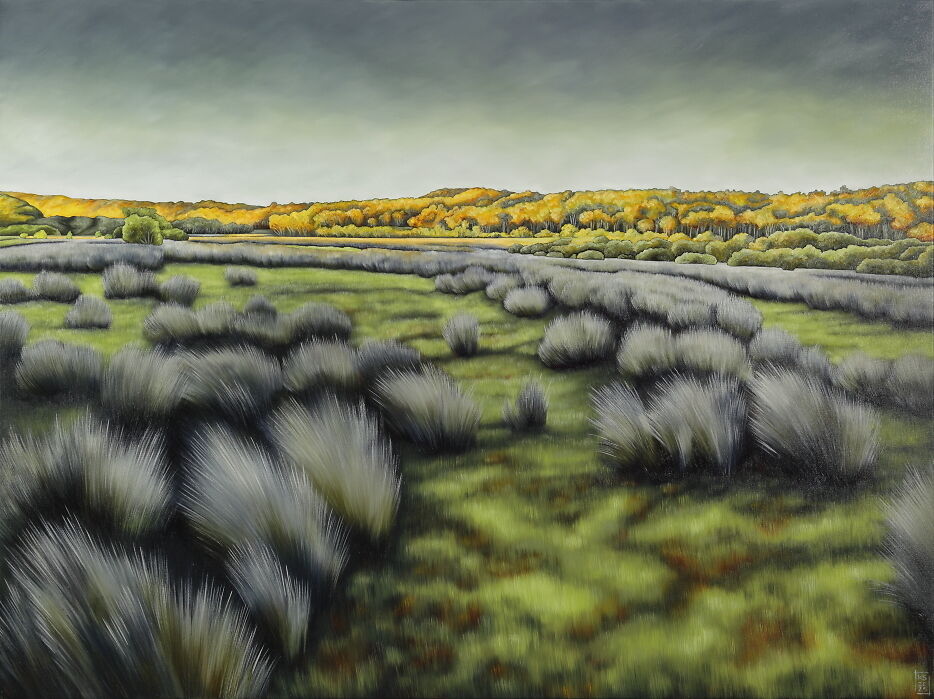
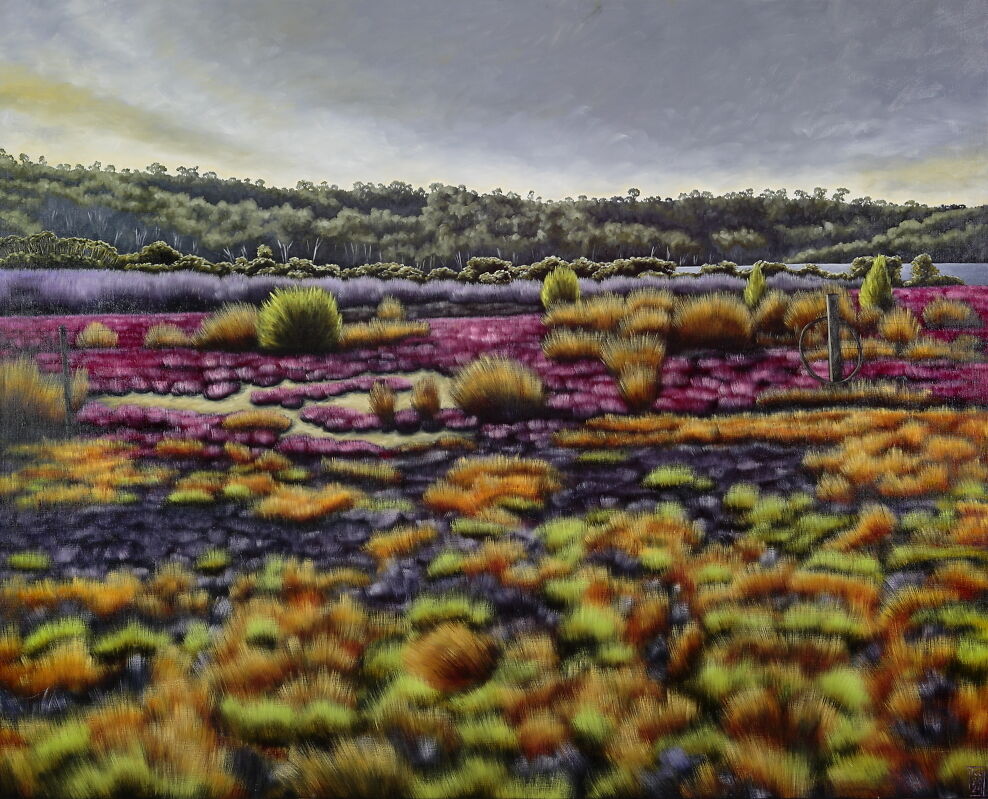
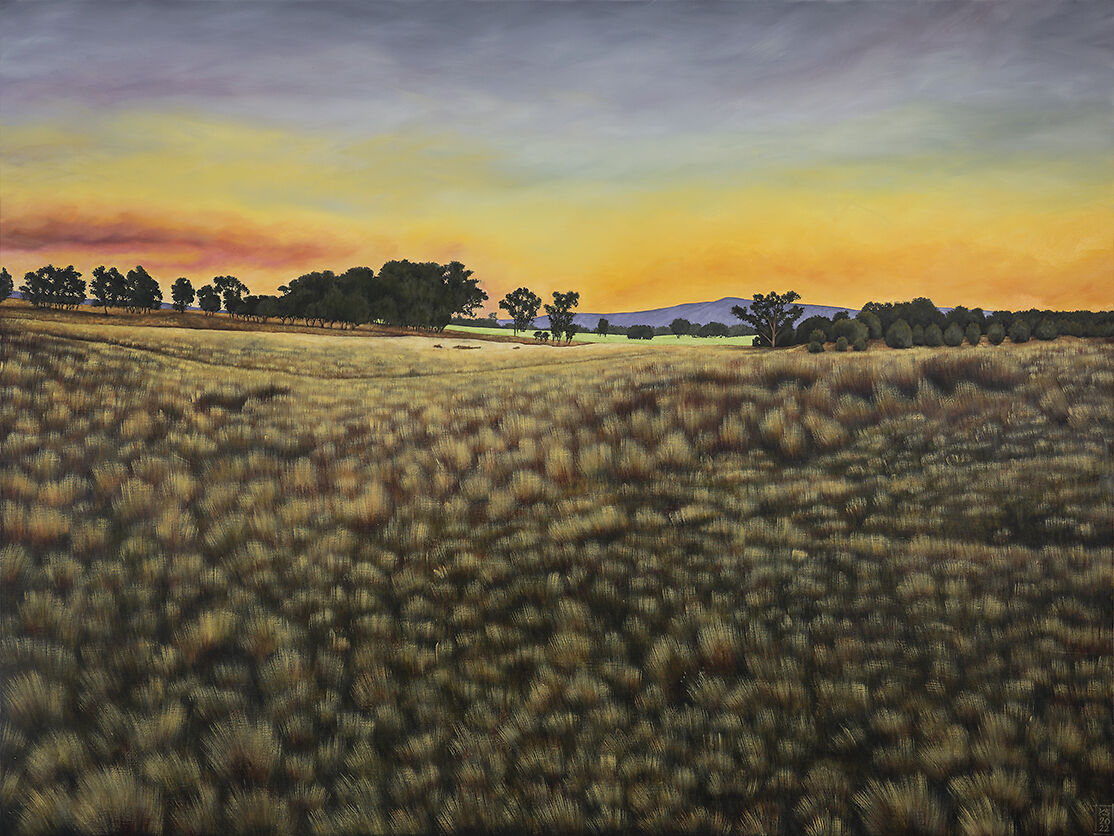
Your recent solo exhibition Millingandi presented a striking series of landscapes from the Merimbula region on the Sapphire Coast of New South Wales. Can you tell me more about this body of work, and what drew you to paint this particular area?
It’s almost always by accident that I find the places that inspire a new series. That was the case with Amoonguna in 2014–15: a small area just outside Alice Springs, conveniently down the road from where I was living at the time. Its easy access meant I could return repeatedly and observe the landscape in different light.
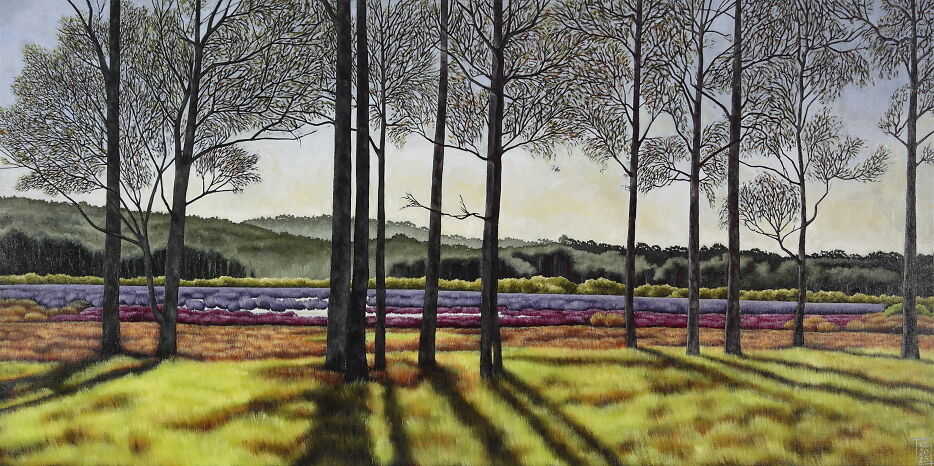
Millingandi emerged in a similar way. It began with an early-morning dog walk, just down the road from the motel where we were staying. That encounter inspired the first painting, Merimbula Landscape 1. We returned a year later and stayed three nights in the same place so I could revisit the wetlands at all times of day and study the shifting colours.


You’ve spoken about the importance of researching a place both historically and spiritually before commencing a series. How does this process of discovery unfold, and how do these layers of meaning shape your visual
approach?
It’s simple, really — I talk to the locals. That’s always been my approach. I spend time in a place, get to know it, and find someone who lives there. They’re the best source of insight, no matter what the internet might say.
Your work often reflects on the changing face of the environment, from the effects of climate change to man-made influences like the introduction of non-native species. What draws you to explore these themes, and do you see your practise as a way to document these shifts or bringing greater visibility to them?
To be honest, I’ve moved away from that aspect. I’m trying to let go of the anxiety that comes with addressing all of it — we all know what’s happening, we know what we should be doing, and hopefully we’re each contributing in whatever way we can. But now my focus is on light, beauty, and simply becoming a better painter.
After more than 15 years of talking about these issues, I’m done with that for now. My approach these days is: look how beautiful this is. Enjoy it.
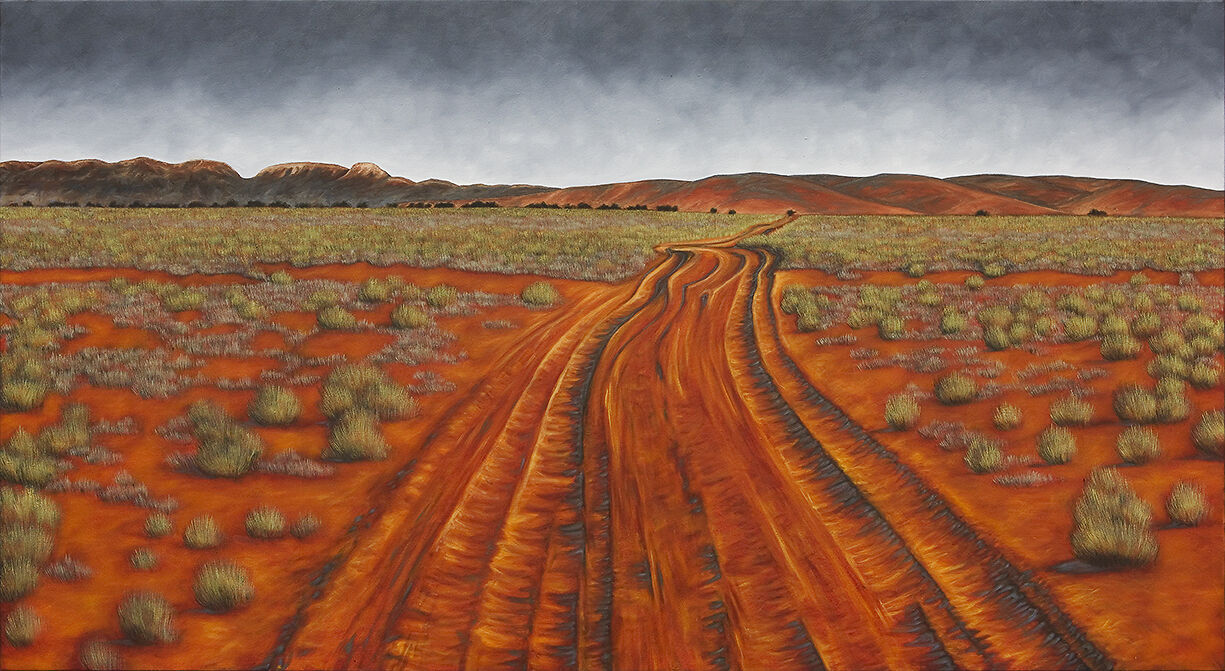
Could you walk us through your creative process, from the moment you arrive at a site, to the finished painting? How much of your work is done on-site and in the studio? And how much is planned, and about surrendering to what the moment brings?
I return to the site as often as I can, observing it in different weather and different light. I take hundreds of reference photos and, from there, the work unfolds in the studio.
Once I’m back in that space, the process becomes methodical by choice—steady, focused, almost meditative. And somewhere within that structure, the magic begins to happen. It either flows or it doesn’t, and that element of chance is what keeps it all so interesting.
Are there any challenges or creative blocks that come up during your process? How do you navigate your way around them?
“The fear of a white canvas” — I know it well. But once I get past that first hurdle, the rest usually comes easily. I tend to begin anywhere between five and eight paintings at the same time, and if I get bored or find one piece particularly challenging on a given day, I simply switch to another. It keeps the process fluid and stops me getting stuck.


Has there been a particular person or experience that profoundly impacted your growth as an artist?
When I was doing my apprenticeship as a lithographer, I had a wonderful older colleague from Dresden who became a mentor to me. He urged me to visit the Lenbachhaus Museum in Munich, renowned for its remarkable collection of works by the Blue Rider artist collective. Those artists were influential to me then, and they remain so today.
For a time, I visited the Lenbachhaus almost every weekend, studying the paintings closely. This August, during a trip back to Bavaria, I visited the recently established museums dedicated to individual members of the collective—most notably Gabriele Münter and Franz Marc.
What advice would you give to emerging artists who want to approach a gallery for representation, but aren’t sure how to start that relationship?
Keep doing what you are doing. Practise your art and your vision. A lot of this is luck. Enter local and national competitions, exhibit as often and wherever you can - be in it for the long haul.
What’s next for your artistic practise – do you have any upcoming projects, exhibitions or locations you’d like to explore in the coming year?
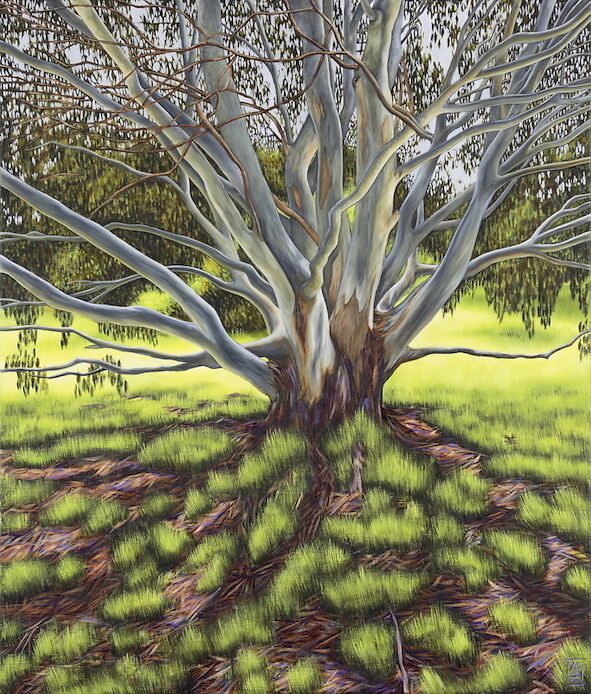
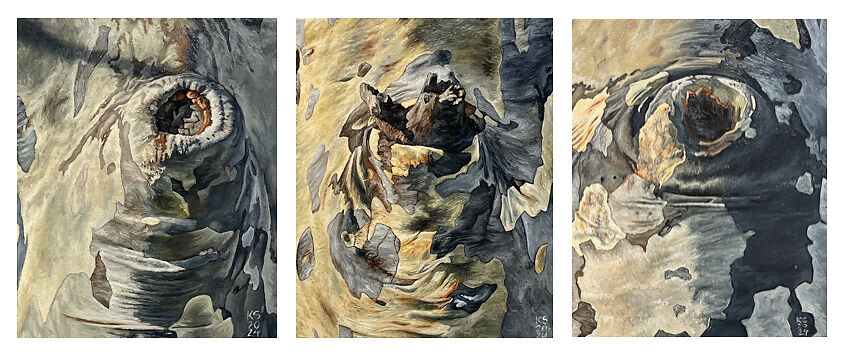
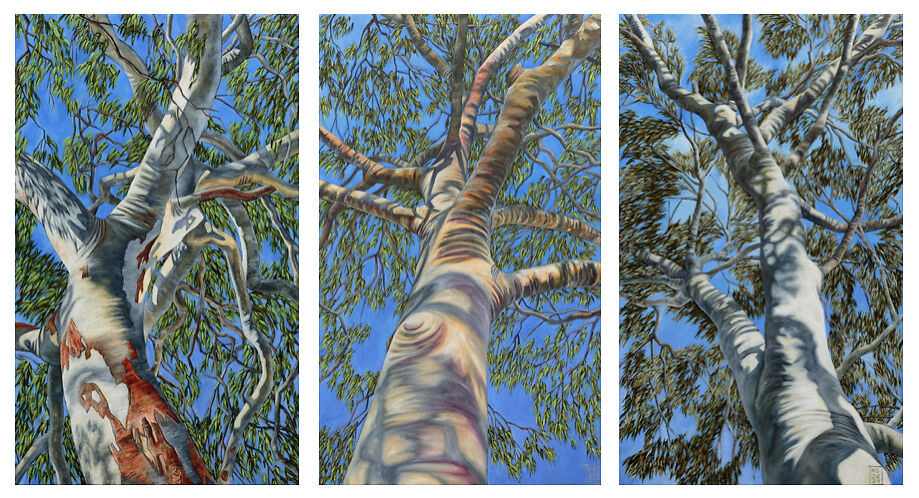
I am working away at my “Tree Spirits” series and am planning to exhibit them next year. Travelling across the Nullarbor to Western Australia is my plan for the winter of 2026, and we will see what emerges from that as it has been 20 years since the last trip! Time flies. And in 2027 there will be a solo show of new work in Austria.
To keep up to date with exhibition dates and artist news, follow Karen on Instagram and Facebook. To shop her range of gorgeous limited edition fine art prints and original paintings, check out her website at www.karenstandke.com.