Featured Artist: Blake Rosenberg
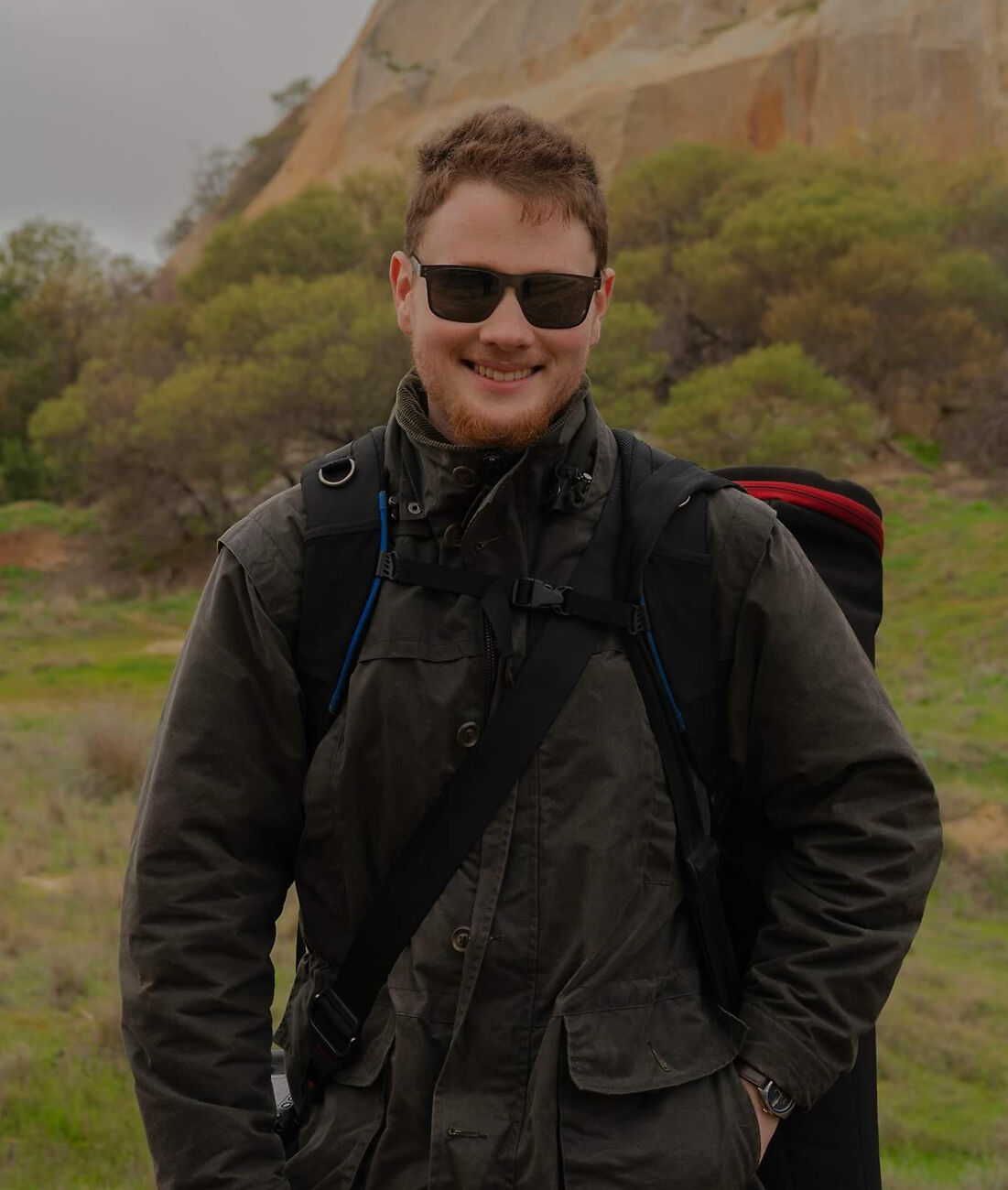
Please welcome our new Services Manager, Blake Rosenberg!
A RMIT graduate with a Bachelor of Arts in Photography, Blake is an accomplished landscape photographer and licensed drone operator who spends his spare time traversing the Victorian High Country or hiking up some lofty peak in search of the perfect sunset or rolling vista to shoot. Based in Geelong and a country boy at heart, Blake draws his inspiration from the natural world with a dedicated focus on "telling the whole story" for any photographic project he takes on.
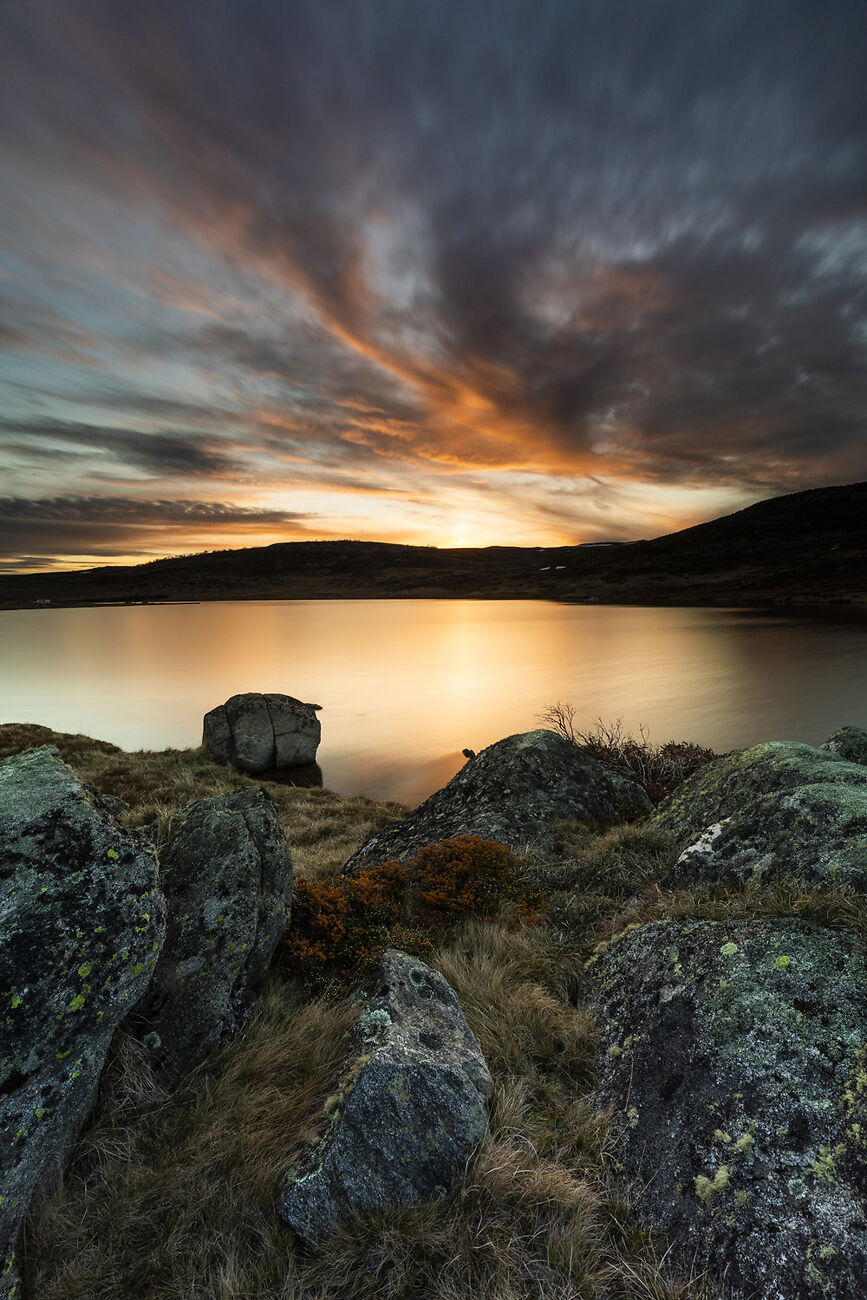
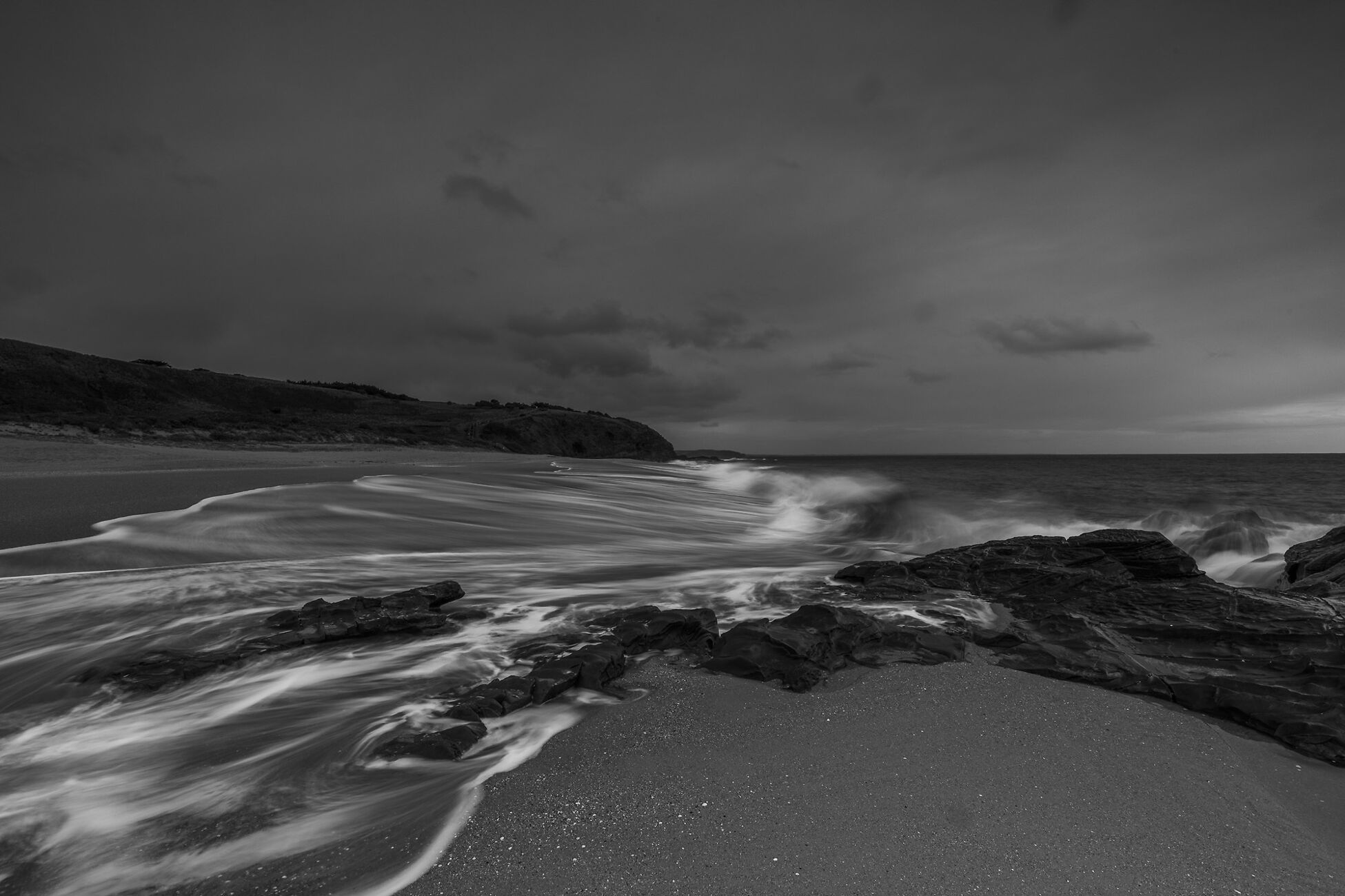
Like anyone with a healthy creative practice Blake's photographic style is ever-evolving, but his landscapes can be characterised by their dramatic, sweeping panoramas, long exposure movement and the presence of rich, golden light.
Blake has settled nicely into the Image Science team, where his attention to detail and technical aptitude has helped him quickly grasp the challenges that come with the demanding Services Manager role. We'll be doing a mini exhibition on our studio walls of Blakes photography for the next few months, so make sure to pop in to have a look next time you swing by!
Welcome to Image Science Blake! Tell us a bit about your background and education as a photographer. What draws you to landscape photography in particular?
Thanks for the warm welcome guys. I was born and raised in a small dairy-farming community in north central Victoria called Stanhope, about 30 mins west of Shepparton. Photography has been my passion since a very young age, but especially over the last decade. My journey started when I found an old digital camera at a garage sale for $15 when I was little, I bought it, and needless to say I was instantly hooked. I brought that little camera everywhere and took pictures of everything. It did me well for a number of years, but it eventually died when taking photos in the middle of a sandstorm. I had a decision to make – give it up, or replace the camera. What I was doing at the time made me feel a certain way that I couldn’t describe, but I decided that I wanted to continue down the photographic path, so I invested in my first proper DSLR. The passion bloomed from there. Photography brings out the artist in me like no other activity does.


In terms of education, I attained my VCE and graduated Dux of Rushworth P-12 College in 2016 and as for formal qualifications, I graduated from RMIT University in 2020 where I attained my Bachelor of Arts Degree in Photography with Distinction.
My motto is to ‘Tell the Whole Story’, sometimes a small detail can be much more poignant and powerful than showing the whole thing. It’s often about what is implied rather than pictured.
I find it somewhat difficult to pinpoint why exactly I am so particularly drawn to landscape photography. Maybe it’s the majesty of sweeping vistas, the magnificence of the natural world’s ancient form, or the humbling grand scale of it all. Maybe it’s the unique interplay of rich golden light across the environment, or the fact that each moment in a sunset is it’s own, never to be repeated again, or perhaps it is what it gives us, what it makes us feel… In the words of photographic legend and one of my idols Peter Dombrovskis: “When you go out there (into the wilderness), you don’t get away from it all, you get back to it all. You come home to what’s important. You come home to yourself.”
Drones appear to be an important fixture in your practice, and I can only assume an essential investment as a landscape and commercial photographer. What are some of the benefits and challenges that come with using drones for aerial photography?
So yes, I am a fully trained and CASA-certified RPA operator for commercial operations. For me, investment into aerial perspectives in the form of drone photography was a relatively recent one, only having taken it up in the last 4 years or so, and boy do I wish I’d done it sooner. It has completely changed and honestly revolutionised my photography. It has opened up new worlds in terms of photography and my creativity has skyrocketed as a result. It’s just such a different and unique perspective, and such a great tool to realise so many different shots. I love it.
It does have it’s challenges though, flight time is a big one, you don’t have an endless time to just hover and wait for the perfect shot, and you have to be a bit disciplined and selective about when you send it up. Also there are areas where you’re not legally allowed to fly drones, so that’s another one. Environmental factors are also at play, if it’s raining or the wind is too strong then you don’t want to send it up for example, you have to be on the lookout for birds of prey. It is quite a complicated operation, because you’re not just operating a camera, you have to split your focus between flying and also the creative photography side, it can be a lot at times, but it is a lot of fun. Thoroughly recommend.
Where are some of your favourite spots to photograph?
Where do I start, there’s so many. Australia is such a massive place. A personal favourite area of mine is the Victorian High Country; I am particularly fond of the Pretty Valley region around Falls Creek; across Harrietville and the Buckland Valley, including Mt Buffalo; the King Valley including Whitfield and Edi; Myrtleford and Bright are favourites of course, plus Mt Beauty and Tawonga; up to the Tallangatta Valley including Walwa and Jingellic, All the way down to Baw Baw and Walhalla. Second would be the iconic and magnificent beaches of the Great Ocean Road, and I am absolutely in love with the rainforests and waterfalls of the Otways – they’re a favourite weekend adventure spot.
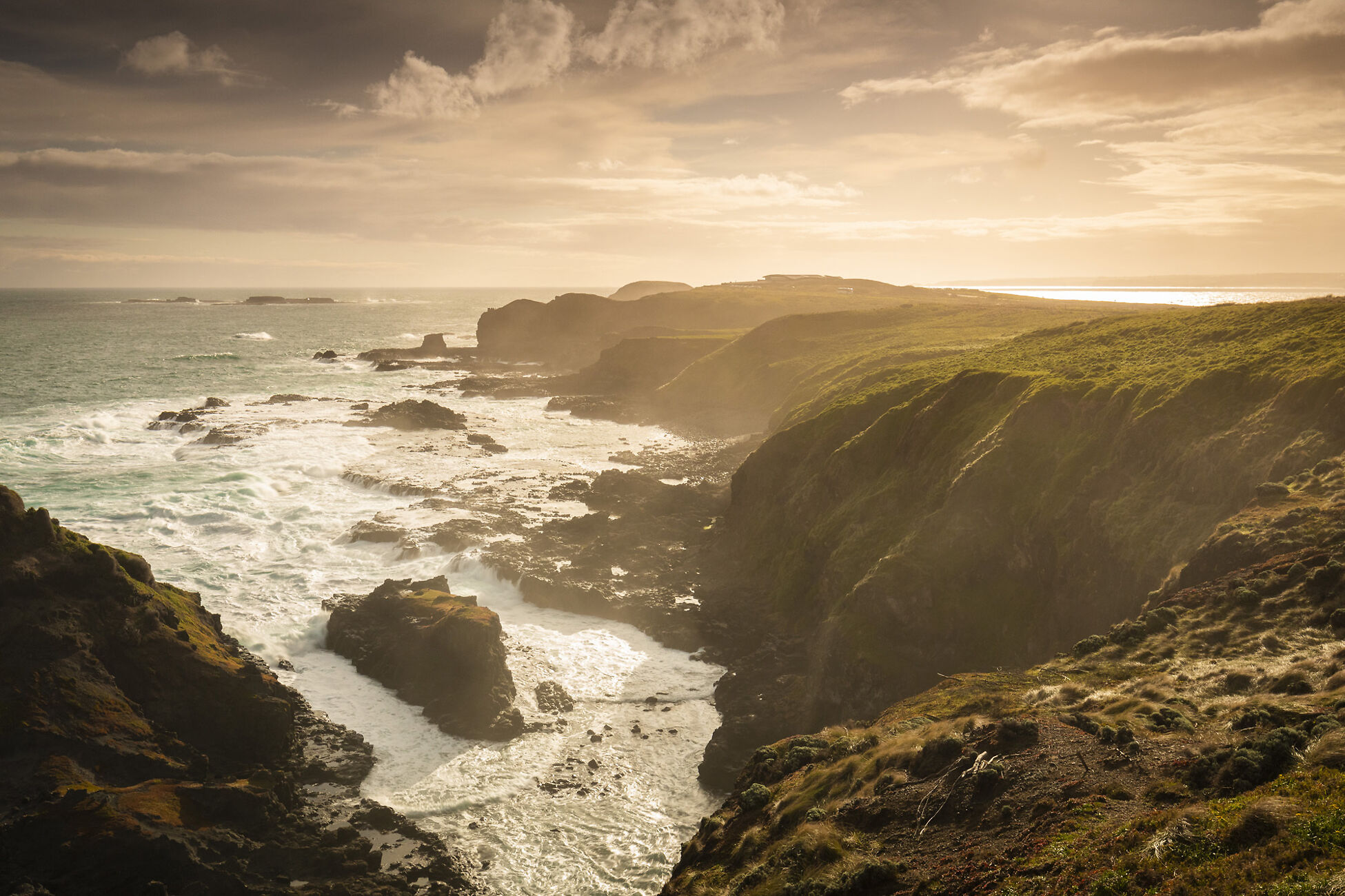
I am entranced by the distinctiveness of Wilson’s Prom and Phillip Island, Venus Bay is incredible and seemingly endless. Gippsland is a place I have a lot of respect for, and want to go back to after being in Mallacoota over Christmas during the 2019 Bushfires, that was a very scary time. The vast openness of the Mallee is intriguing to me, I like the vibrant colours of Lake Tyrrell.
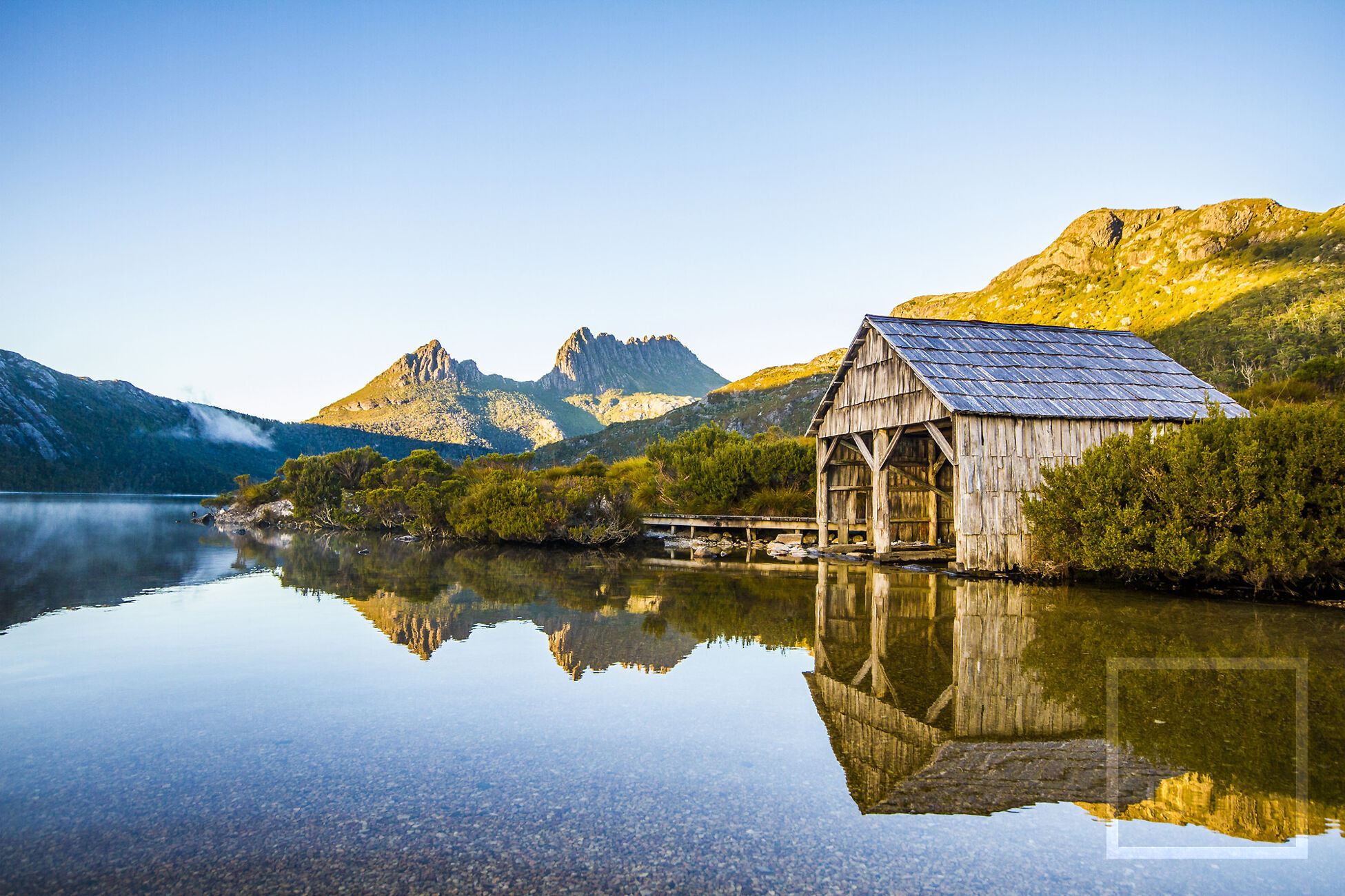
Tasmania is a place that speaks for itself, it’s impossible to narrow down any particular region, as every time you turn a corner you are presented with another incredible scene. I’m itching to go back once again and explore even more.
We have a history of having avid camera collectors on the team at Image Science, and I hear you are continuing this tradition! What are some of your favourite cameras in your collection? What would be your “holy grail” piece?
Oh yes, I love shooting film. The deliberateness of it, how it slows you down and forces you to think. It’s very aesthetic. My main camera that I shoot with the most is a Hasselblad 500C/M, it’s simultaneously built like a tank and a fine Swiss watch. It’s just a lovely, refined piece of kit that’s a pleasure to use. Continuing on medium format, another interesting bit of kit, a Voigtlander Bessa II which shoots 6x9. I also have a beautiful Voigtlander Contaflex Tessar which holds a great deal of sentimental value. It’s unique in being an interchangeable lens camera, but instead of unmounting the lens from the body, you actually remove the bare glass element groups, leaving behind the focusing controls and such. A workhorse of a Pentax MX Kit for when I need really good 35mm. An Olympus Trip 35 which I’ve recently been playing around with a bit more for some fun. It’s a fully mechanical camera, but has an inbuilt metering system for auto-exposure which is powered by a selenium cell – no batteries required ever. And far too many more to even mention, those are just the ones I mainly use frequently.
I think my grail camera would be a Fuji GX617. I’ve seen and even scanned the negatives and they are so beautiful. Just seeing such an expanse of film, in such a captivating format is great. Not practical in the least (is film really though) but imagine the awesome panoramic landscape shots I could get. Hehe.


Tell us a bit about your process when photographing a new subject or landscape and the equipment you use. Do you prefer to shoot film or digital?
As I touched on, I do shoot a bit of film, I do love it, but 9 times out of 10 when I’m actually going out for proper shots, I reach for my digital, it’s dependable and honestly an extension of my body at this point.
I am perhaps slightly in the minority of today in that I don’t shoot mirrorless. I’m a Canon boy, although not after initially starting on Nikon – I decided to make the switch after falling in love with Canon colours and how intuitive to control they are, sorry Nikon, everything just seemed backwards to my brain. My primary setup is a 5D4, Various Fast L Glass, Manfrotto CF Tripod, and Nisi Filters.
My process varies, but I do like to research ahead of time where I’m going, promising locations, weather, sunrise and sunset times etc. I use a combination of Google Maps, paper topographic maps, BOM, and an app called PhotoPills. It varies, but usually I’ll arrive at the location ahead of time, have a scout around looking for scenes and vantages that might be promising or look interesting, then I’ll usually choose one or two and get setup and wait for the light to happen. I try and setup to show something different or unusual, something distinct from what everyone else captures. Upon the light unfolding and the scene coming together, I will usually very quickly be able to pre-visualise how I want the final shot to look like, and that informs my settings, filter choices and post-production direction. I wouldn’t say that I’m a purist by any means, most of the time I’m not aiming to fully faithfully reproduce a scene exactly as it was, I quite often go in a more stylised direction, often employing very long exposures to emphasis movement in the clouds for instance.
How has your photographic style evolved over the years?
I’m usually very quickly able to form an image of how I want the final shot to look in my minds-eye, this final result will inform my process, my settings, filter choices and the post-production direction. As I said, I’m not necessarily aiming to document or accurately reproduce the scene, I more aim to embody emotions or conditions in the aesthetics of the final shot. When I was starting out I would say that I was pretty straight in terms of photographic style, little bits of experimentation here and there but nothing too crazy, but as I developed as a photographer I slowly established my process, direction and style. I feel as though I have found my aesthetic and style, as ever evolving as it is. I would say that my work is characterised by sweeping golden light, vivid sunset colours, moody and dramatic skies, long exposure movement and scene depth.
Your interest in capturing the natural world has led you to make small steps into astrophotography, as seen in your past project “Ourobouros”, a series which examined the cyclical and time-based properties of the earth. What were some of the technical challenges you faced when shooting this series?
I love astrophotography, but I only dabble really. It’s an immensely deep and technical field that I’ve only scratched the surface. The title image in my Ourobouros series was an astrophotography long exposure shot done on film. I used my Hasselblad 500C/M and Provia 100F positive slide film. The camera was pointed at the south celestial pole in order to capture the star trails around that point. One of the challenges was the reciprocity failure rate of the film – lengthening my exposure time for that single frame to over 8 hours. Another issue was – since I was shooting in the middle of winter – was that of dew building up on the front element of my lens. To combat this I designed and soldered my own dew heater that used a series of resistors discharging a battery pack to provide a subtle warmth, which elevated the dew point enough to stop dew and frost forming on the lens.
How would you go about capturing an overly photographed landmark in a way that feels fresh and unique?
No one wants to copy what everyone else is doing in photography. What’s been done has been done. It’s my belief that when in the right mindset a photographer should be able to produce something unique simply though the act of taking a good image. By this I mean that every moment in nature is its own, never to be repeated again. No two days are alike. The landmark may remain unchanged, but the environment that it is in is everchanging, that is what you must focus on and emphasis in order to create a new or fresh perspective on something that has been done to death. My photographic practice leaning towards being more stylised does afford me a great deal of flexibility as to how I want to portray a scene or landmark. I’m not locked in to the straight and traditional viewpoints. My motto is to ‘Tell the Whole Story’, sometimes a small detail can be much more poignant and powerful than showing the whole thing. It’s often about what is implied rather than pictured.
What are some of your creative influences?
I’m pretty lucky to get inspired by what I’m photographing. The scenes talk to me and nature influences my decisions and direction. I am very much guided by my natural surroundings. In terms of people who I admire, look up to, are inspired by, and respect, I would say Ansel Adams, Peter Dombrovskis, William Patino, Morten Hilmer, Thorarinn Jonsson, Mitch Green, Luke Tscharke, Ben Chubb, Daniel Tran, Thomas Heaton, Merr Watson, Hyun Jeon, Marc Adamus, Luke Stackpoole, Reuben Wu, and Harry Pope. Just to name a few.
What’s next for your photographic practice? Do you have any projects in the works for 2023, or goals you’d like to achieve for your business?
Honestly I’m not too sure, but I know that I just want to get out and shoot more. These last few years have been tumultuous for many, me included, and I feel as though I’m not getting out and doing what I love enough. I want to reconnect with nature more and keep making work that I’m proud of.
To see more of Blake's work, follow him on Instagram at @blakerosenbergphotography, or contact him through his website at blakerosenberg.com.