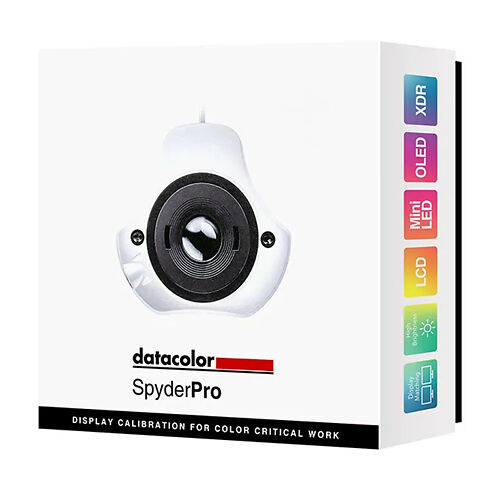
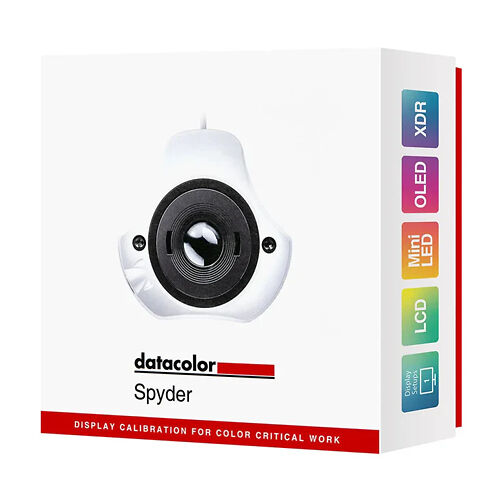
A monitor calibration device is the
single most important part of achieving a colour accurate workflow.
It is absolutely an essential part of achieving high quality results with digital imaging - it is in no way optional. If you have a monitor, you need a monitor calibrator!
While there are a million wrong ways to try and achieve consistent and
accurate colour in the digital imaging process, a hardware calibration
device is the simple, affordable, and accurate way of skipping all the
mistakes, mucking around, and expense associated with ad hoc 'twiddle
this to make that match' type solutions.
If you're not
working on a calibrated monitor, you simply can not expect consistent
and accurate results, either from your own printing or from a lab.
There is simply no way you can conclude, for example, that a print is
'too magenta', if it is very much possible your monitor is not
displaying colour accurately.
There are now options
ranging from just less than $150 through to about $400. Any one of them is
significantly better than no calibration or 'eye based calibration'.
Jump To:
- What will a monitor calibrator do for me?
- How often will I use it?
- This only does monitors - what about my prints?
- Professional level monitor calibrators
- An excellent budget option for beginners
What will a monitor calibrator do for me?
A monitor calibrator actually works in two stages.
The first stage is calibration
- using the physical controls on your monitor, you set your monitor
into the best possible state for digital imaging. This means setting it
as close as possible to a known standard (usually, a white point of
6500 Kelvin and gamma of 2.2, with a brightness (luminosity)
appropriate for your working conditions).
Once calibrated, the system profiles
the calibrated state of your monitor. A series of colours are displayed
on your screen and read in by the monitor calibration device. A table
is created that lists the colours your monitor should have displayed
versus the colours your monitor did display. This table is then
installed into your computer's video card, and used to modify the video
cards signal from that point on - so the results is colour that
compensates for the innacuracies of your display.
The final results is a screen in its best possible state for digital imaging work.
The
profile is also used by Photoshop (and other ICC colour management
savvy applications), to display images with clinical accuracy on your
system. Having images displayed with accuracy on your screen is the
first step in developing a system you can trust and use to get
professional quality results. If your monitor is properly calibrated
and you deliver a digital file to a lab, and the print comes back
poorly done, you can definitively tell the lab that the fault was
theirs. You will be able to make fine adjustments to files, with
changes of as little as 1% in colour tone easily visible and accurately
reflected. You will be able to work with a new found level of precision
and confidence.
(More about calibration versus profiling)
How often will I use it?
Professional Photographers calibrate at least
once a month and before any major cash generating job. The average home
use will find that every 4 to 8 weeks is sufficient (varies depending
on the age and quality of the monitor). The process takes less than 10
minutes.
Basically, monitors (both LCDs and CRTs) do drift over time.
You should let the monitor warm up for half an hour before calibration,
as there are usually big colour changes in the first few minutes of
using a monitor. If your monitor is older or brand new, then
calibration will need to be done more frequently.
Ok the monitor is sorted, what about prints?
If you are doing your own printing:
The final stage in achieving a colour accurate workflow is to have high quality custom printer profiles
made for your printer and your favourite papers. You can add two custom
printer profiles to the purchase of any monitor calibrator for just
$110. Just tick the Colour Solution Package box when you add the monitor calibrator to your cart.
Alternatively, you can consider a complete workflow calibration
option based around a spectrophotometer. This gives you complete
control but brings with it a much higher price tag and greater
complexity.
If you have your prints done by a lab:
You should find you get back excellent, accurate prints from your lab at this stage, if your lab is good.
If
not, we recommend you change to a lab that has colour management at the
heart of its processes. Unfortunately, a lot of labs talk the talk but
do not walk the walk. A good sign is if they offer ICC profiles
available for easy download off their website (just like this!).
We'll get in trouble if we recommend/don't recommend any particular lab here but you're welcome to send us an email
and ask us for advice. Between our own experience, and that related to
us by over 4000 clients, we have a pretty good idea of which labs offer
high quality results and which don't.
You might also like to consider our own fine art printing service, which of course uses high quality colour management.
Professional Monitor Calibrators - which one should you buy?
First, consider the new ColorMunki - at around $700 it can calibrate both monitors and printers, and does so very easily and well. Obviously this is a greater investment than just a monitor calibrator, though, so if you don't do your own printing, then you will just need a monitor calibrator.
Fortunately
it's very hard to go wrong with monitor calibrators these days - all
the devices we carry are now accurate and easy to use.
The answer to this question depends on how you are calibrating your monitor. If you are using Direct Hardware Calibration (e.g. with an Eizo ColorEdge monitor), then you will be using the software that came with your monitor (ColorNavigator) and not the software that comes with the calibration device. The the best choice is currently the Spyder3 Express or Eye One Display 2, and it pretty much comes down to pricing and brand loyalty with those two - the Spyder3 Express is much more keenly priced and is probably slightly more accurate (as it is a more modern design), but the Eye One Display 2 is the industry standard and a well trusted solution. Both are excellent quality devices that can be used to their full potential with ColorNavigator.
If you are using classic Software Calibration, the the best option is a full featured calibrator that offes extensive calibration options as well as profiling - here the Spyder 3 Pro lets itself down slightly by having poor support for luminance (brightness control). (You can get the same results as the more expensive calibrators, it just takes more work - so if dollars are tight it is still a very good choice, but you will have to spend a bit more time working on your luminance control).
So the best choice is really either the Eye One Display 2 or the Spyder3 Elite.
The Spyder 3 Elite is the newest and probably most advanced monitor calibration
device available on the market today (and the most expensive). It features a number of hardware
advancements over previous units and in our testing has proven to be an
excellent calibration device with some very useful advanced options if
you're very interested in colour control (such as L-star* curves). It
is the only device that also supports front projector calibration and
the 64 bit versions of Windows XP and Vista out of the box. This is the calibrator Jeremy Daalder, the owner of Image Science, currently uses.
The Eye One Display 2
has over several years proven itself easy to use, accurate and
reliable - exactly what you want in a calibrator. It's generally quite reasonably priced. It's pretty much the
industry standard device and the one most labs are calibrating with.
The Eye One Display 2 is also almost universally compatible with
aftermarket calibration software for both monitors and TVs, so if you
can imagine you colour management needs growing, then the Eye One
Display 2 is a very good option.
(You can compare Spyder products here [opens in a new window].)
The Best budget option - Spyder3Express
The DataColor Spyder3 Express offers a very affordable colour management
system - at about $150 it's hard to beat! Like most cheaper calibrators it does most of its work in profiling rather than calibration, but it absolutely trounces the other budget options (the huey & huey pro) in terms of accuracy and reliability - it is slightly slower to use, but the quality is well worth the extra time.